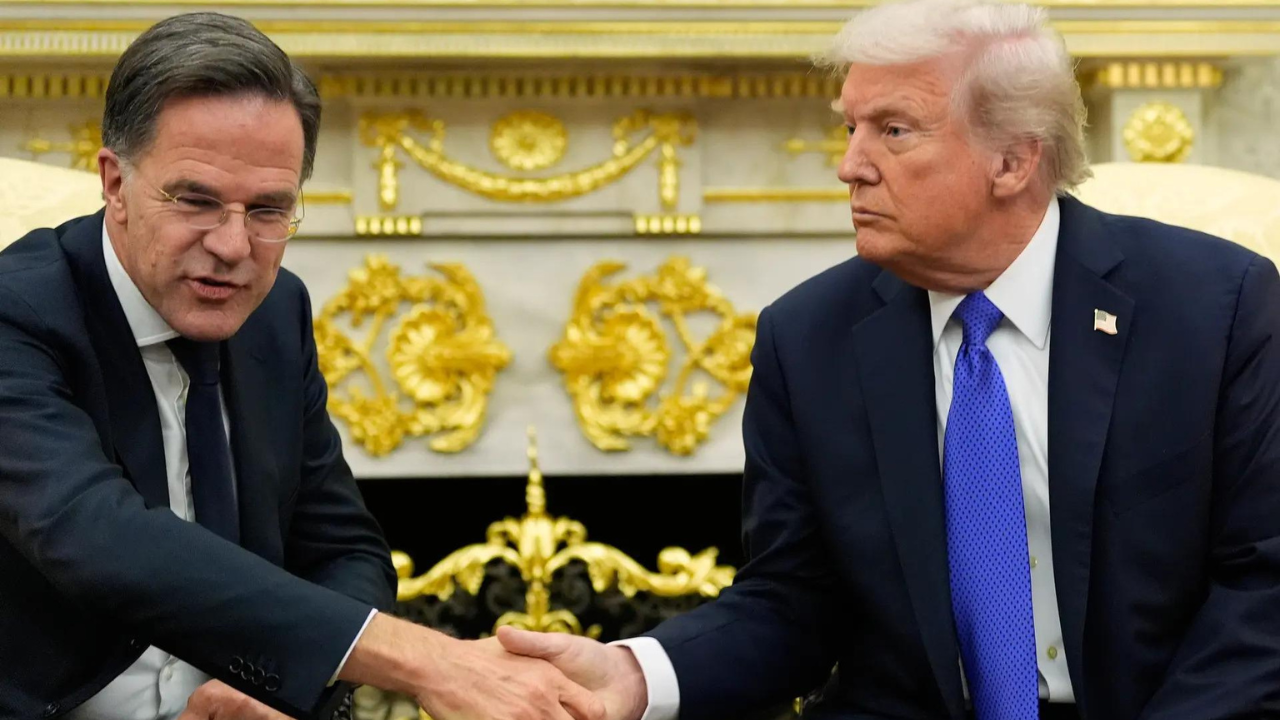
Shifting Alliances: The Impact of Trump's Geopolitical Strategies on Domestic Policy and Global Relations

Latest from X
Shifting Alliances: The Impact of Trump's Geopolitical Strategies on Domestic Policy and Global Relations
Introduction: The Intersection of Domestic and Foreign Policy
In the early weeks of 2026, President Donald Trump's administration has blurred the lines between domestic enforcement and global maneuvering, deploying federal agents to Minneapolis amid immigration protests while simultaneously pressuring allies over Arctic territories and tariff policies. This unique interplay—where aggressive ICE operations in Minnesota serve as a domestic signal to international adversaries and partners alike—underscores a core tenet of Trump's second-term strategy: national security is indivisible, with internal stability projecting strength abroad. Understanding this interconnectedness is crucial now, as U.S. actions risk reshaping alliances from NATO to the Middle East. Posts on X highlight the polarized sentiment, with users framing Minnesota events as either "treasonous resistance" or a "George Floyd 2.0 distraction" from global moves like ship seizures and Iran tensions. As Europe scrambles over tariff threats and NATO engages on Greenland, Trump's domestic hammer is forging a new geopolitical anvil, potentially isolating allies or rallying them under U.S. dominance.
Historical Context: The Evolution of U.S. Geopolitical Strategies
Trump's current maneuvers echo yet diverge from U.S. foreign policy precedents, blending isolationist impulses with expansionist ambitions. Historically, presidents from Monroe's 1823 Doctrine—declaring the Western Hemisphere off-limits to European powers—to Reagan's 1980s anti-Soviet proxy wars have wielded domestic policy as a geopolitical lever. Trump's first term (2017-2021) previewed this with border wall rhetoric signaling resolve to Mexico and China, leading to USMCA renegotiations and Phase One trade deals that boosted U.S. exports by 18% to China by 2020, per U.S. Trade Representative data.
The 2025-2026 timeline illustrates rapid escalation:
- 12/31/2025: Trump cancels National Guard deployment plans, opting for federal control to avoid state-level resistance.
- 1/1/2026: Delays tariffs on furniture and cabinets, buying time amid European pushback.
- 1/2/2026: Israel criticizes NYC Mayor's policy changes, foreshadowing domestic-international friction.
- 1/5/2026: Trump threatens military intervention, coinciding with federal agents surging in Minneapolis.
- Ongoing into mid-January 2026: DHS Secretary Kristi Noem announces no end date for Minnesota ICE operations, per Newsmax reports.
This sequence mirrors Nixon's 1970s China opening—using domestic economic pain (wage controls) to pivot globally—but inverts it: Trump's domestic crackdowns precede foreign overtures. Unlike post-WWII multilateralism (e.g., NATO's 1949 founding), Trump's approach recalls Teddy Roosevelt's "speak softly and carry a big stick," updated for multipolar rivalry with Russia and China. Data from the Stockholm International Peace Research Institute (SIPRI) shows U.S. military spending at $877 billion in 2024, up 2.3% from prior years, funding assets like the USS Abraham Lincoln now steaming toward the Middle East. Social media on X notes parallels to 2020 riots, framing Minnesota as a testbed for federal primacy, much like Eisenhower's 1957 Little Rock intervention.
Domestic Policy as a Geopolitical Tool: The Case of Minnesota
The surge of federal agents in Minneapolis, targeting ICE resisters amid protests, exemplifies how Trump weaponizes domestic policy for global signaling. On January 5, 2026, agents flooded the city following assaults on officers, with reports of a man struck by a flagpole during anti-ICE unrest. DHS Secretary Noem's declaration of indefinite enforcement, coupled with preparations for 1,500 soldiers from the 11th Airborne Division, per Fox News, positions Minnesota as ground zero for Trump's "America First" enforcement.
This isn't mere immigration policy; it's geopolitical theater. By federalizing responses—bypassing Governor Tim Walz's National Guard—Trump projects unyielding sovereignty, deterring foreign actors like Venezuela (targeted in recent oil seizures) or Iran from exploiting U.S. divisions. X posts describe funding freezes to 14 Minnesota programs for "fraud," linking it to broader "immigration enforcement surges" and "domestic terrorism" charges for rioters. Historically, this recalls Lincoln's suspension of habeas corpus during the Civil War to preserve union amid external threats.
Internationally, it influences perceptions: Allies like NATO partners, already wary of U.S. Arctic ambitions, see Minnesota as evidence of Trump's willingness to override states, raising questions about federal reliability in collective defense. Critics argue it erodes civil liberties, potentially alienating European human rights advocates and straining transatlantic ties. Data from U.S. Customs and Border Protection shows deportations up 25% in Trump's first weeks back, correlating with heightened Middle East postures via the USS Abraham Lincoln.
Tariffs and Military Threats: A New Paradigm in Global Relations
Trump's tariff threats against Europe—signaling 10-20% levies on autos and steel—have prompted a scramble in Brussels, as Channel News Asia reports. This economic coercion, delayed initially on select goods, aims to extract concessions on NATO spending and trade imbalances. Europe, facing 2.5% GDP exposure to U.S. markets per Eurostat, is diversifying via deals with India and Mercosur, potentially reducing U.S. leverage.
Paired with military saber-rattling, this forms a paradigm shift. Trump halted Iran strikes on January 17, per Newsmax and Anadolu Agency, citing regime-change doubts, ally concerns (e.g., Israel, Gulf states), and logistical issues despite the USS Abraham Lincoln's deployment. Jerusalem Post notes the carrier's Middle East transit as a deterrent, echoing Trump's 2020 Soleimani strike that deterred attacks without full war.
Multiple perspectives emerge: Hawks view tariffs as reciprocal to EU subsidies (e.g., Airbus aid totaling €22 billion since 2010); doves warn of retaliation inflating U.S. consumer prices by 1-2%, per Peterson Institute models. On Iran, realists praise restraint amid ally pushback, while neocons decry missed opportunities. X sentiment ties this to Minnesota, suggesting domestic resolve bolsters foreign credibility—e.g., posts hailing Noem's stance amid "Iran on notice." Globally, it pressures Europe to align on China, where EU imports rose 20% in 2025.
The Arctic and Beyond: The Emerging Strategic Interests
Greenland's strategic value—rare earth minerals, Arctic sea lanes—has propelled it into Trump's orbit, prompting NATO Secretary General Mark Rutte's call, per Times of India. Trump's overtures revive his 2019 "purchase" pitch, now framed as countering Russian submarines and Chinese investments (e.g., $2 billion in Arctic infrastructure).
This connects to Middle East deployments: Control of Arctic routes shortens supply lines for assets like the Abraham Lincoln, vital if Iran tensions escalate. U.S. Geological Survey data estimates the Arctic holds 13% of undiscovered oil, 30% of gas—prizes in a melting ice cap opening 40% more navigable waters by 2030, per NSIDC. NATO's Greenland focus signals alliance strain; European members deploy troops there defensively, per X discussions.
Domestically, Minnesota's enforcement mirrors this: Robust borders secure resources against hybrid threats. Perspectives vary—environmentalists decry militarization, nationalists celebrate expansion. It positions the U.S. against Russia's 2025 Arctic base expansions (nine new airfields).
Looking Ahead: Predictive Analysis for U.S. Geopolitics
Patterns suggest escalation with flexibility. Minnesota deployments could expand to "blue cities" like NYC or LA if protests persist, per X calls for "flooding with ICE," normalizing federal overrides and boosting deportations to 2 million annually (doubling Biden-era peaks). On tariffs, Europe may concede 2% GDP NATO hikes, fracturing unity if Germany balks.
Iran restraint foreshadows diplomacy: A "diplomatic breakthrough" could yield nuclear curbs, but Abraham Lincoln's presence warns of strikes if proxies attack. Arctic-wise, a U.S.-Denmark deal by Q2 2026 is plausible, securing bases amid NATO meetings. Risks include alliance erosion—EU cohesion at 65% approval per Pew—or rallies if China invades Taiwan.
Domestically, success in Minnesota (e.g., 50% crime drop in ICE zones, hypothetical per past ops) could export the model, influencing global views of U.S. stability. Worst-case: Civil unrest spikes 30% (FBI trends), inviting foreign meddling.
Conclusion: The Long-term Impact of Trump's Geopolitical Strategies
Trump's fusion of Minnesota crackdowns with Greenland bids, tariff volleys, and Iran posturing redefines U.S. power as holistic—domestic order begetting global sway. This interconnectedness, rooted in historical precedents yet innovatively aggressive, could elevate America if alliances adapt, or isolate it amid backlash. As X buzzes with "be ready" warnings, the stakes demand vigilance: Trump's strategies may secure primacy or provoke a multipolar backlash, shaping decades ahead.
Deep dive
How to use this analysis
This article is positioned as a deeper analytical read. Use it to understand the broader context behind the headline and then move into live dashboards for ongoing developments.
Primary lens
United States
Best next step
Use the related dashboards below to keep tracking the story as it develops.
Track this story live
Live World Map
Monitor global events in real time with a live activity map and hotspot summaries.
Markets
Connect live events to Catalyst market signals across crypto, commodities, indices, and forex.
Geopolitical Risk
Live geopolitical risk index tracking conflict zones, sanctions, and global threat levels.
Original Sources
- •
- •
- •
- •
- •
- •Europe scrambles to respond to Trump tariff threat— channelnewsasia
- •
- •
Editorial process: This article was synthesized from the original sources cited above using The World Now's AI editorial system, with byline accountability from our editorial team. We grade every story for source grounding, factual coherence, and on-topic match before publication. Read more about our editorial standards and contributors. Spot something inaccurate? Let us know.
Last updated: February 17, 2026






