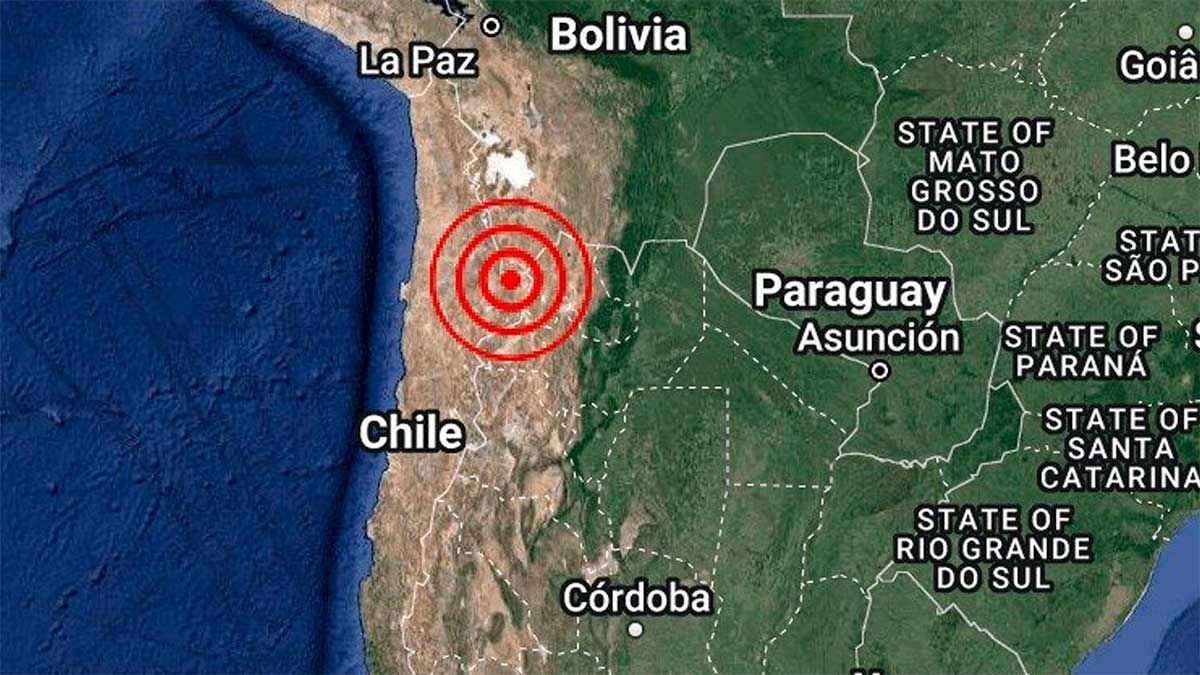

Series of Earthquakes Shake Northern Chile in Early January 2026
A moderate tremor and several low-magnitude earthquakes have been reported in northern Chile over the past few days, raising concerns among local residents and authorities. The seismic activity began on December 31, 2025, and continued into the first week of January 2026, with magnitudes ranging from 4.5 to 4.9.
On December 31, 2025, at 15:14 UTC, a medium-severity tremor struck northern Chile, with the specific details of its magnitude still under review. Local authorities have not reported any significant damage or injuries associated with this initial tremor, but the event has heightened awareness about seismic activity in the region.
Following this, a series of low-magnitude earthquakes occurred, starting with a magnitude 4.7 earthquake recorded on January 1, 2026, at 22:49 UTC. This earthquake was located approximately 57 kilometers south-southwest of Ollagüe and occurred at a depth of 131 kilometers. Despite its magnitude, no immediate reports of damage were made, and the earthquake's depth likely mitigated its impact on the surface.
The seismic activity continued with another quake on January 2, 2026, at 19:30 UTC, which registered a magnitude of 4.5. This earthquake was situated 19 kilometers south-southwest of Diego de Almagro and occurred at a depth of 77 kilometers. Similar to the previous events, local officials reported no substantial effects from this tremor.
The most recent earthquake in this series occurred on January 4, 2026, at 00:00 UTC, when a magnitude 4.9 quake struck off the coast of Aisen, Chile, at a shallow depth of just 10 kilometers. While this earthquake was closer to populated areas, there have been no reports of damage or casualties.
Experts have noted the significance of these recent seismic events, particularly the medium tremor on December 31, which revealed unexpected subterranean phenomena. The GDELT report suggests that scientists are investigating the geological implications of this activity, which could provide valuable insights into the region's tectonic behavior.
Chile is situated along the Pacific Ring of Fire, a region known for its high seismic and volcanic activity. The country experiences frequent earthquakes, many of which are of low to moderate magnitude. However, the potential for larger seismic events always remains a concern for residents and authorities alike.
As the situation develops, local authorities and geological experts are closely monitoring the seismic activity in northern Chile to assess any potential risks and provide timely updates to the public.
In conclusion, while the recent earthquakes in northern Chile have not caused significant damage or injuries, they serve as a reminder of the region's vulnerability to seismic activity. Continued monitoring and research will be essential in understanding the implications of these events and ensuring the safety of local communities.