
Series of Earthquakes Shake Japan from Hokkaido to Kyushu in Late 2025 and Early 2026
Japan, one of the world's most seismically active nations, has been hit by a flurry of earthquakes over the past week, ranging from magnitude 4.5 to 6.0. The strongest events included a magnitude 6.0 tremor 91 kilometers east of Noda on December 31, 2025, and a magnitude 5.7 quake 18 kilometers south of Matsue in Shimane Prefecture on January 6, 2026—initially reported by some outlets as magnitude 6.2. No tsunami warnings were issued for the Shimane event, and there have been no immediate reports of significant damage or casualties across the affected areas.
The seismic activity began intensifying on December 30, 2025, with multiple moderate quakes striking offshore regions along Japan's eastern and southern coasts. At 08:12 GMT, a magnitude 5.5 earthquake occurred at a shallow depth of 10 kilometers, 20 kilometers north-northeast of Wadomari on the island of Amami Oshima in Kagoshima Prefecture. Later that evening, at 22:19 GMT, a magnitude 4.8 quake (severity rated high) rattled 113 kilometers east of Miyako in Iwate Prefecture at 33.7 kilometers depth, followed by another magnitude 4.8 (low severity) at the same epicenter at 34 kilometers depth. Approximately 90 minutes later, at 23:51 GMT, a magnitude 4.8 tremor struck 57 kilometers east of Yamada, also in Iwate Prefecture, at 35 kilometers depth.
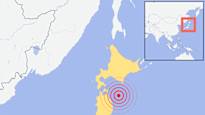
The following day, December 31, 2025, saw further activity. A magnitude 6.0 earthquake (high severity) hit at 14:26 GMT, 91 kilometers east of Noda in Chiba Prefecture at 19 kilometers depth. Later, at 16:30 GMT, a magnitude 4.9 quake occurred 127 kilometers south of Honchō at 64 kilometers depth.
Activity paused briefly before resuming on January 6, 2026, with a cluster of quakes in western Japan. At 01:18 GMT, the magnitude 5.7 event (medium severity) struck 18 kilometers south of Matsue in Shimane Prefecture at 10 kilometers depth, prompting international media coverage. This was closely followed at 01:28 GMT by a magnitude 4.7 quake (low severity) 11 kilometers south-southwest of Yasugichō in Shimane at a very shallow 3 kilometers depth, and at 01:37 GMT by a magnitude 5.0 tremor (medium severity) 14 kilometers southwest of Yasugichō at 23 kilometers depth. The sequence concluded early that morning with a magnitude 4.5 quake (low severity) at 03:34 GMT, 41 kilometers north-northeast of Kuji in Iwate Prefecture at 56 kilometers depth.
These events spanned from the northern prefectures of Iwate and Chiba to southern Kagoshima and western Shimane, highlighting Japan's position astride four major tectonic plates: the Pacific, Philippine Sea, Eurasian, and North American plates. The country experiences around 1,500 earthquakes annually strong enough to be felt, according to the Japan Meteorological Agency (JMA), with deeper events often linked to subduction zones along the Pacific Ring of Fire.
Background on Japan's Seismic Landscape
Japan's vulnerability to earthquakes is well-documented, with rigorous building codes and early warning systems in place since major disasters like the 1995 Great Hanshin earthquake (magnitude 6.9, over 6,400 deaths) and the 2011 Tohoku earthquake and tsunami (magnitude 9.0, nearly 20,000 deaths). The recent quakes occurred at varying depths, from shallow crustal events near populated areas to deeper offshore tremors, reducing the risk of widespread surface damage. The Shimane event, reported by international sources as magnitude 6.2 striking the west coast, aligns with preliminary JMA assessments, though final magnitudes are often revised based on aftershock data. No source indicated structural damage, evacuations, or injuries, consistent with the moderate intensities and offshore locations.
Finnish outlet YLE News briefly noted an earthquake in Japan on January 6, while GDELT-tracked reports from IANS, Peru21, and Pulzo emphasized the Shimane quake's alert status without tsunami risk, underscoring global attention to Japan's seismic alerts.
Ongoing Monitoring and Outlook
Japanese authorities, including the JMA, continue to monitor for aftershocks, which are common following such sequences. The lack of tsunami warnings reflects the events' characteristics—primarily strike-slip or thrust faulting without significant vertical displacement. As of January 6, 2026, no major disruptions to infrastructure, transportation, or daily life have been reported. Residents in affected prefectures remain vigilant, adhering to standard preparedness protocols amid Japan's heightened seismic risk profile. Further updates will depend on seismic network refinements and any emerging ground reports.