
Series of Earthquakes Rattle Mexico Over New Year's Period, Led by 6.5 Magnitude Event
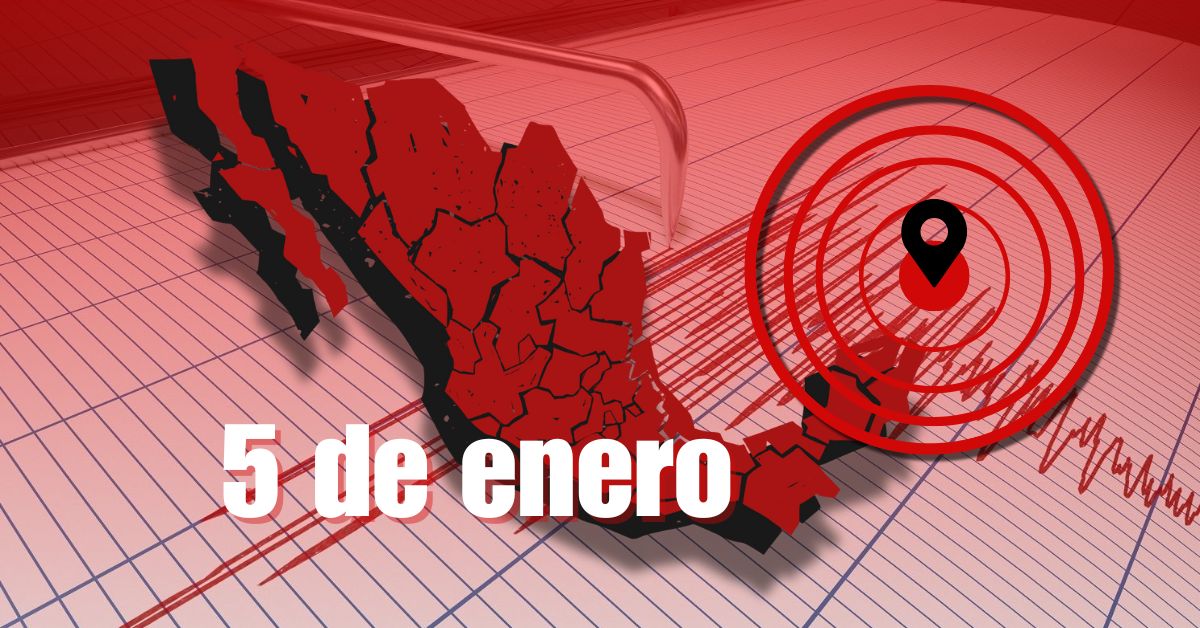
Mexico City, Mexico – A cluster of seismic events has shaken parts of Mexico in late December 2025 and early January 2026, with the most significant being a magnitude 6.5 earthquake near Rancho Viejo on January 2. While no immediate reports of major damage or casualties have emerged from official sources, the tremors underscore the country's ongoing vulnerability to tectonic activity along its Pacific coast and interior fault lines.
The strongest quake in this sequence struck on Friday, January 2, 2026, at 13:58:18 GMT (8:58 a.m. local time in Mexico's Baja California region), registering a magnitude of 6.5 at a depth of 35 kilometers. The epicenter was located just 4 kilometers north-northwest of Rancho Viejo, a rural area in the state of Baja California. Classified as high severity by monitoring services, this event was strong enough to potentially cause light to moderate damage in populated areas, though initial assessments indicated no widespread impacts. It was followed later that day by two magnitude 4.5 tremors, signaling possible aftershock activity or a brief swarm.
Approximately two hours after the major quake, at 15:37:08 GMT, a magnitude 4.5 earthquake occurred 5 kilometers north-northwest of Las Vigas, also at a 35-kilometer depth. This low-severity event was felt locally but posed minimal risk. Just over an hour later, at 17:00:35 GMT, another magnitude 4.5 quake hit 3 kilometers south-southeast of San Marcos, at a shallower 24-kilometer depth. These mid-sized tremors, while not uncommon in the region, heightened public alertness following the earlier powerful shake.
Preceding this January activity was a smaller magnitude 2.9 earthquake on Tuesday, December 30, 2025, at 11:02:39 GMT. Centered 48 kilometers east-southeast of Golfo de Santa Clara in Sonora state, at a very shallow depth of 5.7 kilometers, it was rated high severity relative to its size due to its proximity to coastal areas. Such minor events often go unfelt but contribute to the baseline seismic hum in the region.
Mexican authorities, including the Servicio Sismológico Nacional (SSN), routinely track these events through their network of sensors. Real-time alerts via the SkyAlert app and national earthquake early warning system likely notified residents in affected zones seconds before the stronger waves arrived, a critical tool in a nation averaging over 10,000 tremors annually. Coverage from outlets like Razón, in an article dated January 5, 2026, provided live updates on "temblores" (tremors), reflecting public interest in sismo monitoring amid the holiday period.
Tectonic Context and Historical Background
Mexico's seismic profile is dominated by the subduction of the Cocos Plate beneath the North American Plate along the Middle America Trench, generating frequent quakes off the Pacific coast and inland. Baja California, site of the January 2 events, sits astride the Pacific-North American plate boundary, where transform faults like the San Andreas extension produce both shallow crustal quakes and deeper subduction events. The Gulf of Santa Clara area in Sonora experiences extension-related seismicity from the Basin and Range province.
Historically, the region has seen devastating quakes, including the 2017 magnitude 7.1 Puebla event that killed over 370 people and the 1985 Mexico City quake (magnitude 8.0) that claimed around 10,000 lives. More recently, a magnitude 7.4 quake off Oaxaca in 2020 caused structural damage but fewer than 10 deaths thanks to improved building codes and warnings. The 6.5 Rancho Viejo event, while notable—comparable in energy release to the 1995 Kobe quake's initial foreshock—appears contained, with no tsunami warnings issued by the Pacific Tsunami Warning Center, as the epicenter was inland.
Experts note that quake swarms like those on January 2 can indicate stress release along faults but do not reliably predict larger events. The U.S. Geological Survey (USGS) preliminarily cataloged the M6.5 as consistent with normal subduction dynamics, with shaking intensity reaching IV-V on the Modified Mercalli scale near the epicenter—enough for windows to rattle but not collapse structures.
Ongoing Monitoring and Public Response
As of January 5, 2026, Mexican civil protection agencies reported no significant injuries or infrastructure failures from these events. Social media and news aggregators captured user reports of swaying buildings and frightened pets, but Protección Civil urged residents to review emergency kits and evacuation plans. The SSN continues to monitor for aftershocks, which are common after M6+ events; over 20 minor tremors followed similar recent quakes in the Pacific states.
In a seismically active year, these incidents remind of Mexico's preparedness gains since 1985, including stricter seismic norms in urban areas like Tijuana and Mexicali near Baja California. International partners, including USGS and Japan's JMA, contribute data sharing for refined models.
Looking ahead, seismologists anticipate continued activity through the dry season, with public education campaigns emphasizing "drop, cover, and hold on" protocols. While this cluster caused no calamity, it reinforces the need for vigilance in one of the world's most quake-prone nations.
(Word count: 712)