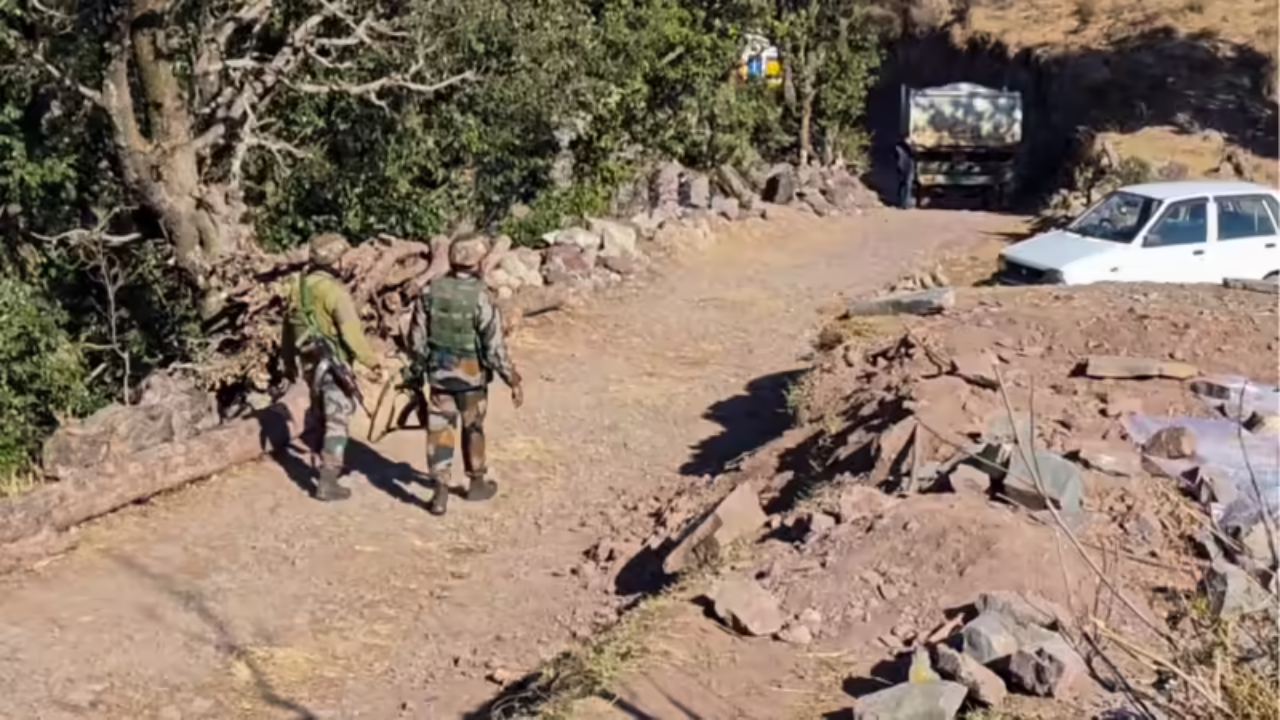

Security Forces Neutralize IED Threat in Jammu and Kashmir's Rajouri District
Rajouri, Jammu and Kashmir – Indian security forces successfully recovered and destroyed an improvised explosive device (IED) in Rajouri district on Thursday, averting a potential terror attack in the restive region.
The incident, reported on January 8, 2026, underscores the persistent security challenges in Jammu and Kashmir, where militants frequently deploy IEDs to target military convoys and infrastructure. According to reports from The Times of India, the IED was detected and neutralized by security personnel in a proactive operation, preventing any casualties or damage.
Details of the recovery remain limited, with official sources confirming only that the device was found, defused, and destroyed at the site. No group has claimed responsibility, and investigations are underway to trace the origin of the explosive. The operation highlights the vigilance of forces amid heightened threats in the Pir Panjal valley area, where Rajouri is located.
Rajouri, a rugged district spanning over 2,600 square kilometers along the Line of Control (LoC) with Pakistan, has been a hotspot for insurgent activities since the late 1990s. The region’s dense forests and mountainous terrain provide ideal cover for militants infiltrating from across the border. Security forces, including the Indian Army’s Rashtriya Rifles battalions and Jammu and Kashmir Police, conduct regular cordon-and-search operations here to dismantle terror networks.
This latest IED recovery comes amid a surge in such incidents in Jammu province. In recent months, similar devices have been unearthed in neighboring Poonch and Reasi districts, often linked to Pakistan-based groups like Lashkar-e-Taiba (LeT) and Jaish-e-Mohammed (JeM). For instance, in December 2025, troops foiled an IED blast attempt on the Jammu-Poonch highway, killing two terrorists in the ensuing encounter. Data from the South Asia Terrorism Portal (SATP) indicates that Jammu and Kashmir recorded over 150 IED-related incidents between 2020 and 2025, resulting in dozens of security personnel and civilian deaths.
The Indian Army has intensified counter-IED measures, including the deployment of advanced detection technologies such as electronic jammers, drone surveillance, and canine units. In 2024 alone, forces neutralized more than 50 IEDs across the Union Territory, according to official briefings. These efforts are part of broader operations like "Operation Sarp Vinash" successors, aimed at clearing infiltration routes in the Rajouri-Poonch sector.
Background on Militancy in Rajouri
Rajouri’s strategic importance stems from its proximity to the LoC and key highways connecting Kashmir Valley to Jammu. The district witnessed intensified violence following the abrogation of Article 370 in August 2019, which revoked Jammu and Kashmir’s special status. While overall militancy has declined—fatalities dropped by nearly 70% from 2019 peaks, per government figures—Jammu province has emerged as a new focal point. Hybrid militants, often local recruits radicalized online, have increasingly used IEDs as asymmetric warfare tools.
Cross-border smuggling of explosives via drones has exacerbated the threat. Indian officials have repeatedly accused Pakistan of supporting such activities, a charge Islamabad denies. The United Nations has designated LeT and JeM as terrorist entities, with their modules active in the region.
Local administration in Rajouri has bolstered community engagement through village defense committees (VDCs) and development initiatives under the Prime Minister’s Development Programme (PMDP). Infrastructure projects, including the Chenab Rail Bridge nearby, are also protected against sabotage.
Ongoing Security Landscape
The recovery reflects the success of intelligence-driven operations. Army officials, speaking on condition of anonymity, noted that human intelligence (HUMINT) and real-time surveillance played crucial roles. No injuries were reported, and normalcy was restored swiftly in the area.
This event occurs against a backdrop of fragile calm post-2021 ceasefire renewals along the LoC, which reduced infiltration by 80%, per defense ministry data. However, sporadic violations and terror bids persist, prompting Prime Minister Narendra Modi’s government to allocate ₹40,000 crore for border security infrastructure in the 2025-26 budget.
Experts view such recoveries as indicative of robust preparedness, though they emphasize the need for sustained vigilance. As winter sets in, with snow covering passes, forces anticipate attempts by militants to stockpile arms for spring offensives.
In a statement following similar incidents, Army Chief General Upendra Dwivedi reiterated commitment to "zero tolerance" against terrorism. Jammu and Kashmir Lieutenant Governor Manoj Sinha has urged public cooperation in reporting suspicious activities.
The neutralization of the Rajouri IED serves as a reminder of the enduring battle against terrorism in India’s northwest. With elections slated for the Union Territory later in 2026, security apparatus remains on high alert to ensure stability. Investigations continue, with expectations of further disclosures on the perpetrators.
(Word count: 612)






