
Russian Strikes Trigger Widespread Blackouts in Ukraine's Dnipropetrovsk and Zaporizhzhia Regions
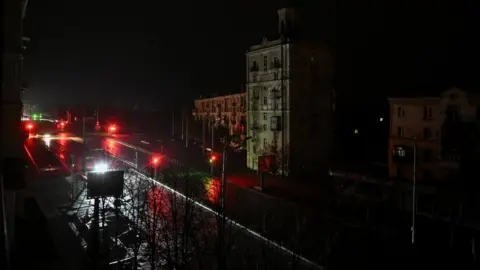
Kyiv, Ukraine – Russian missile and drone strikes on January 8, 2026, have plunged two major southeastern regions of Ukraine—Dnipropetrovsk and Zaporizhzhia—into near-total darkness, officials reported, exacerbating the country's energy crisis amid ongoing winter hostilities.
Ukrainian authorities described the attacks as causing "almost total power loss" across the affected areas, with blackouts impacting millions of residents, critical infrastructure, and frontline operations. The strikes, which began around 07:39 GMT, targeted energy facilities in a pattern consistent with Moscow's strategy to disrupt Ukraine's power grid during the coldest months of the year. Emergency services and local governments scrambled to restore power, but officials warned that full recovery could take days amid sub-zero temperatures.
According to reports from Ukrainian regional administrations, Dnipropetrovsk oblast—home to the industrial hub of Dnipro city and over 3 million people—experienced outages affecting nearly 100% of its territory. Zaporizhzhia oblast, partially occupied by Russian forces since early 2022 and site of Europe's largest nuclear power plant, faced similar devastation. "The situation is critical; hospitals, water supplies, and heating systems are at risk," a statement from the Zaporizhzhia regional military administration noted, as cited in international coverage.
Ukrainian Energy Minister Herman Galushchenko confirmed the scale of the damage in a televised address, stating that substations and transmission lines were hit, leaving "vast areas without electricity." He emphasized that air defenses intercepted some incoming threats but could not prevent all impacts. No immediate casualty figures were released, though previous similar strikes have resulted in civilian deaths and injuries.
Escalation in Energy Infrastructure Attacks
This latest barrage fits into a broader Russian campaign against Ukraine's energy sector, which has intensified since the full-scale invasion began in February 2022. Russia has systematically targeted thermal power plants, hydroelectric dams, and the grid, aiming to erode civilian morale and military logistics. Last winter (2024-2025), similar assaults knocked out up to 50% of Ukraine's generating capacity, forcing rolling blackouts nationwide and prompting international aid for repairs.
Dnipropetrovsk and Zaporizhzhia are strategically vital. Dnipropetrovsk, often called the "rocket capital" due to its Soviet-era aerospace industry (now repurposed for defense), supports Ukraine's military production. Zaporizhzhia hosts the Zaporizhzhia Nuclear Power Plant (ZNPP), seized by Russian troops in March 2022 and a flashpoint for global concern over nuclear safety. The International Atomic Energy Agency (IAEA) has repeatedly warned of risks at the facility, where power lines from the plant itself have been damaged in past strikes.
The attacks occurred hours after Ukrainian forces reported advances in the Kursk region of Russia, suggesting a retaliatory motive. Kremlin spokesperson Dmitry Peskov denied targeting civilian infrastructure, claiming strikes were aimed at "military objectives," a standard Russian narrative in such incidents. Ukraine's Air Force reported repelling a multi-wave assault involving over 100 drones and missiles launched from Russian territory and occupied Crimea.
Humanitarian and Economic Toll
With temperatures dipping below -10°C (14°F) in the region, the blackouts pose immediate threats to public health. Schools and non-essential services were shuttered, while mobile power generators were deployed to hospitals and shelters. The United Nations humanitarian office (OCHA) highlighted the vulnerability of over 4 million people in the two oblasts, many already displaced by fighting.
Economically, the strikes disrupt manufacturing and agriculture in these breadbasket regions. Ukraine's grid operator, Ukrenergo, has invested billions in repairs with Western support— including $1.5 billion from the U.S. and EU in 2025 alone—but capacity remains fragile. President Volodymyr Zelenskyy appealed for more air defense systems, telling reporters: "Every missile on our energy is an attack on our survival. The world must respond."
Background: A War on Power
Russia's invasion, now entering its fifth year, has reshaped Ukraine's energy landscape. Pre-war, the country generated 55 GW from diverse sources; today, it's down to about 20 GW operable. Winter offensives peak as a psychological weapon, reminiscent of 2022-2023 blackouts that left Kyiv in darkness for weeks.
Internationally, the EU has pledged €5 billion for grid reinforcements, while the U.S. approved Patriot systems in late 2025 to counter such threats. The IAEA maintains a presence at ZNPP, monitoring for radiation risks amid blackouts that disable cooling systems.
Outlook: Resilience Amid Strain
Restoration efforts are underway, with Ukrenergo prioritizing interconnections with EU grids via Poland and Romania for imports. However, analysts warn that sustained attacks could lead to nationwide rationing. Zelenskyy's government eyes 2026 peace talks, but Moscow's demands for territorial concessions remain a sticking point.
As Ukraine fortifies its defenses, the blackouts underscore the war's grinding attrition. "We will endure and rebuild," Galushchenko vowed, echoing national resolve. International monitors urge de-escalation to avert a deeper humanitarian crisis.
(Word count: 712)