
Russia Unleashes Massive Missile and Drone Assault on Ukraine, Deploys Oreshnik Hypersonic Weapon in Lviv Strike
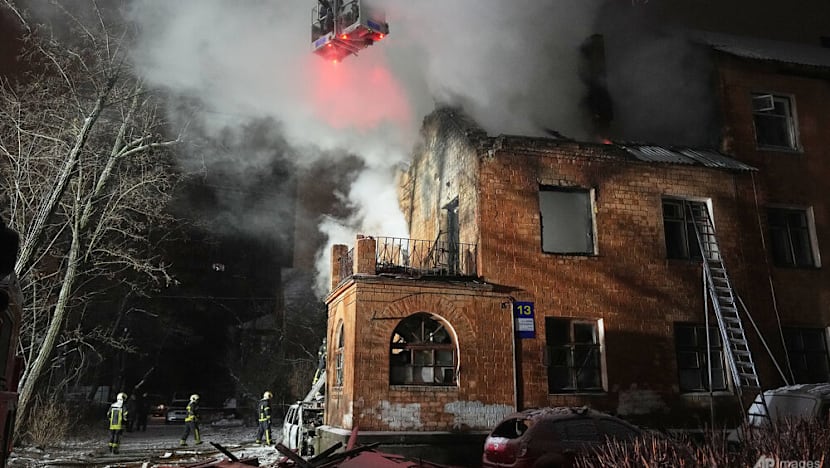
Kyiv, Ukraine – Russia conducted a large-scale aerial bombardment across Ukraine overnight into Friday, launching 36 missiles and 242 drones that targeted energy infrastructure and military sites, resulting in at least four deaths and dozens of injuries in Kyiv alone, according to Ukrainian authorities. The attacks, which included the first reported combat use of Russia's advanced Oreshnik intermediate-range ballistic missile (IRBM) on the western city of Lviv, came hours after Moscow rejected a Western-backed peacekeeping proposal.
The barrage began late Thursday, January 8, 2026, and extended into early Friday, affecting multiple regions. Ukrainian officials reported near-total power outages in the southeastern oblasts of Dnipropetrovsk and Zaporizhzhia due to strikes on energy facilities. In Kyiv, explosions lit up the night sky for hours, with local authorities confirming four civilians killed and between 19 and 25 injured, depending on reports from sources including Anadolu Agency and France 24. The strikes also hit Lviv, near Ukraine's border with NATO members Poland and Slovakia, prompting concerns over proximity to alliance territory.
Russia's Defense Ministry claimed the operation was a retaliatory response to an alleged Ukrainian strike on President Vladimir Putin's residence, targeting Ukraine's military-industrial complexes and drone production sites. Moscow specifically highlighted the use of the Oreshnik hypersonic missile in the Lviv attack, describing it as part of a "massive overnight strike on energy facilities and drone manufacturing sites." The Kyiv Independent and BBC reported Russia's assertion of deploying the Oreshnik IRBM, a weapon capable of hypersonic speeds and designed to evade defenses, marking its operational debut in the conflict.
The scale of the assault was detailed by India's Times of India, which cited 36 missiles—including ballistic and cruise variants—and 242 drones, one of which struck near the EU-NATO border. Cypriot outlet Cyprus Mail echoed Russia's narrative, linking the Oreshnik launch directly to the purported attack on Putin's residence. Ukrainian air defenses intercepted a significant portion of the incoming threats, but the widespread blackouts underscored the vulnerability of Ukraine's power grid, a frequent target during winter months to exacerbate civilian hardships.
Escalation Amid Diplomatic Deadlock
The attacks followed Russia's rejection of a European peacekeeping plan, which proposed stationing Western troops in Ukraine post-ceasefire to guarantee security. Channel News Asia and France 24 noted the timing, with Moscow denouncing the initiative shortly before the strikes commenced. O Globo and other outlets framed the bombardment of Kyiv as a direct rebuff to the plan, heightening tensions in a war now entering its fourth year.
The Guardian's live coverage highlighted Kyiv's post-strike calls for intensified international action against Russia's "shadow fleet" of tankers evading sanctions, linking the energy attacks to broader economic warfare. Reports from Infobae and Lithuanian outlet Dienos Naujienos described the Kyiv assault as a "new massive missile attack," with at least four dead and multiple wounded, amplifying European security concerns given Lviv's strategic location.
Background on the Conflict and Oreshnik Missile
Russia's full-scale invasion of Ukraine began in February 2022, evolving into a protracted war of attrition marked by repeated strikes on civilian infrastructure. Energy facilities have been prime targets since late 2022, causing rolling blackouts and humanitarian strain each winter. The Oreshnik, unveiled by Russia in late 2024, represents a technological escalation—an IRBM with hypersonic glide vehicles purportedly uninterceptable by current defenses, though independent verification of its performance remains limited.
Previous mass attacks, such as those in December 2024 and early 2025, involved similar drone-missile combinations, but the inclusion of Oreshnik signals Moscow's push to demonstrate advanced capabilities amid stalled frontlines in eastern Ukraine.
As of Friday morning, Ukrainian emergency services continued rescue operations amid debris in Kyiv and Lviv, with no immediate reports of radiation or chemical leaks from the strikes. International observers, including NATO, have urged restraint, while the U.S. and EU condemned the escalation. No official Ukrainian response to the Putin residence claim was detailed in reports, but President Volodymyr Zelenskyy's office has previously denied such operations.
The strikes risk further complicating ceasefire talks, with analysts noting Russia's pattern of intensifying barrages before negotiations. Ukraine's resilience in air defense, bolstered by Western aid, intercepted many projectiles, but the human and infrastructural toll mounts. Further developments are expected as damage assessments conclude and diplomatic fallout unfolds.
(Word count: 712)






