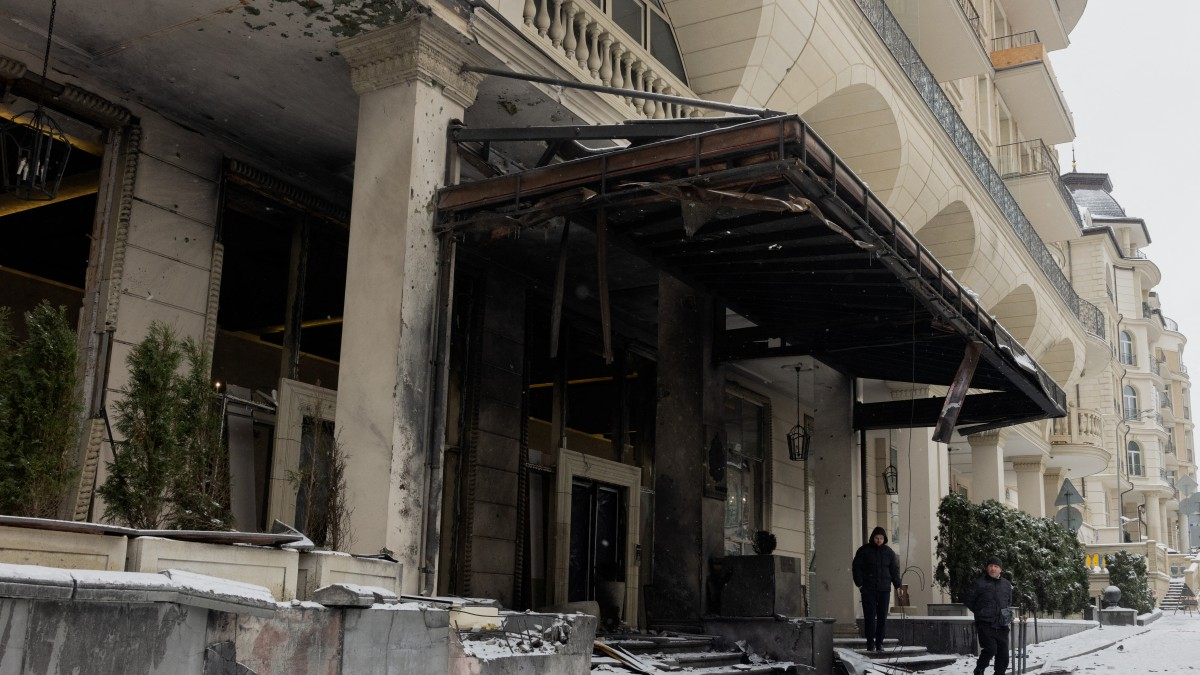

Russia Launches Mass Strikes on Kyiv and Lviv, Crippling Heating Systems in Ukrainian Capital
Kyiv, Ukraine – Russia intensified its military campaign against Ukraine with a large-scale aerial assault on Kyiv and Lviv on January 8, 2026, targeting critical infrastructure and leaving thousands without heat during freezing winter conditions. The attacks, which began around 11:09 p.m. UTC, have prompted the United Nations Security Council to convene an emergency session on Monday, highlighting growing international concern over the escalation.
Ukrainian authorities reported widespread damage from the barrage, which involved missiles and drones striking energy facilities and heating networks. In Kyiv, the strikes caused a total collapse of the city's centralized heating system, exacerbating hardships for residents amid sub-zero temperatures. Power outages rippled across the capital and surrounding areas, with emergency services rushing to restore services. Lviv, in western Ukraine, also faced direct hits, though specific damage assessments there remain preliminary as rescue operations continue.
The assault marks a significant escalation in Russia's pattern of targeting Ukraine's energy grid, particularly during winter months when civilian suffering is maximized. Ukrainian air defenses intercepted a portion of the incoming projectiles, but the sheer volume overwhelmed some sectors, according to official statements from Kyiv's military command.
Immediate Aftermath and Humanitarian Impact
In Kyiv, the heating failure affected millions, with apartment blocks and hospitals relying on backup generators. Local media and officials described chaotic scenes as families bundled in layers against the cold, with schools and non-essential services shuttered. The El Tiempo report, citing UN preparations, noted that the strikes have "provoked the collapse of heating in Kiev," underscoring the deliberate nature of infrastructure targeting.
Lviv, a key logistical hub farther from the front lines, sustained strikes on industrial and transport sites, disrupting supply lines to the west. Ukrainian President Volodymyr Zelenskyy addressed the nation shortly after the attacks, condemning them as "terror against civilians" and calling for bolstered international air defense support. No immediate casualty figures were released, but prior similar strikes have resulted in dozens of deaths and hundreds injured.
Russia's Defense Ministry claimed the operation targeted "military-industrial objectives" supporting Ukraine's war effort, a standard justification for such actions. However, independent verification from sources like the Institute for the Study of War (ISW) has consistently documented hits on civilian infrastructure in comparable incidents.
Background on the Conflict and Energy Warfare
The strikes occur nearly four years into Russia's full-scale invasion of Ukraine, which began on February 24, 2022. What started as a bid for rapid territorial gains has devolved into a protracted war of attrition, with Russia controlling about 20% of Ukrainian territory as of late 2025, including Crimea and parts of Donetsk, Luhansk, Kherson, and Zaporizhzhia regions.
A hallmark of Moscow's strategy since late 2022 has been systematic attacks on Ukraine's power and heating infrastructure. In the 2022-2023 winter, Russia destroyed around 40% of Ukraine's energy capacity, leading to rolling blackouts and a humanitarian crisis. Despite Western aid enabling repairs—Ukraine restored over 80% of capacity by mid-2025—Russia has renewed assaults, destroying half of Ukraine's electricity generation in targeted campaigns last fall.
These actions align with Russia's broader doctrine of using energy denial to pressure Kyiv and erode public morale. The International Energy Agency (IEA) reported in December 2025 that Ukraine's grid remains vulnerable, with imports from the EU covering only part of the shortfall. Lviv's inclusion in the January 8 strikes extends the reach westward, signaling no safe rear areas.
The UN Security Council's Monday meeting, scheduled in response to these "latest attacks," follows a pattern of diplomatic pushback. Previous sessions have seen vetoes from Russia, a permanent member, stalling resolutions. Western nations, led by the US and EU, are expected to reiterate calls for sanctions and arms to Ukraine, while China and others advocate de-escalation.
International Response and Outlook
NATO allies swiftly condemned the strikes, with the US State Department pledging additional Patriot systems and the EU announcing €500 million in energy aid. Poland and Romania reported intercepting debris from the assault, prompting airspace alerts.
As Ukraine braces for potential follow-up waves—Russia maintains a stockpile of over 1,000 missiles per intelligence estimates—the focus shifts to resilience. DTEK, Ukraine's largest energy firm, activated emergency protocols, but experts warn of prolonged outages without swift repairs.
The UN session could amplify calls for winter truces, as proposed by Secretary-General António Guterres in prior appeals, though enforcement remains elusive. With peace talks stalled since Switzerland-hosted summits in 2024 yielded no breakthroughs, the strikes underscore the conflict's grinding momentum.
For Ukrainian civilians, the immediate priority is survival through the cold snap. Restoration efforts are underway, but the attacks serve as a stark reminder of the war's civilian toll, now entering its harshest season.
(Word count: 712)






