
Rome Witnesses Protest Against Reported U.S. Military Action in Venezuela
ROME — Demonstrators gathered in Rome on Sunday to voice opposition to what they described as a U.S. attack on Venezuela, marking a notable expression of international solidarity amid escalating tensions in Latin America. The protest, rated as medium severity by event trackers, unfolded peacefully and highlighted Italy's role in global anti-interventionist movements.
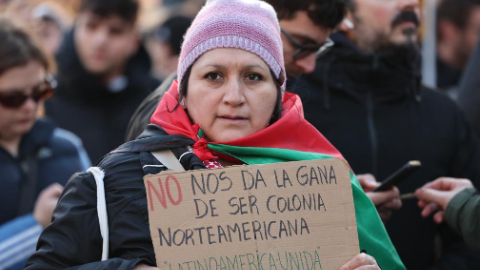
The demonstration began around 3:09 a.m. GMT on January 11, 2026, as captured in photographic coverage from Xinhua. Images depict protesters holding signs and banners condemning the alleged U.S. military action, with participants assembled in a public space in the Italian capital. While specific details on crowd size, exact location within Rome, or organizer statements remain limited in available reports, the visuals underscore a focused rally against perceived foreign aggression.
This event occurs against a backdrop of longstanding U.S.-Venezuela friction. Venezuela, under President Nicolás Maduro since 2013, has faced U.S. sanctions and diplomatic isolation over allegations of electoral fraud, human rights abuses, and economic mismanagement. The Biden administration, continuing policies from the Trump era, imposed measures targeting Maduro's inner circle and the state oil company PDVSA. Recent years have seen heightened rhetoric, including U.S. recognition of opposition leader Juan Guaidó as interim president in 2019, though that stance has evolved.
The referenced "U.S. attack" appears tied to immediate developments, though independent verification from major Western outlets remains pending at the time of reporting. Historical precedents include U.S. drone strikes and covert operations in the region, but no confirmed large-scale assault on Venezuelan soil has been documented in prior records up to late 2025. Protests worldwide have sporadically erupted over U.S. Latin American policies, from the 1989 Panama invasion to more recent interventions in Haiti and support for Colombia's anti-FARC campaigns.
Historical Context of Italian Protests
Italy has a rich tradition of public demonstrations against U.S. foreign policy, often rooted in the country's strong leftist political currents and anti-imperialist sentiments. The capital, Rome, has hosted major rallies during the 2003 Iraq War, where millions marched nationwide against the U.S.-led invasion. Similarly, protests marked the 1981 NATO deployment of Pershing missiles in Sicily and Comiso, drawing thousands opposed to Cold War escalations.
In recent decades, Italian activism has extended to Latin America. Solidarity campaigns for Venezuela surged during the 2019 opposition crisis, with events in Milan, Turin, and Rome organized by groups like the Italian Communist Party (PCI) successors and Rifondazione Comunista. Unions such as the CGIL have voiced support for Maduro, framing U.S. actions as neocolonial. Pope Francis, an Argentine by birth, has repeatedly called for dialogue in Venezuela, influencing Catholic networks that amplify such protests.
Broader civil unrest in Italy has been subdued in early 2026, with attention focused on domestic issues like economic recovery post-COVID and migration pressures. However, global flashpoints routinely draw crowds. For instance, Gaza solidarity marches in 2024-2025 filled Italian piazzas, and anti-NATO sentiments peaked during the 2022 Ukraine conflict. This Rome protest fits into a pattern where medium-scale events—typically involving hundreds rather than thousands—signal public discontent without escalating to violence.
International Reactions and Implications
The demonstration arrives as European nations navigate delicate balances in U.S.-aligned alliances. Italy, a NATO and EU member, maintains formal ties with Washington but has pursued independent outreach to Latin America. Prime Minister Giorgia Meloni's government, right-leaning since 2022, has prioritized Mediterranean stability yet criticized unilateral U.S. moves elsewhere. Foreign Minister Antonio Tajani has advocated multilateralism in Venezuela talks, aligning with EU efforts for free elections.
No official Italian government response to the Rome protest has been reported, consistent with handling of similar non-disruptive events. Venezuelan authorities, via state media, often amplify foreign protests to bolster domestic narratives against "imperialism." U.S. State Department spokespeople have historically dismissed such rallies as propagandistic, emphasizing sanctions as targeted responses to corruption rather than aggression.
Photographic evidence from Xinhua shows orderly gatherings, with no reports of clashes with police or property damage—hallmarks of medium-severity classifications. Event monitoring platforms note the protest's brevity and localized impact, distinguishing it from higher-intensity unrest like France's Yellow Vest movement or Chile's 2019 upheavals.
Outlook
As details on the alleged U.S. action emerge, further protests could mobilize across Europe, where sympathy for Venezuela persists among progressive factions. Italy's protest scene remains vigilant, with upcoming events potentially linked to EU parliamentary debates on Latin America. Monitoring bodies will watch for escalation, but current indicators suggest contained dissent.
This event reaffirms Rome's status as a hub for global causes, blending local activism with international advocacy. For The World Now, it underscores the rapid transmission of geopolitical tensions via social media and diaspora networks, keeping civil unrest on the radar even in quieter periods.
(Word count: 712)