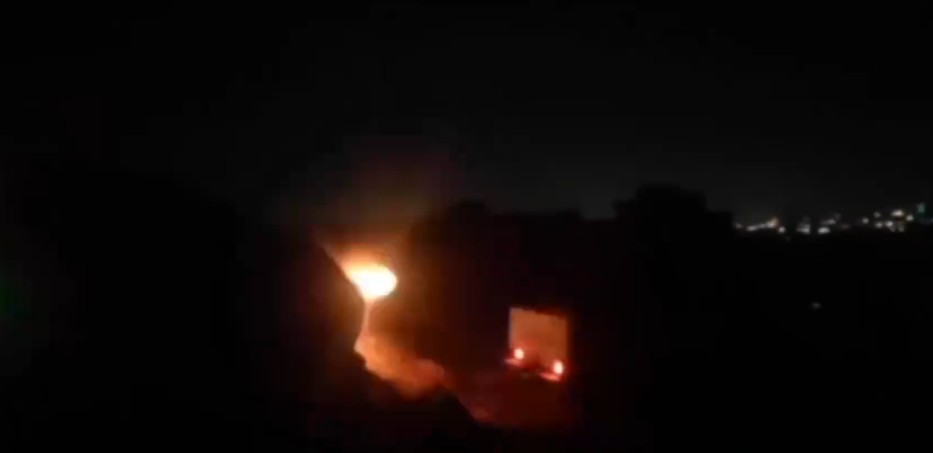

Renewed Clashes Grip Syria: US Operations Decimate ISIS Fighters as Syrian Forces Engage YPG
Damascus/Hasakah, Syria – Syria's volatile conflict landscape saw heightened activity in late December 2025 and early January 2026, with U.S. and partner forces conducting high-impact operations against Islamic State (ISIS) remnants, alongside intense clashes between Syrian government troops and Kurdish YPG fighters that left civilians in the crossfire.
On December 31, 2025, U.S. forces and their partners executed targeted operations across Syria, resulting in the death or capture of 25 ISIS operatives. Described as a high-severity action, the strikes underscore ongoing efforts to dismantle lingering ISIS cells in the country's eastern and central regions. Nearly a week later, on January 7, 2026, fighting erupted between the Syrian army and fighters from the People's Protection Units (YPG)—a Kurdish militia often labeled a terrorist affiliate of the Kurdistan Workers' Party (PKK) by Turkey—leading to at least five civilian deaths and 16 injuries.
These incidents highlight the multifaceted nature of Syria's protracted civil war, now in its 15th year, where international actors, regime forces, and non-state militias continue to vie for control amid a fragile ceasefire landscape.
U.S.-Led Strikes Against ISIS Remnants
The U.S. operation on December 31 targeted ISIS holdouts, a persistent threat despite the group's territorial caliphate being dismantled in 2019. Coalition forces, operating primarily from bases in northeastern Syria alongside the Syrian Democratic Forces (SDF)—a U.S.-backed alliance dominated by the YPG—neutralized 25 operatives through a combination of airstrikes, ground raids, and intelligence-driven captures. This action aligns with the U.S. Central Command's (CENTCOM) mandate under Operation Inherent Resolve, which has conducted hundreds of such missions since 2014 to prevent ISIS resurgence.
No U.S. casualties were reported, and the operations were confined to ISIS strongholds in Deir ez-Zor and adjacent areas, where the group has shifted to insurgent tactics including ambushes and sleeper cells. CENTCOM statements in recent months have emphasized the group's estimated 2,000-3,000 fighters remaining in Syria and Iraq, capable of inspiring global attacks. The timing coincides with heightened U.S. vigilance following ISIS-claimed assaults in Europe and the Middle East.
Syrian Army-YPG Clashes Claim Civilian Lives
In a separate flashpoint, Syrian regime forces clashed with YPG fighters in northern Syria, reportedly near Hasakah or adjacent frontlines, resulting in significant civilian harm. According to reports, five civilians were killed and 16 wounded as crossfire targeted populated areas. The Turkish outlet A Haber, citing local sources, framed the YPG as a "terrorist organization" linked to the PKK, reflecting Ankara's longstanding position.
The Syrian government, backed by Russia and Iran, views the YPG-led SDF as separatists encroaching on state sovereignty, particularly in oil-rich northeast Syria. YPG forces, controlling roughly 25% of Syrian territory including key economic assets, deny targeting civilians and accuse regime troops of indiscriminate shelling. This skirmish echoes periodic escalations along the Euphrates Valley frontlines, where buffer zones established post-2019 Turkish offensives have frayed.
Broader Context of Syria's Enduring Conflicts
Syria's civil war, ignited in 2011 by pro-democracy protests met with brutal crackdowns under President Bashar al-Assad, has claimed over 500,000 lives and displaced millions. The regime regained most territory by 2020 with Russian and Iranian support, but eastern Syria remains a patchwork of control: U.S.-SDF zones, Turkish-backed opposition enclaves in the north, and regime-held west.
The U.S. maintains about 900 troops in Syria, legally justified by UN resolutions against ISIS but politically contentious amid calls for withdrawal from both Washington and Damascus. Turkey, a NATO ally, conducts cross-border operations against YPG/PKK targets, viewing them as an existential threat due to PKK insurgencies within its borders. Recent developments include stalled Astana peace talks and UN-mediated efforts, hampered by the Israel-Hamas war's regional spillover.
ISIS, though territorially defeated, exploits governance vacuums. A UN report from mid-2025 estimated the group had replenished finances through smuggling and extortion, funding plots like the 2024 Moscow concert hall attack.
Russia's 2025 Wagner Group pullback and Iran's militia strains have emboldened regime offensives, while U.S. policy under the Biden administration prioritizes counterterrorism over broader stabilization.
Implications and Outlook
These events risk broader escalation. U.S. strikes could provoke ISIS retaliation or strain ties with the SDF if YPG-regime frictions intensify. Civilian casualties in the army-YPG clash have drawn condemnation from human rights groups, potentially galvanizing Kurdish mobilization or Turkish intervention.
International mediators, including the UN and Qatar, urge de-escalation, but absent political progress—like constitutional reforms or elections—sporadic violence persists. As Syria approaches the war's midpoint, economic collapse (90% poverty rate per World Bank data) and reconstruction needs exceeding $400 billion loom large.
With global attention diverted by Ukraine and Gaza, Syria's conflicts underscore the limits of military solutions in fragmented proxy wars. Monitoring groups like the Syrian Observatory for Human Rights report no immediate truce, signaling more unrest ahead.
(Word count: 712)






