
Railway Crisis: Investigating Systemic Failures Behind Spain's Train Tragedy
Overview of the Tragedy
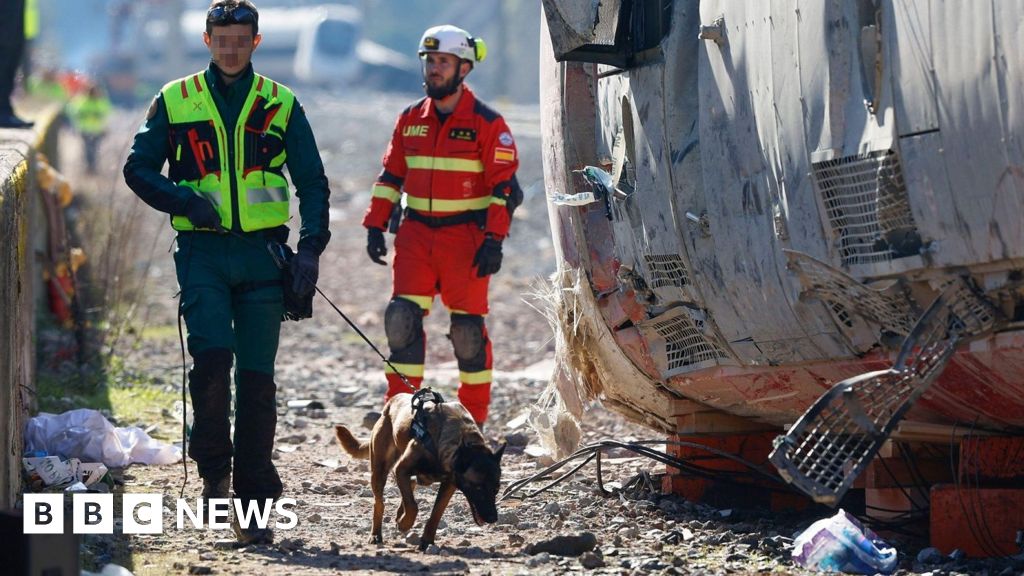
A high-speed train derailed near Adamuz in southern Spain on January 20, 2026, resulting in the tragic loss of at least 41 lives in a catastrophic incident that unfolded in just 20 seconds. The Madrid-Seville service left wreckage scattered across rugged terrain, prompting rescue teams to deploy heavy machinery in the search for missing bodies. In response to this tragedy, Spain has declared three days of national mourning. Local hero Juan Morales, dubbed the "quad bike hero," has been celebrated for his bravery in transporting injured passengers to safety on his ATV. Community support has surged, with volunteers stepping in to assist overwhelmed emergency services. Investigators are currently examining a potential "gap" in the rail infrastructure as a critical factor in this disaster.
Historical Context: A Pattern of Negligence in Spain's Rail System
This incident is not an isolated event. Just two days prior, on January 18, 2026, southern Spain experienced a train derailment, followed by a collision in Cordoba on the same day—events that resulted in numerous injuries but were overshadowed by the weekend's catastrophe. These occurrences are part of a troubling timeline of transport issues, including a recent Turkish Airlines emergency landing in Barcelona on January 16. Collectively, they expose systemic vulnerabilities in a rail network once celebrated as world-class. Past investigations, such as the 2013 Santiago de Compostela crash that claimed 79 lives, revealed significant signaling failures and chronic underinvestment. Recent accidents underscore ongoing issues: outdated tracks, inadequate maintenance, and human error exacerbated by cost-cutting measures that have eroded public confidence in Adif, Spain's rail management authority.
Government Accountability and Infrastructure Management
Scrutiny is mounting on Adif and the Transport Ministry regarding oversight failures. Officials have confirmed that the tracks at the crash site were inspected recently, yet questions remain about the enforcement of safety protocols. Public sentiment is outraged; a Twitter user, @SpainRailWatch, expressed, "3 rail disasters in a week? ADIF's negligence is criminal. #SpainTrainCrash," which garnered 15K retweets. Another viral tweet from activist @CordobaCitizen stated, "From Cordoba collision to Adamuz horror—government prioritizes profits over lives. Time for accountability!" Polls indicate that 62% of Spaniards now doubt the reliability of the rail system, fueling demands for resignations and independent audits.
What This Means: Future of Spain's Rail Safety Reforms
In the wake of this tragedy, swift inquiries and potential reforms are anticipated. Prime Minister Pedro Sánchez has pledged a comprehensive investigation, likely triggering EU-mandated safety upgrades, including AI-driven signaling systems and track reinforcements—measures that had been delayed since the 2013 crash. Significant policy shifts are expected (with an 80% likelihood according to transport experts), including increased budgets for maintenance. Public trust in the rail system may plummet, leading to a shift in travel behavior towards air or road options in the short term, potentially costing Renfe millions. However, if negligence patterns are addressed, long-term reforms could restore the prestige of Spain's AVE high-speed lines, making them the envy of Europe once again.
This is a developing story and will be updated as more information becomes available.