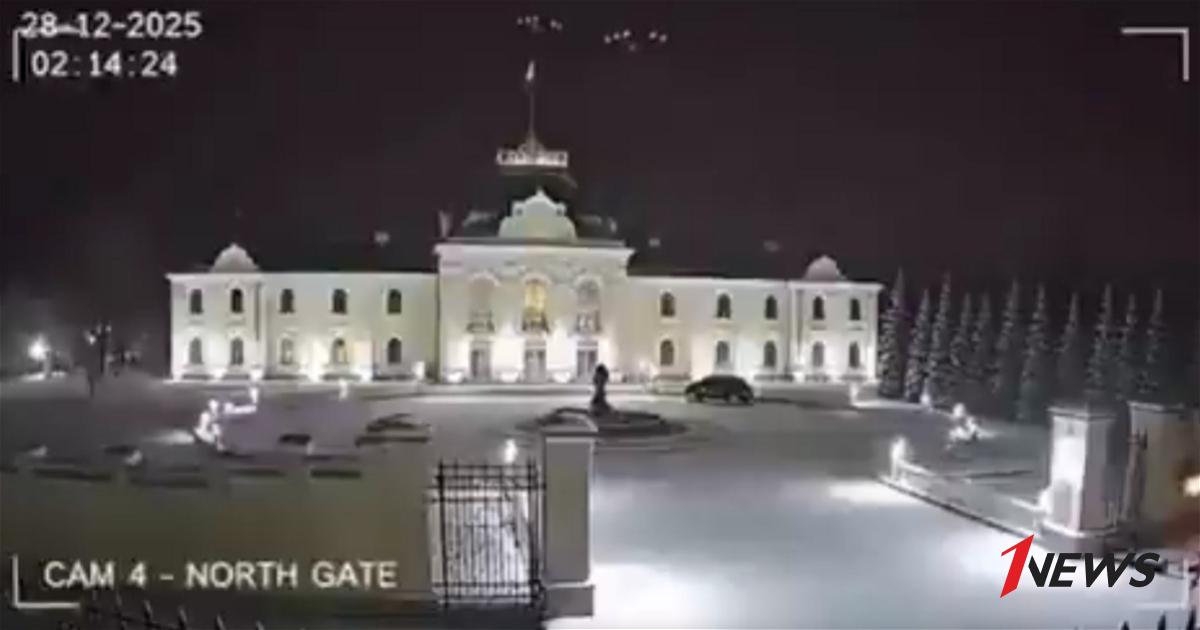

Questions Arise Over Credibility of Alleged Drone Attack on Putin's Residence
Recent claims of a drone attack targeting Russian President Vladimir Putin's residence have sparked a wave of skepticism among experts and analysts. The incident, which reportedly occurred on December 31, 2025, has been characterized by some as an attempt by Ukraine to escalate tensions in the ongoing conflict. However, a closer examination of the allegations suggests that the credibility of these claims may be in question.
According to initial reports, the Russian government accused Ukrainian forces of launching a drone strike aimed at Putin's official residence. However, experts have raised concerns about the veracity of these claims, suggesting they may be exaggerated or unfounded. The response from Russian officials suggests a strategy to solidify domestic support and frame Ukraine as a persistent threat.
The timing of the alleged attack raises additional questions. The incident coincides with the ongoing Russia-Ukraine war, which has continued to escalate since its onset in February 2022. In this context, the Kremlin's narrative may be seen as an effort to rally public sentiment around national security and justify ongoing military actions.
The GDELT article highlights the broader implications of such accusations. It suggests that the Russian government may be leveraging the claims of the drone attack to bolster its position domestically and internationally. By portraying itself as a victim of aggression, Russia can solidify its narrative of being under siege from external forces, thereby justifying its military campaigns and internal policies.
Moreover, the article points to previous instances where the Kremlin has been accused of manipulating narratives for political gain. This pattern raises concerns about the authenticity of the claims surrounding the December 31 incident. Analysts argue that the lack of concrete evidence supporting the drone attack allegations further undermines their credibility.
As the situation develops, experts emphasize the importance of critically assessing information coming from both sides of the conflict. Misinformation can significantly impact public perception and international relations, particularly in a complex and volatile environment such as the one currently faced by Russia and Ukraine.
This incident reflects the broader challenges of information warfare in the digital age, where narratives can be shaped and reshaped rapidly. The potential for misinterpretation or manipulation of events underscores the need for careful scrutiny of claims made by state actors involved in ongoing conflicts.
In conclusion, while the Russian government has accused Ukraine of launching a drone attack on President Putin's residence, the credibility of these claims is being questioned by experts. As the conflict continues, the importance of discerning fact from fiction will remain paramount in understanding the evolving dynamics between Russia and Ukraine. The international community watches closely as developments unfold, keenly aware of the implications such incidents may have for regional stability and security.






