
Political Violence Escalates in the United States as 2026 Begins
As the new year unfolds, a former FBI agent has issued a stark warning regarding the rising tide of political violence in the United States. This escalation is underscored by recent notable incidents, including an alleged assassination attempt and violent confrontations involving Immigration and Customs Enforcement (ICE) personnel. The events showcase a growing divide within American society, a distressing trend that has raised concerns among law enforcement and community leaders.
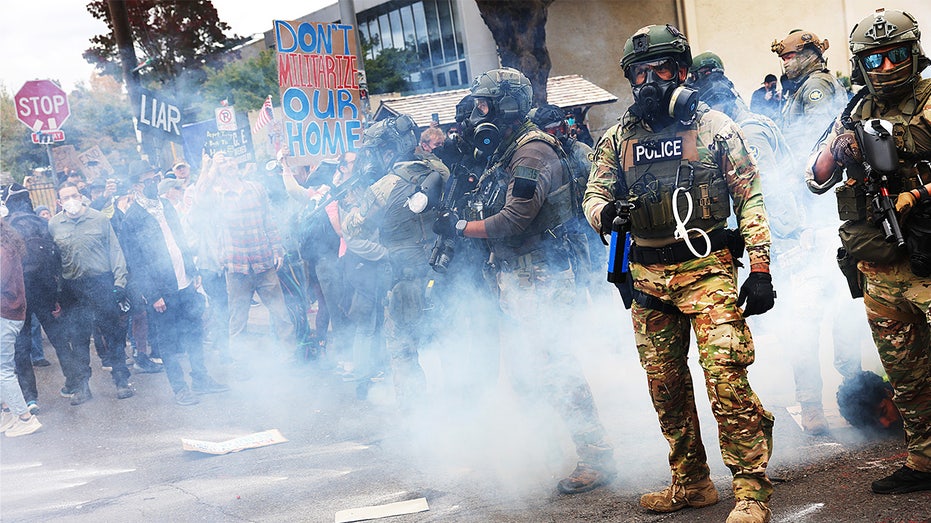
On January 2, 2026, a federal lawsuit was filed by residents of Oregon against the Department of Homeland Security (DHS) after the agency deployed tear gas against anti-ICE protesters. The suit alleges that the use of tear gas during a demonstration at an ICE facility not only violated the rights of the protesters but also posed significant health risks to local families living in nearby neighborhoods. This legal action highlights the contentious atmosphere surrounding immigration enforcement and the lengths to which community members will go to protect their rights and safety.
The situation in Oregon is emblematic of broader unrest across the nation, as political tensions continue to mount. The former FBI agent, who spoke on the condition of anonymity, remarked that the combination of political protests and a polarized political climate has fostered an environment ripe for violence. "We are seeing a concerning trend where individuals feel justified in taking extreme actions to express their political frustrations," they noted, referencing the recent assassination attempt on a political figure as a particularly alarming example.
Background on Recent Unrest
The backdrop of this unrest can be traced to ongoing debates over immigration policy, civil rights, and the role of federal law enforcement. The use of ICE in enforcing immigration laws has become a flashpoint for protests across the country, with many advocates arguing that the agency's actions are disproportionately harsh and contribute to community fear. The lawsuit filed in Oregon is part of a larger movement against perceived federal overreach and the militarization of police forces in domestic settings.
Moreover, the escalation in political violence and unrest is not an isolated phenomenon; it reflects a larger pattern seen in various parts of the country. The recent events come on the heels of a tumultuous 2025, where political divisions deepened significantly. The rise in incidents of violence during protests and counter-protests has alarmed both officials and civil society organizations.
Outlook
As the United States enters 2026, it remains to be seen how these tensions will manifest and whether there will be a coordinated response from federal and state authorities to address the underlying issues. The lawsuit in Oregon could set a significant precedent regarding the use of force by federal agents in civil demonstrations and may inspire similar actions across the country.
Community leaders are calling for dialogue and reconciliation efforts to bridge the growing divides within American society. However, the challenge remains as long-standing grievances regarding immigration policies and civil rights continue to provoke passionate responses from all sides. The situation is fluid, and as political violence becomes increasingly normalized, the need for constructive engagement and resolution becomes more urgent.
As the nation grapples with these issues, the hope is that 2026 will bring a renewed commitment to addressing the underlying causes of unrest, fostering a climate of understanding and safety for all citizens.