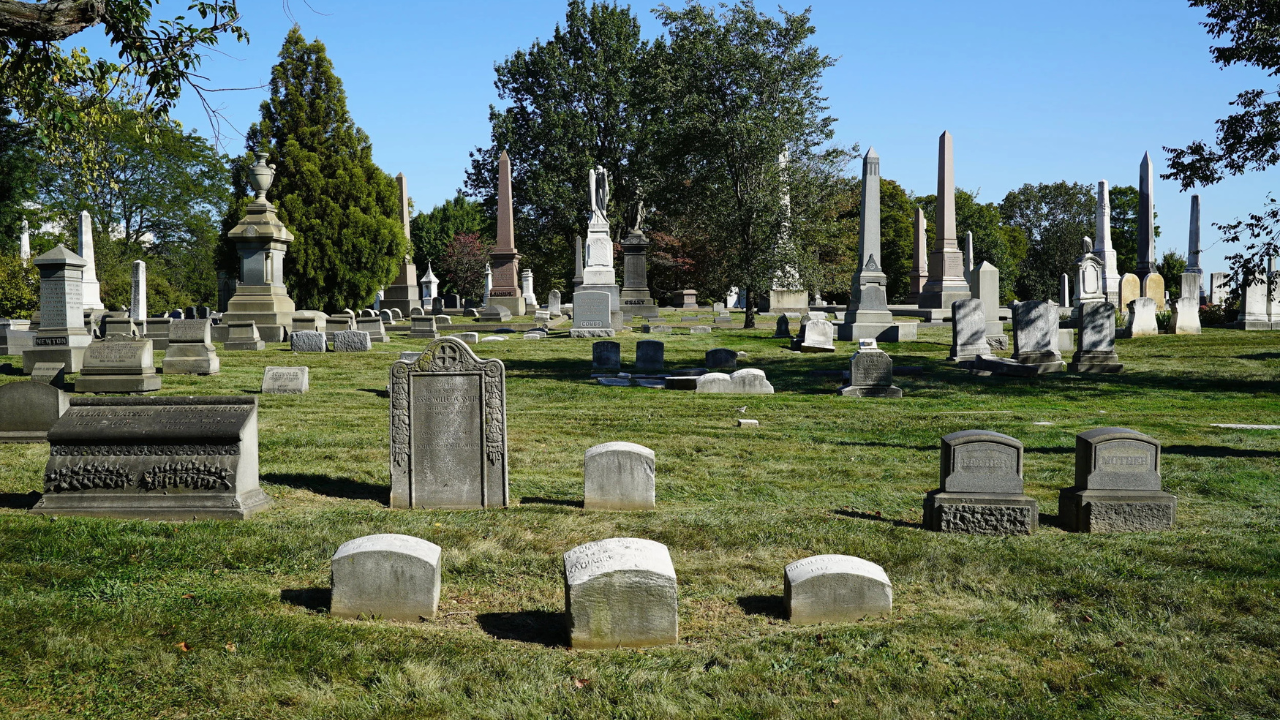

Philadelphia Man Arrested in Grisly Grave Robbery Case Involving Over 100 Human Skulls and Remains
Philadelphia, PA – Authorities in Philadelphia have arrested a man in connection with a disturbing series of grave robberies at the historic Mount Moriah Cemetery, where investigators discovered approximately 100 human skulls along with numerous mummified bodies and body parts at locations linked to the suspect.
The arrest, announced on Saturday, January 10, 2026, followed weeks of reported desecrations at the cemetery, located on the border of Philadelphia and Yeadon, Pennsylvania. Police apprehended the unidentified suspect near the cemetery grounds, prompting searches of his nearby residence and a storage unit. There, officers uncovered an extensive cache of human remains, including skulls, torsos, mummified limbs, and other body parts, according to reports from investigators.
The scale of the discovery has shocked local communities and law enforcement alike, marking one of the most significant grave desecration cases in recent U.S. history. Officials have not yet publicly identified the suspect or released details on potential charges, but the investigation is ongoing to determine the full extent of the robberies and the motive behind the acts.
Details of the Investigation
Law enforcement responded to multiple reports of disturbed graves at Mount Moriah Cemetery over recent weeks, leading to heightened surveillance in the area. The suspect was taken into custody after being observed in suspicious activity near the site. A subsequent search warrant executed at his home revealed dozens of skulls meticulously stored, alongside partially mummified torsos and limbs preserved in various states of decay.
Further evidence was found in a rented storage unit, where additional remains were cataloged, bringing the total number of skulls to around 100. Investigators believe the desecrations targeted older graves, taking advantage of the cemetery's vast size and somewhat isolated sections. Forensic teams are now working to identify the origins of the remains, matching them to specific plots within the 200-acre grounds.
No information has been released regarding whether the remains have been repatriated to their graves or the suspect's background. Authorities emphasized that the public is not believed to be in danger, as the crimes appear confined to cemetery grounds.
Background on Mount Moriah Cemetery
Mount Moriah Cemetery, established in 1855, holds a significant place in Philadelphia's history as one of the city's oldest and largest burial grounds. Spanning over 200 acres across Philadelphia and Delaware counties, it was once the final resting place for notable figures, including Civil War veterans, inventors, and early industrialists. At its peak, it served as Pennsylvania's largest cemetery by area.
However, the site has faced decades of decline due to financial troubles, ownership disputes, and urban encroachment. By the 2010s, parts of the cemetery had become overgrown with weeds, attracting urban explorers and vandals. In 2011, the neighboring Bartram's Garden organization began efforts to preserve sections of the grounds, including the preservation of Victorian-era monuments and the restoration of the cemetery's iconic gatehouse.
The cemetery's neglect has made it vulnerable to illicit activities, though large-scale grave robbing remains exceedingly rare. Pennsylvania law strictly prohibits grave desecration under Title 18, Section 3390 of the state criminal code, classifying it as a felony punishable by up to seven years in prison and fines. Federal statutes under the Native American Graves Protection and Repatriation Act (NAGPRA) may also apply if any remains involve indigenous ancestors, though Mount Moriah primarily interred European-American settlers and later diverse ethnic groups.
This incident echoes rare but infamous U.S. grave robbing cases, such as the 19th-century body-snatching for medical schools or the 1989 arrest of a New Jersey man with over 100 skulls intended for occult purposes. Modern forensics and surveillance have made such crimes harder to perpetrate undetected.
Broader Context of Crime in Philadelphia
Philadelphia has grappled with rising crime rates in recent years, particularly violent offenses and property crimes. According to FBI Uniform Crime Reporting data through 2025, the city reported over 40,000 Part I offenses annually, with homicides hovering around 400-500 per year. While grave desecration is anomalous, cemetery vandalism has occasionally surfaced amid broader urban decay issues.
Local officials have pledged increased patrols around Mount Moriah and other historic sites. Community groups, including the Friends of Mount Moriah Cemetery, expressed outrage, calling the acts a "profound violation of sacred ground."
Outlook and Next Steps
Investigators continue to process the remains and scour additional sites for evidence. The motive remains unclear—possibilities range from black-market sales of artifacts to personal collection—but authorities have ruled out any connection to ongoing violence. The Philadelphia Police Department and Delaware County officials are coordinating with the medical examiner's office for identifications, a process expected to take weeks given the volume.
Restoration efforts at Mount Moriah may accelerate in response, with calls for enhanced security funding. As the case unfolds, it serves as a stark reminder of the vulnerabilities facing America's historic cemeteries amid modern challenges.
This story is developing, with updates expected as charges are filed and more details emerge.
(Word count: 712)