
Paris Hosts Pivotal Geopolitical Summits: Ukraine Ceasefire Talks and Syria-Israel De-escalation Deal
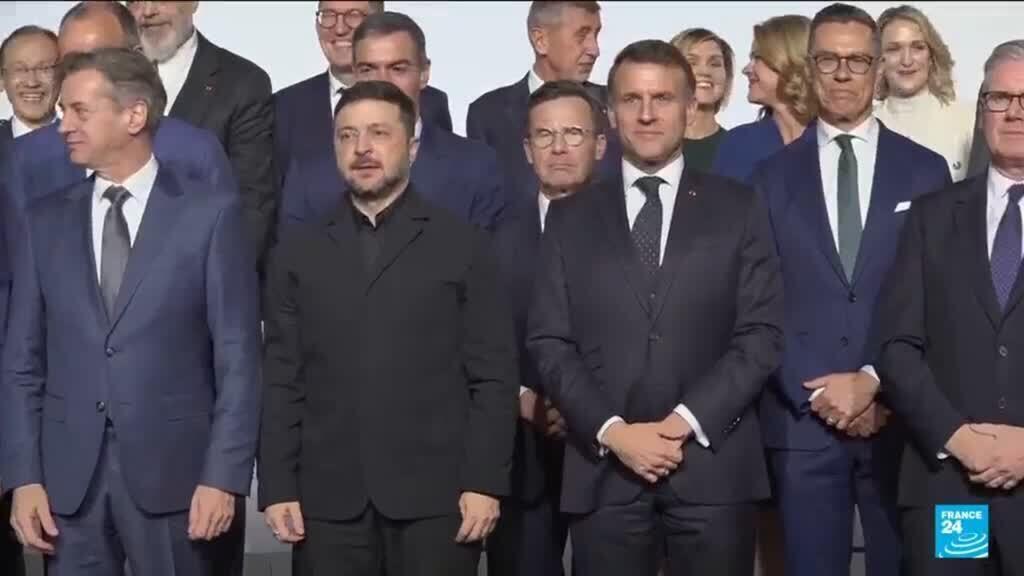
Paris, France – In a flurry of high-level diplomacy this week, the French capital has become a focal point for resolving protracted global conflicts. On January 5, a Syrian delegation met with Israeli officials in Paris, culminating in an agreement to establish a joint mechanism for intelligence sharing and military de-escalation. Concurrently, discussions on January 6 and 7 focused on security guarantees for Ukraine amid potential ceasefire negotiations with Russia, hosted by French President Emmanuel Macron and attended by Ukrainian President Volodymyr Zelensky, EU leaders, and a U.S. delegation.
The Syrian-Israeli meeting, which began on January 5, has drawn mixed reactions. While the agreement marks a rare direct engagement between the two nations—long at odds over border tensions in the Golan Heights and Syrian territory—it has sparked concerns in Damascus about potential sovereignty breaches. According to reports, the talks led to the formation of a bilateral framework aimed at reducing military escalations and enhancing information exchange, a development detailed in Al Jazeera coverage. This comes amid ongoing regional instability in the Middle East, where Israel has conducted strikes against Iranian-backed groups in Syria, and Syria grapples with post-civil war reconstruction under President Bashar al-Assad.
Shifting to the Ukraine-focused gatherings, Paris served as the venue for a "coalition of the willing" meeting on January 6, where European leaders reaffirmed their commitment to Kyiv. Greek Prime Minister Kyriakos Mitsotakis emphasized the imperative to bolster Ukraine's armed forces as the cornerstone of any security architecture. "Further strengthening the Ukrainian Armed Forces [is] the most important security guarantee," Mitsotakis stated during the session, underscoring Europe's resolve amid war fatigue.
The following day, on January 7, allies including France, Ukraine, the EU, and the U.S. announced plans for comprehensive security guarantees in the event of a ceasefire with Russia. Hosted by Macron, the talks involved Zelensky and a U.S. team comprising Jared Kushner and Steve Witkoff—figures linked to incoming U.S. administrations emphasizing pragmatic foreign policy shifts. France 24 reported that these assurances would encompass commitments from Washington, signaling a potential transatlantic alignment on ending Moscow's invasion, now in its fourth year since February 2022.
Background on the Diplomatic Surge
France's role as a diplomatic hub is not new. Under Macron, Paris has positioned itself as a mediator in international crises, from the 2015 Paris Climate Agreement to recent Middle East shuttle diplomacy. The Ukraine war, triggered by Russia's full-scale invasion, has seen Western allies provide over $100 billion in aid to Kyiv, including advanced weaponry. However, with U.S. political transitions and European economic strains, ceasefire discussions have gained urgency. Security guarantees—potentially modeled on NATO's Article 5 or bilateral pacts—aim to deter future Russian aggression without immediate membership for Ukraine.
The Syria-Israel dynamic adds another layer. Israel seized the Golan Heights in 1967 and annexed it in 1981, a move unrecognized internationally except by the U.S. under Trump. Syria's civil war (2011–present) weakened its military, allowing Israeli operations against Hezbollah and Iranian assets. The Paris meeting represents a tentative thaw, possibly facilitated by French intelligence channels, though Syrian officials have voiced wariness over territorial integrity.
Implications and Outlook
These Paris summits highlight France's balancing act between European security and Middle Eastern stabilization. For Ukraine, the pledges could pave the way for negotiations, potentially involving U.S. mediation under evolving leadership. Analysts note that U.S. involvement via Kushner and Witkoff suggests alignment with deal-making approaches seen in the Abraham Accords.
On Syria-Israel, the joint mechanism offers a low-risk confidence-building step but faces hurdles from hardliners on both sides. Broader regional players like Iran and Turkey will watch closely, as any de-escalation could reshape alliances.
As Macron's administration navigates these fronts, Paris' January events underscore its enduring convening power. Further details on implementation are awaited, with follow-up talks likely in the coming weeks. The outcomes could influence global stability, from Black Sea grain corridors to Levantine ceasefires.
(Word count: 612)






