
Paris Becomes Global Diplomatic Hub as Ukraine, Syria-Israel Talks Converge Amid US Policy Shifts
Paris, France – In a flurry of high-stakes diplomacy, the French capital has emerged as a central venue for resolving international conflicts, hosting concurrent talks on Ukraine's security guarantees and US-mediated negotiations between Syria and Israel. These meetings, occurring over January 5-6, 2026, come against a backdrop of shifting US foreign policy priorities under President Donald Trump, including renewed interest in Greenland and Venezuela, raising questions about transatlantic alignment.
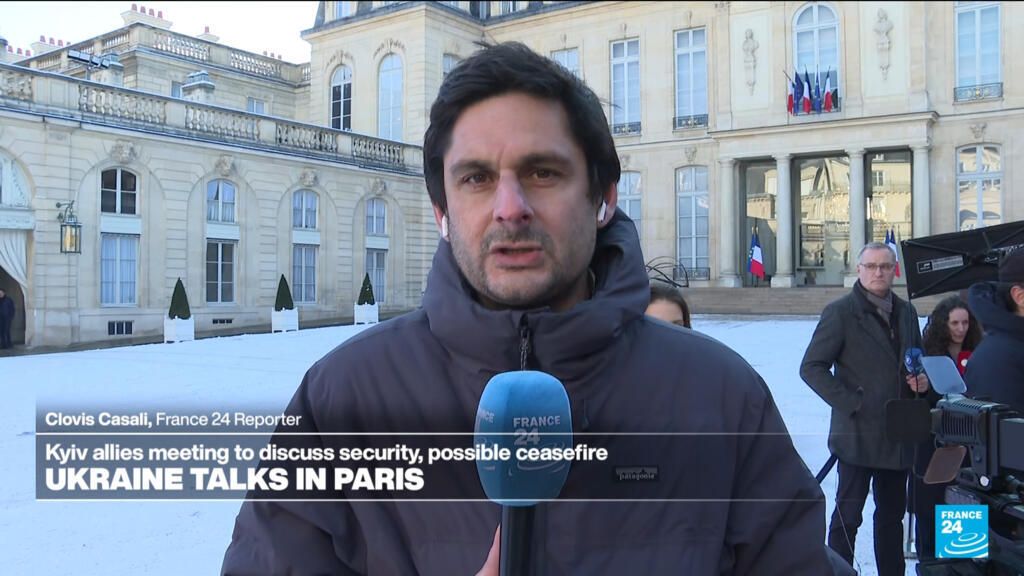
On January 6, key European allies of Ukraine, alongside top US envoys, convened with Ukrainian President Volodymyr Zelensky at the Elysée Palace to discuss security assurances in the event of a ceasefire in Russia's ongoing war against Ukraine. The gathering, attended by figures such as French President Emmanuel Macron and UK Prime Minister Keir Starmer, aimed to forge a unified framework for post-conflict stability. However, European leaders used the occasion to firmly rebuff Trump's recent comments advocating for a US takeover of Greenland, the strategically vital and mineral-rich Arctic island under Danish sovereignty. "Greenland belongs to its people," they reaffirmed, underscoring sensitivities over Arctic sovereignty amid growing great-power competition in the region.
France24 correspondent Clovis Casali, reporting from the Elysée, highlighted the dual focus of the summit: advancing Ukraine talks while addressing Trump's provocative statements. The pushback reflects broader European concerns about US intentions in the Arctic, where Greenland's position offers access to rare earth minerals essential for green energy transitions and military applications. Trump's interest echoes his 2019 proposal to purchase the territory, which was swiftly rejected by Denmark.
Parallel to these Ukraine discussions, Syrian and Israeli officials resumed US-mediated talks in Paris on January 5, signaling continued efforts to de-escalate longstanding tensions. The Associated Press reported that the meetings focus on establishing or reinforcing a buffer zone along their shared border, a perennial flashpoint exacerbated by Syria's civil war and Israel's security concerns over Iranian influence. A Syrian delegation's direct engagement with Israeli representatives has sparked debate over potential sovereignty implications, though official statements emphasize diplomatic progress under US facilitation.
These Syria-Israel talks mark a rare instance of indirect or mediated dialogue between the adversaries, who lack formal diplomatic relations. Historical context includes Israel's occupation of the Golan Heights since 1967—annexed in 1981 but unrecognized internationally—and repeated airstrikes on Syrian territory targeting militant groups. The Paris venue leverages France's role as a neutral mediator in Middle East affairs, building on prior US-brokered frameworks like the Abraham Accords.
Adding to the uncertainty surrounding the Ukraine summit, reports indicate the Trump administration's attention is increasingly diverted toward Venezuela. Newsmax noted that prospects for breakthroughs in Paris remain unclear as US focus shifts to the South American nation, where political instability and migration pressures have prompted renewed interventionist rhetoric. The article referenced US envoy Steve Witkoff's involvement in Paris but highlighted domestic priorities potentially diluting American commitment to European security pacts. Before any reference to a "US capture"—likely alluding to hypothetical or aggressive postures toward Venezuelan assets—the piece underscored how this pivot complicates multilateral efforts.
Background on Converging Crises
France's selection as host underscores President Macron's ambition to position Europe as an autonomous geopolitical actor. The Ukraine war, now in its fourth year since Russia's full-scale invasion in February 2022, has prompted multiple ceasefire initiatives, with recent US signals under Trump favoring negotiations over prolonged aid. Over $200 billion in Western assistance has sustained Kyiv, but fatigue and electoral shifts have intensified calls for guarantees akin to NATO's Article 5.
Syria's fragile post-Assad transition—following the regime's reported collapse in late 2024—has opened windows for normalization but also risks of power vacuums exploited by extremists. Israel's talks align with its strategy to secure borders amid Hezbollah setbacks in Lebanon and Hamas conflicts in Gaza.
Outlook for Paris Diplomacy
While no immediate breakthroughs were announced, the simultaneous nature of these talks highlights Paris's diplomatic clout. European unity on Greenland and Ukraine signals resolve, yet US distractions in Venezuela and the Arctic could strain alliances. Observers await outcomes that might shape ceasefires, buffer zones, and transatlantic relations in 2026. Further sessions are anticipated, with France coordinating follow-ups.
(Word count: 612)






