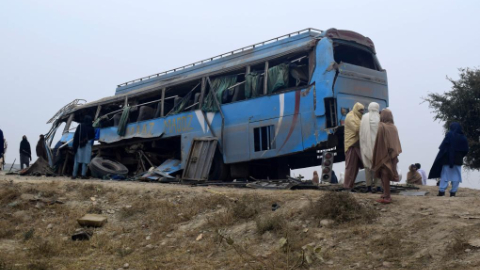

Pakistan Grapples with Resurgent Terrorism: Deadly Bus Attack in Northwest Follows Major Explosives Seizure in Karachi
Islamabad, Pakistan – Pakistan's security forces are intensifying counterterrorism efforts amid a spate of recent incidents, including a bus attack in the northwest that claimed one life and injured eight others, and a significant seizure of explosives in the southern port city of Karachi. These events, occurring within days of each other in early January 2026, underscore the persistent threat posed by militant groups in the country.
The bus attack took place in northwest Pakistan, where assailants opened fire on a passenger bus, resulting in one fatality and eight injuries, according to a report from Xinhua news agency published on January 6, 2026. The incident highlights the volatile security situation in the region's restive areas, which have long been hotspots for insurgent activity. Details on the exact location within northwest Pakistan—likely referring to Khyber Pakhtunkhwa province or adjacent tribal districts—were not immediately specified in the report, but such attacks typically target civilian transport as a tactic to sow fear and disrupt daily life.
In a related development, Pakistani counterterrorism police conducted a major operation in Karachi on January 5, 2026, seizing approximately two tons of explosives and arresting three individuals. Classified as a medium-severity incident, the raid prevented what authorities believe could have been a large-scale attack in the densely populated commercial hub of Sindh province. Karachi, Pakistan's economic powerhouse with over 16 million residents, has frequently been targeted by urban militants linked to groups like Lashkar-e-Jhangvi or al-Qaeda affiliates, though no group claimed responsibility for the foiled plot.
These back-to-back events come as Pakistan contends with an uptick in terrorism-related violence. According to official data from the Pakistan Institute for Peace Studies and international monitors like the South Asia Terrorism Portal, the country recorded over 1,000 terrorism-related fatalities in 2025 alone, with a notable resurgence of the Tehrik-i-Taliban Pakistan (TTP) following the Afghan Taliban's 2021 takeover of Afghanistan. The TTP, which operates from safe havens across the border, has claimed responsibility for numerous attacks in Khyber Pakhtunkhwa and Balochistan, including ambushes on security convoys and bombings in urban centers.
Background on Pakistan's Terrorism Landscape
Pakistan has battled militancy for over two decades, rooted in the fallout from the Soviet-Afghan War, the post-9/11 U.S.-led invasion of Afghanistan, and internal sectarian strife. The northwest, encompassing former Federally Administered Tribal Areas (FATA) now merged into Khyber Pakhtunkhwa, remains a primary battleground. Bus and vehicle attacks here are often attributed to the TTP or its splinter groups, which aim to challenge state authority and avenge military operations like Zarb-e-Azb (2014) and Radd-ul-Fasaad (ongoing).
Karachi's challenges differ, blending ethnic-political violence with jihadist threats. The city's Pashtun migrant communities have historically harbored TTP elements, prompting repeated police sweeps. The seizure of two tons of explosives—equivalent to a substantial improvised explosive device (IED) cache—signals sophisticated planning, reminiscent of past plots like the 2012 assassination attempt on then-Muttahida Qaumi Movement leader Altaf Hussain.
Government responses have included enhanced border fencing along the Durand Line, intelligence-sharing with Afghanistan under the China-Pakistan Economic Corridor security framework, and legislative measures like the 2020 amendments to the Anti-Terrorism Act. Prime Minister Shehbaz Sharif's administration has pledged zero tolerance, allocating billions to the National Action Plan against terrorism.
Broader Implications and Security Outlook
No group has yet claimed the bus attack or the Karachi explosives plot, leaving open questions about perpetrators. However, the timing—mere days apart—suggests coordinated pressures on Pakistan's law enforcement amid economic strains and political instability following the 2024 elections.
Security analysts note that while military operations have degraded militant capabilities, cross-border sanctuaries and radicalization via social media sustain the threat. The U.S. State Department's 2025 Country Reports on Terrorism highlighted Pakistan's progress in dismantling Lashkar-e-Taiba and Jaish-e-Mohammed networks but flagged persistent TTP activity.
Pakistani authorities have urged public vigilance, with the Interior Ministry issuing alerts for major cities. International partners, including the UN and Quad nations, continue to support capacity-building through training and equipment. As investigations proceed, these incidents serve as stark reminders of terrorism's enduring shadow over Pakistan's stability and development goals.
(Word count: 612)






