
Ongoing Syrian Conflicts Intensify: US-Led Strikes Kill or Capture 25 ISIS Fighters as Government-Kurdish Clashes Claim Five Lives
Aleppo, Syria / Eastern Syria – January 7, 2026 – Syria's fragile security landscape deteriorated further over the past week with U.S. and partner forces conducting operations against Islamic State (ISIS) remnants, resulting in the death or capture of 25 operatives, followed by deadly clashes between Syrian government troops and Kurdish forces in Aleppo that left five people dead.
The U.S.-led operations, which began on December 31, 2025, targeted ISIS holdouts in eastern Syria, a region long associated with the group's diminished but persistent presence. According to reports from U.S. military sources, these actions involved coalition partner forces and aimed to disrupt militant networks. This marks a continuation of counterterrorism efforts in the area, where ISIS has sought to regroup amid competing local power struggles.
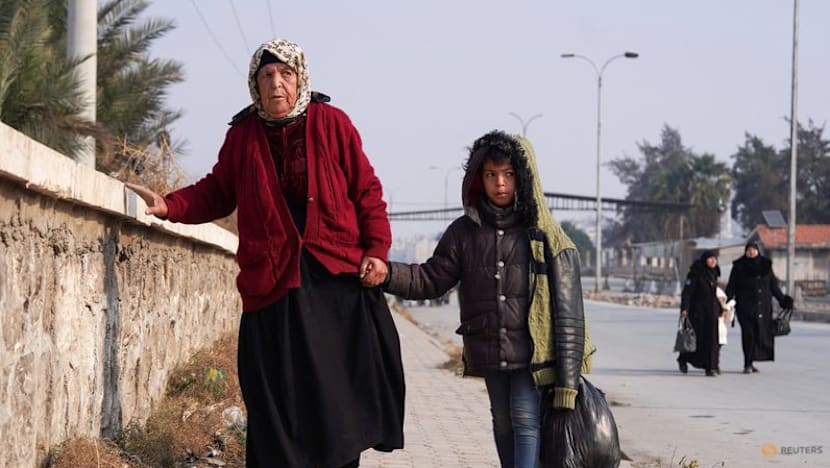
Just days later, on or around January 6, 2026, tensions boiled over in Aleppo province, where Syrian government forces clashed with Kurdish-led fighters, resulting in five fatalities. Channel News Asia reported the incident as a significant flare-up in a city that has been a focal point of Syria's civil war since 2011. The clashes underscore the precarious alliances and rivalries among armed groups in northern Syria, where Kurdish forces, primarily the Syrian Democratic Forces (SDF), maintain influence despite nominal truces with the Assad regime.
Details of the Incidents
The U.S. operations were described as medium-severity engagements, initiated at approximately 9:12 a.m. GMT on December 31, 2025. U.S. Central Command routinely conducts such airstrikes and ground raids in coordination with the SDF, which controls much of Syria's northeast oil-rich regions. These efforts have been pivotal since the territorial defeat of ISIS's caliphate in 2019, preventing the group's resurgence. The 25 ISIS operatives neutralized represent a notable blow, though exact locations—likely in Deir ez-Zor or Hasakah provinces—were not specified in initial announcements.
In Aleppo, the clashes pitted Syrian Arab Army (SAA) units against Kurdish fighters, possibly affiliated with the People's Protection Units (YPG), the SDF's main component. Aleppo, once fully recaptured by government forces with Russian backing in 2016, remains a hotspot for sporadic violence involving Turkish-backed proxies, rebels, and Kurdish militias. The Channel News Asia report highlighted the deaths without attributing casualties to specific sides, noting the incident's occurrence amid heightened military movements in the area.
No immediate claims of responsibility or detailed casualty breakdowns were available from either event, but local monitors such as the Syrian Observatory for Human Rights (SOHR) have historically tracked such escalations.
Historical Context and Key Players
Syria's conflict, now in its 15th year, stems from the 2011 Arab Spring uprising against President Bashar al-Assad, evolving into a multifaceted war involving jihadists, ethnic militias, and foreign powers. The Assad government, supported by Russia and Iran, controls most population centers, including Damascus and Aleppo. Kurdish forces, dominant in the northeast, have been U.S. allies against ISIS but face threats from Turkish military operations aimed at creating a buffer zone.
The U.S. maintains about 900 troops in Syria, primarily to counter ISIS and secure oil fields, despite President-elect transitions in Washington. Recent Turkish airstrikes on Kurdish positions and Israeli operations against Iranian-linked targets have added layers of complexity. The December 31 U.S. strikes align with ongoing coalition activities, which reported over 70 ISIS leaders killed in 2025 alone.
Kurdish-government frictions in Aleppo reflect broader disputes over territory and governance. A 2019 agreement allowed SDF integration into state institutions, but implementation has faltered, leading to periodic standoffs. Turkish influence, via proxies like the Syrian National Army, often exacerbates these tensions.
Implications and Outlook
These incidents highlight Syria's persistent instability, where anti-ISIS efforts intersect with local power struggles. The U.S. operations reinforce the coalition's commitment to preventing ISIS revival, estimated to have 2,000-3,000 fighters in Syria and Iraq per recent U.N. assessments. However, the Aleppo clashes risk drawing in external actors—Russia could bolster Assad, while Turkey might intensify cross-border actions.
International mediators, including the U.N., have called for de-escalation ahead of potential Astana process talks involving Russia, Turkey, and Iran. With Assad's regime economically strained by sanctions and reconstruction needs, renewed violence could displace thousands and hinder normalization efforts.
As of January 7, no further escalations were reported, but monitors remain vigilant. Syria's conflict has claimed over 500,000 lives and displaced millions, with no comprehensive resolution in sight.
(Word count: 682)






