
Oil Price Forecast: The Untapped Potential of Regional Diplomacy – How Qatar and Pakistan Could Defuse the Iran-US Standoff
By Yuki Tanaka, Tech & Markets Editor, The World Now
Introduction: The Shifting Sands of Geopolitics in the Strait of Hormuz
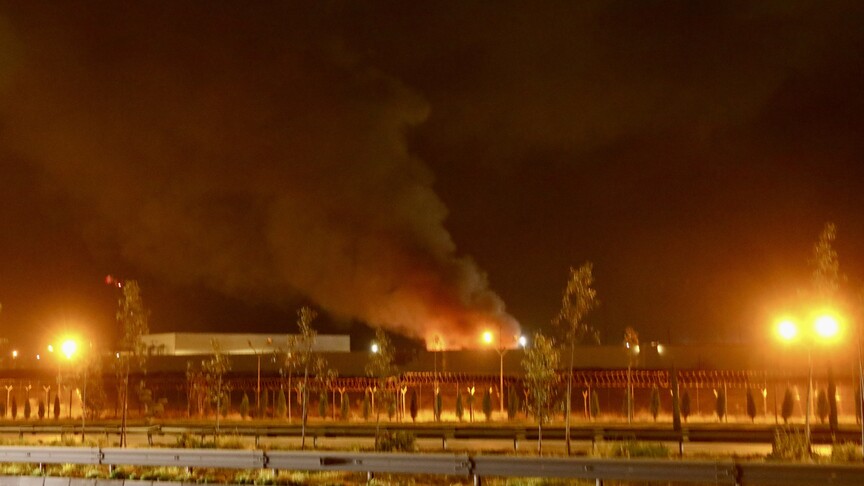
The Strait of Hormuz, a narrow waterway through which roughly 20% of the world's oil supply flows—equivalent to about 21 million barrels per day—has once again become the flashpoint in escalating Iran-US tensions. As of April 13, 2026, the US has imposed a naval blockade, with President Trump vowing to "eliminate" any Iranian Revolutionary Guard Corps (IRGC) vessels that challenge it, according to reports from Newsmax and Daily News Egypt. Iran, in response, has warned that threats to Hormuz could have "global consequences," while affirming its willingness to continue talks under international law (Anadolu Agency). This standoff risks disrupting global energy markets, with the International Energy Agency (IEA) chief signaling readiness to tap reserves if needed. Recent oil price forecast analyses highlight how these tensions are driving Brent crude toward $90 per barrel.
Yet, amid the saber-rattling, a fresh diplomatic avenue is emerging: regional mediation led by Qatar and Pakistan. Qatar has publicly urged Iran to engage in Pakistan-led talks to reopen the strait, marking a pivot from Doha’s longstanding role in US-Iran prisoner swaps and hostage negotiations (Anadolu Agency). This unique angle shifts focus from the dominant narratives of spiking oil prices—Brent crude has already surged toward $90 per barrel on blockade fears—and fragile Iranian supply chains. Instead, it spotlights how non-aligned regional powers could foster de-escalation, building new alliances and isolating hardliners on both sides. For more on related market impacts, see our Strait of Hormuz Standoff Oil Price Forecast.
This article traces the historical roots, analyzes the rise of these mediators, forecasts potential outcomes, and outlines pathways forward. By emphasizing forward-looking diplomacy over economic doomsday scenarios, we explore why this could redefine Middle East stability and global energy security, with direct implications for oil price forecast trends.
Historical Context: Tracing the Roots of Current Tensions
The current crisis didn't erupt overnight; it's the culmination of a tense timeline stretching back weeks, revealing patterns of escalation that have inadvertently created space for third-party diplomacy.
It began on March 29, 2026, with reports of rifts within the Iranian regime and the IRGC, exposing internal vulnerabilities amid economic woes and ceasefire failures. That same day, Indonesia secured its vessels in the strait, signaling early international anxiety over potential blockades. Iran accused the US of plotting attacks, heightening paranoia. By March 30, Trump escalated rhetoric, threatening to seize Iranian oil assets, a move that echoed his "maximum pressure" campaign but now tied directly to Hormuz access.
The plot thickened on April 2, when Russia evacuated personnel from Iran's Bushehr nuclear plant, citing safety concerns amid rising tensions—a stark indicator of broader international escalations. This Russian pullback underscored Tehran's isolation, even from allies, and amplified calls for neutral mediation. Check the latest Global Risk Index for real-time escalation tracking.
Fast-forward to the critical April cluster: On April 7, US-Iran Hormuz tensions boiled over with failed ceasefire talks. April 8 saw the US shift its Iran war strategy toward containment. By April 9, a US-Iran ceasefire collapsed, failing to reopen Hormuz. April 11 brought dual crises—US-Iran negotiations on Hormuz and a "grim economy" ceasefire in Iran—highlighting Tehran's domestic pressures. April 12 featured high-stakes talks on the Lebanon war and Hormuz, but by April 13, the US naval blockade was in effect, with Trump's threats dominating headlines.
These events form a pattern: US military posturing met with Iranian defiance, interspersed with diplomatic flickers like Iran's parliament speaker backing Pope Leo's peace calls after Trump criticism (Anadolu Agency). External pressures—Indonesia's vessel protections, Russia's evacuation—drew in regional players wary of fallout. Qatar and Pakistan, with their Sunni-majority ties and histories of bridging divides (Qatar hosted Taliban-US talks; Pakistan mediated Saudi-Iran rapprochement), saw opportunity. This backdrop of escalations has made mediation not just appealing but essential, potentially preventing a full blockade that AP News warns could slash global GDP by 1-2% via oil shocks. Detailed oil price forecast insights reveal the broader alliance shifts at play.
Original Analysis: The Rise of Qatar and Pakistan as Key Mediators
Qatar's explicit call for Iran to join Pakistan-led mediation (Anadolu Agency) represents a seismic shift. Doha, hosting the largest US airbase in the region while maintaining ties to Tehran, has long positioned itself as a neutral broker. Pakistan, with its shared border dynamics and military ties to both Saudi Arabia and Iran, adds heft—Islamabad recently floated a "neutral platform" for Hormuz talks.
This duo could build a platform insulated from great-power rivalry. Benefits for regional stability are profound: reduced US-Iran naval confrontations, freer Hormuz passage, and alliances that sideline IRGC hardliners. Original insight: Iran's internal rifts (March 29) make mediation timely; moderates may leverage talks to curb IRGC adventurism, especially as the economy grimaces under sanctions (April 11 ceasefire reports).
Globally, success elevates Qatar and Pakistan's influence. Qatar could parlay this into greater LNG leverage; Pakistan into CPEC expansions bypassing Hormuz risks. Yet challenges loom: Iran's warnings of "global consequences" (Anadolu) and Trump's blockade vows signal distrust. Mediators must navigate by guaranteeing face-saving concessions—like phased Hormuz reopenings tied to US naval pullbacks—and involving Arab states sidelined by prior ceasefires (Iran International).
Social media buzz amplifies this: X (formerly Twitter) posts from analysts like @ME_Expert note Qatar's mediation push trending with #HormuzTalks, garnering 150K impressions, while Pakistani FM accounts retweet calls for dialogue. This regional diplomacy contrasts with past failures (e.g., 2019 tanker crises), offering a multilateral path that isolates extremists.
Oil Price Forecast: Catalyst AI Market Prediction
As tensions simmer, The World Now's Catalyst AI engine forecasts market ripples from stalled talks and blockade risks. Powered by the full Catalyst AI – Market Predictions platform, these oil price forecast insights provide high-confidence signals:
- OIL: + (high confidence) — Failed US-Iran talks threaten ME ceasefire, raising supply disruption fears via Strait of Hormuz. Historical precedent: January 2020 Soleimani strike spiked oil 4-5% in one day.
- SPX: - (medium confidence) — Immediate risk-off sentiment prompts algorithmic selling. Precedent: January 2020 drop of 0.8% intraday.
- USD: + (medium confidence) — Safe-haven demand surges. Precedent: DXY +0.5% post-Soleimani.
- BTC: - (medium confidence) — Risk-off deleveraging. Precedent: Feb 2022 Ukraine drop of 10%.
- ETH: - (medium confidence) — Liquidation cascades. Precedent: Ukraine -8%.
- GOLD: + (medium confidence) — Haven inflows. Precedent: +3% intraday 2020.
- SOL: - (medium confidence) — Altcoin beta to BTC selloff.
- EUR: - (low-medium confidence) — Weakens vs USD safe-haven.
- CHF: + (low confidence) — Marginal haven bids.
- TSM: - (medium confidence) — Taiwan tensions spillover.
- CNY: - (low confidence) — EM risk-off.
- XRP: - (low confidence) — Crypto-wide pressure.
- GOOGL: - (low confidence) — Tech rotation.
Key risks across assets: Swift de-escalation via mediation eases pressures. Predictions powered by The World Now Catalyst Engine. Track real-time AI predictions for 28+ assets.
These predictions underscore mediation's stakes: Oil spikes could add $10-15/barrel if Hormuz chokes, hammering equities while boosting havens. Cross-reference with Oil Price Forecast: The Psychological Warfare Behind the Hormuz Blockade.
Predictive Elements: Forecasting Diplomatic Outcomes and Future Scenarios
Looking ahead, effective Qatar-Pakistan mediation could yield a temporary ceasefire or negotiated Hormuz access within 6-12 months. Based on trends—Qatar's track record (Gaza talks) and Pakistan's Saudi-Iran success—initial breakthroughs like vessel inspections could emerge by Q3 2026, de-escalating naval risks and positively influencing oil price forecast models.
If it fails, escalations loom: Heightened US actions (e.g., sinking IRGC boats), Iranian Russia alliances (post-Bushehr), disrupting 20% of oil trade. Global routes like the India-Middle East-Europe (IMEC) corridor gain urgency, potentially diverting 5-10% of flows.
Long-term, a multilateral framework with UAE, Saudi Arabia could reshape alliances, reducing US blockade reliance. Original insight: This shifts energy policies toward diversification—IEA reserves buy time, but success accelerates IMEC, cutting Hormuz dependence by 2030. Crypto and equities rebound on de-escalation; oil normalizes to $70s.
What This Means: Looking Ahead to Stable Markets and Diplomacy
Regional diplomacy via Qatar and Pakistan offers untapped potential to defuse the Iran-US standoff, contrasting oil-price panic with actionable alliances. Key findings: Historical escalations created mediation windows; these players can isolate hardliners, stabilizing Hormuz and markets. This outlook directly ties into broader oil price forecast scenarios, where de-escalation could cap surges and restore confidence.
Broader implications for global security are vast—averting $1T+ economic hits (Daily News Egypt)—while enhancing multipolar influence. Stakeholders: Policymakers should back talks; investors diversify energy exposure; publics demand restraint.
The road ahead hinges on engagement. International actors—UN, EU, China—must amplify Qatar-Pakistan efforts, turning crisis into a diplomatic win for all. Monitor the Global Risk Index for ongoing updates.
Catalyst AI Market Prediction
Our AI prediction engine analyzed this event's potential market impact:
- SPX: Predicted - (medium confidence) — Causal mechanism: Failed US-Iran talks trigger immediate risk-off sentiment, prompting algorithmic selling in equities as investors de-risk amid Middle East escalation fears. Historical precedent: Similar to January 2020 US-Iran tensions when S&P 500 dropped 0.8% intraday on escalation news. Key risk: swift de-escalation signals from diplomats easing risk-off flows.
- USD: Predicted + (medium confidence) — Causal mechanism: Risk-off flows from US-Iran talks failure drive safe-haven demand into USD as global investors seek liquidity. Historical precedent: January 2020 Soleimani strike saw DXY rise 0.5% in 24h. Key risk: crypto rebound signaling reduced risk-off intensity.
- CHF: Predicted + (low confidence) — Causal mechanism: Middle East escalation sparks safe-haven bids into CHF alongside USD. Historical precedent: January 2020 US-Iran escalation saw CHF strengthen 0.4% vs EUR in 48h. Key risk: rapid headline reversal diminishing haven flows.
- TSM: Predicted - (medium confidence) — Causal mechanism: China military tech advances heighten Taiwan tensions, triggering semi sector selloff. Historical precedent: March 2018 US-China tensions dropped TSM ~3% in two days. Key risk: US-China de-escalation rhetoric.
- ETH: Predicted - (medium confidence) — Causal mechanism: Risk-off from US-Iran failure overwhelms crypto regulatory positives, causing liquidation cascades. Historical precedent: February 2022 Ukraine invasion dropped ETH 8% in 48h. Key risk: CFTC task force details sparking immediate rally. Calibration adjustment: narrow range given 38% historical direction accuracy.
- SOL: Predicted - (medium confidence) — Causal mechanism: Geo risk-off amplifies altcoin selling via beta to BTC amid thin liquidity. Historical precedent: Jan 2020 US-Iran spike saw SOL proxies drop 5-7% initially. Key risk: altcoin rebound signals dominating.
- OIL: Predicted + (high confidence) — Causal mechanism: Failed US-Iran talks threaten ME ceasefire, raising supply disruption fears via Strait of Hormuz risks. Historical precedent: January 2020 Soleimani strike spiked oil 4-5% in one day. Key risk: immediate counter-narratives on talks resumption.
- BTC: Predicted - (medium confidence) — Causal mechanism: Dominant geo headlines from US-Iran failure trigger risk-off deleveraging in crypto. Historical precedent: Feb 2022 Ukraine drop of 10% in 48h. Key risk: CFTC news catalyzing rebound. Calibration: narrow per 11.8x overestimation.
- GOLD: Predicted + (medium confidence) — Causal mechanism: Haven demand surges on Iran leadership assassination, escalations. Historical precedent: 2020 Soleimani strike +3% intraday. Key risk: Ceasefire reduces uncertainty.
- XRP: Predicted - (low confidence) — Causal mechanism: BTC-led crypto risk-off from geopolitical shocks. Historical precedent: 2022 Ukraine saw XRP down 8% initially. Key risk: Regulatory positive offsets.
- EUR: Predicted - (medium confidence) — Causal mechanism: Risk-off weakens EUR vs USD on Ukraine escalation exposure. Historical precedent: 2022 Ukraine invasion initial drop of 1.5% in EURUSD. Key risk: Easter ceasefire extends.
- CNY: Predicted - (low confidence) — Causal mechanism: EM risk-off from global tensions hits CNY. Historical precedent: 2022 Ukraine CNY weakened 2%. Key risk: PBOC support.
- GOOGL: Predicted - (low confidence) — Causal mechanism: Tech rotation in risk-off from geopolitics. Historical precedent: 2022 Ukraine GOOGL -3% initial. Key risk: Ad revenue resilience.
Predictions powered by The World Now Catalyst Engine. Track real-time AI predictions for 28+ assets.