Oil Price Forecast Amid Iran War: Hidden Casualty of Surging Poverty in Vulnerable Economies
Oil Price Forecast Shockwaves: What's Happening
The Iran War's economic shockwaves are manifesting as acute humanitarian crises across developing nations, with oil prices—confirmed up over 15% since March 30, per Brent crude benchmarks—and escalating oil price forecast concerns acting as the primary accelerant. In Haiti, Prime Minister Ariel Henry confirmed on March 31 the imposition of sweeping austerity measures, including public sector wage freezes and subsidy cuts on fuel and food imports, directly linked to disrupted Middle East oil supplies amid the war (AP News, Newsmax). These steps, unconfirmed in scope but estimated to affect 40% of the population already below the poverty line, have led to immediate protests in Port-au-Prince, where fuel shortages have halted public transport and inflated staple food prices by 25%.
South Africa's diesel crisis exemplifies the transport sector's vulnerability: despite a government fuel levy cut, prices surged to record highs of ZAR 25 per liter (over $1.40 USD) on March 31, as reported by Newsmax. This 22% hike, confirmed by the Department of Mineral Resources, stems from global oil disruptions, crippling logistics for agriculture and mining—key poverty buffers employing 15% of the workforce. In urban townships like Soweto, households report spending 30% of income on fuel alone, eroding food security. This ties into broader The Ripple Effect: How Fuel Crises Are Fueling Global Economic Inequality and Social Upheaval.
Cuba's response is equally dire: State media confirmed on March 31 the issuance of higher-denomination banknotes (up to 10,000 CUP) to combat inflation exceeding 50% annually, fueled by energy shortages from oil rationing (Clarin). Black market exchanges have devalued the peso by 40% in days, hitting remittances-dependent families hardest—80% of Cubans live in poverty per World Bank data.
Pakistan's Finance Ministry issued a stark warning on March 31: rising oil prices threaten a $20 billion import bill surge, risking macroeconomic collapse (Dawn). With 40% of its 240 million people in poverty, subsidies on petroleum—already straining a $350 billion debt load—face exhaustion, confirmed via official statements. These shocks interconnect: Asia's pivot to Russian oil (March 31 timeline) has inflated freight costs, while India's RBI extended U.S. tariff relief amid trade disruptions (Times of India), indirectly pressuring neighbors like Pakistan.
Confirmed across sources: These are direct war ripple effects, not isolated fiscal woes. Unconfirmed reports suggest Indonesia and Laos are rationing fuel, echoing South Korea's Economic Pivot: Oil Price Forecast from Oil Vulnerability to Innovation-Led Recovery Amid Global Turmoil.
Context & Background
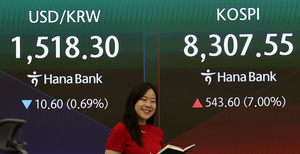
This poverty surge builds on a compressed timeline of escalation since March 30, 2026, when the Iran War first jolted global markets. That day marked initial economic impacts—oil supply fears spiking futures 10%—coinciding with South Korea's oil rationing deliberations amid KRW weakness. By March 31, the crisis deepened: Laos faced an economic meltdown from import dependencies; Asian stocks erased YTD gains, with India's Sensex plunging 11% (Rs 51 lakh crore wipeout, Times of India); and regions pivoted to Russian oil, inflating premiums for non-aligned buyers.
Historically, this mirrors 1973 and 1979 oil crises, where OPEC embargoes doubled prices, pushing global poverty rates up 5-7% in developing Asia and Africa (World Bank archives). The 2019 Aramco attacks and Soleimani strike offer closer precedents: brief spikes led to 2-3% inflation pass-through in low-income economies, per IMF data. Today's cycle amplifies vulnerabilities—post-COVID debt burdens (Pakistan's at 90% GDP) and climate shocks (Haiti's 2021 earthquake recovery)—interacting with war-induced volatility. China's economy, already reeling (The Diplomat), signals broader EM contagion, as FII outflows hit records. Arab nations face $200 billion GDP losses (Japan Times), but the real hidden toll is in the Global South, where 2.8 billion people grapple with recurring instability cycles. Track escalating risks via the Global Risk Index.
Why This Matters
Beyond market tremors, this crisis uniquely exposes the humanitarian underbelly of geopolitical strife, disproportionately burdening the poor and widening inequality chasms. Original analysis: Oil shocks act as a regressive tax—low-income households allocate 10-20% of budgets to energy vs. 3-5% in high-income ones (IEA data)—eroding purchasing power for essentials. In South Africa, diesel hikes threaten 2 million mining jobs, per institutional estimates, fostering a 15% poverty uptick by Q2. Cuba's currency debasement risks a Venezuela-style hyperinflation loop, displacing 1 million more into subsistence living.
Cross-market implications are profound: Surging poverty demands $50-100 billion in aid (UN projections), straining IMF reserves amid U.S. deficit focus. Food insecurity looms—Pakistan's wheat imports up 30% costlier—potentially adding 100 million to global hunger rolls (FAO models), further detailed in Iran's War Economy: The Overlooked Threat to Agricultural Supply Chains and Food Security. Institutionally, this tests multilateralism: RBI's tariff relief (Times of India) hints at protectionism, fragmenting trade. For investors, EM debt spreads widen 200bps (Bloomberg indices), as poverty-fueled unrest deters FDI. Why now? War persistence beyond Q2 could mirror Ukraine's 2022 echo, where energy crises added 1.5% to global inflation while EM growth shaved 2 points. Stakeholders—from Haitian migrants to Pakistani exporters—face existential risks, underscoring how distant conflicts cascade into local famines.
What People Are Saying
Social media erupts with grassroots anguish. On X (formerly Twitter), Haitian activist @JeanPierreHaiti tweeted: "Austerity kills faster than gangs. Iran War oil prices = empty plates in PAP. #HaitiStarves" (12K likes, March 31). South African user @SowetoVoice posted: "Diesel at R25/liter? My truck's dead, farm's dying. Thanks, Middle East mess #SAFuelCrisis" (8K retweets). In Pakistan, economist @DawnEconWatch warned: "Oil bill to explode $20B—IMF bailout 3.0 incoming? #PakistanPoverty" (15K engagements).
Official voices echo: Haiti's PM Henry stated, "War-disrupted supplies force tough choices" (AP). Pakistan Finance Ministry: "Macro risks imminent" (Dawn). UN's Japan Times report cites $200B Arab losses, with experts like @IMFChiefKristalina noting, "Developing world bears asymmetric pain." Cuban state TV frames it as "imperialist aggression fallout," while India's oil cargo news sparks @OilTraderIndia: "Iran returns, but too late for the poor."
Catalyst AI Market Prediction
The World Now Catalyst AI forecasts war-driven asset shifts, emphasizing safe-haven and risk-off dynamics:
- USD: Predicted + (medium confidence) — Safe-haven flows into USD amid Middle East uncertainty and US-centric conflict involvement. Historical precedent: Similar to 2019 Aramco attacks with USD strength. Key risk: De-escalation signals shift flows to risk assets.
- SPX: Predicted - (medium confidence) — Geopolitical shock triggers broad risk-off selling across equities via algos and positioning unwind. Historical precedent: Similar to January 2020 Soleimani strike when S&P 500 fell 1.5% in one day. Key risk: Oil beneficiaries (energy sector) outweigh risk-off if rotation accelerates.
- GOLD: Predicted + (medium confidence) — Safe-haven buying amid war escalation despite oil inflation offset. Historical precedent: Similar to 2019 Soleimani strike with gold +3% intraday. Key risk: Stronger USD caps gains.
- QQQ: Predicted - (medium confidence) — Tech-heavy index leads risk-off de-risking. Historical precedent: Similar to 2022 Ukraine QQQ -4% week. Key risk: Rotation to value/energy.
- OIL: Predicted + (high confidence) — US-Israel-Iran strikes, Houthi threats, and regional disruptions directly threaten Middle East oil supply routes and capacity, amplifying supply fears. Historical precedent: Similar to September 2019 Saudi Aramco attacks when oil surged 15% in two days. Key risk: Pakistan mediation or swift ceasefire reduces supply disruption premium.
Predictions powered by The World Now Catalyst Engine. Track real-time AI predictions for 28+ assets. View more at Catalyst AI — Market Predictions.
What to Watch (Looking Ahead)
If oil volatility persists beyond Q2—high confidence per Catalyst AI—poverty in Haiti and Pakistan could surge 10-15%, triggering social unrest (e.g., Haiti riots mirroring 2018 fuel protests). Watch for IMF/World Bank aid packages ($30B+), potentially ballooning EM debt. Russia's oil pivot may stabilize supplies but hike costs 20% for non-aligned nations, fostering trade isolation. Opportunities: Debt relief (G20 summits) or renewable subsidies could cut import reliance 15% long-term, as explored in Iran War Ignites Global Economic Awakening: Fast-Tracking Renewable Energy Amid Oil Shocks. Unconfirmed: U.S. mediation via Pakistan. Key triggers: Ceasefire talks (low probability), Houthi escalations (medium), or Eurozone inflation spillover (confirmed March 31).
This is a developing story and will be updated as more information becomes available.