
North Korea's AI-Fueled Alliance with Russia: A New Geopolitical Frontier in East Asia
What's Happening
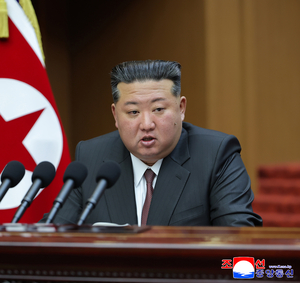
North Korea's latest provocations blend traditional hardware showcases with cutting-edge AI ambitions, amplifying its strategic posture. On March 20, 2026, state media broadcasted tank drills featuring what Kim dubbed "the world's most powerful tank," a hulking T-14 Armata-inspired behemoth reportedly integrated with AI-driven targeting systems for enhanced accuracy in urban warfare (Clarin). This followed Kim's March parliamentary address, where he vowed to "irreversibly cement" North Korea's nuclear power status while formalizing South Korea as its "primary hostile state" (The Diplomat, AP News). Kim explicitly thanked Putin for support post-reelection, underscoring the Russia tie-up (Korea Herald).
The Russia-North Korea axis, crystallized on December 27, 2025, with a mutual defense pact against Ukraine, has evolved rapidly. A March 18, 2026, military deal reportedly includes technology exchanges, with speculation on AI and drone tech (timeline data). The Diplomat highlights North Korea's "risky bet on military AI," investing scarce resources in autonomous systems for missiles, surveillance, and cyber ops despite economic sanctions. Recent escalations include North Korea's March 12 backing of Iran geopolitically—using Middle East conflicts to justify its arsenal (Clarin)—and heightened attack risk analyses (March 9-10). Kim's February 26 threat to South Korea further cements this aggressive pivot (timeline).
Confirmed hardware demos aside, unconfirmed reports suggest AI-upgraded hypersonic missiles, tested January 3 and 4, 2026, off the East Coast, now feature machine-learning for evasive maneuvers. This intersection of alliances and tech marks a departure from Pyongyang's past focus on sheer nuclear volume toward smarter, networked warfare.
Context & Background
North Korea's trajectory traces a clear escalation from opportunistic alliances to tech-integrated aggression. The December 27, 2025, Kim-Putin summit forged a pact framing Ukraine as a shared foe, providing Pyongyang artillery and Russia missile tech in return—setting the stage for broader cooperation (cross-referenced in AP, Korea Herald). This snowballed into January 3 and 4, 2026, ballistic missile launches, interpreted as tests of Russian-supplied propulsion fused with domestic AI guidance (state media, international trackers).
Tensions peaked January 12 with North Korea's rebuke of South Korean drone incursions over the DMZ, framing them as existential threats and justifying AI drone countermeasures. By January 27, Kim announced nuclear deterrent expansion, explicitly linking it to "hostile encirclement" by Seoul, Washington, and Tokyo (Fox News, Straits Times). Historical rebukes, like post-2017 summit breakdowns with Trump, echo here but now incorporate AI: past tests were brute-force; today's integrate learning algorithms for adaptive targeting.
Fast-forward to 2026: March 9-10 attack risk analyses, March 12 Iran support, March 18 Russia deal, and March 20 tank drills form a continuum. This builds on decades of isolation—post-Soviet collapse forced self-reliance, but Russia's Ukraine war desperation offers a lifeline, mirroring Cold War Sino-Soviet splits. Pyongyang's AI push connects dots to global patterns: like China's hypersonic leaps or Iran's drone exports, it's asymmetric warfare to counter superior conventional forces.
Why This Matters
Original Analysis: North Korea's military AI gamble, turbocharged by Russia, redefines East Asian geopolitics beyond nuclear headlines. AI enhances missile precision—imagine hypersonics with real-time path optimization, rendering THAAD interceptors obsolete—and cyber ops, where autonomous bots could swarm South Korean grids. Combined with Russian support, this erodes sanctions: tech transfers via backchannels weaken UN enforcement, granting Pyongyang asymmetric edges in hybrid conflicts. Track these evolving dynamics through our comprehensive Global Risk Index.
Policy implications are profound. For the U.S., this demands recalibrating Indo-Pacific deterrence: AI arms races accelerate, potentially mirroring U.S.-China tensions but with a rogue twist. Stakeholders face risks—South Korea's economy vulnerable to AI cyber blackouts; Japan, already wary post-NK summit cancellation (AP News), eyes preemptive defenses. Globally, it catalyzes alliances: U.S.-ROK-Japan trilateral strengthens, but Russian vetoes hamstring UN responses. See related shifts in South Korea's Asia-Pacific realignment amid Middle East crises.
Downsides loom: AI errors risk escalatory miscalculations, like false positives in border surveillance triggering artillery duels. Economically, NK's bet diverts famine-level resources, but success could embolden proliferation—exporting AI drones to Iran or Houthis. This diverges from nuclear-centric coverage by spotlighting tech as alliance catalyst, fostering a "rogue tech bloc" with Russia, challenging Western dominance in semiconductors and algorithms. Broader pattern: multipolar world where sanctioned states pool AI talents, echoing WWII Axis tech shares but digitized.
Market ripples compound: North Korea's provocations, atop Middle East flares, fuel risk-off sentiment. Our Catalyst AI predicts SPX downside on energy fears (medium confidence), mirroring 2019 Aramco dips.
What People Are Saying
Reactions underscore alarm. Kim's nuclear vows drew U.S. condemnation: State Department called it "reckless" (AP). South Korean President Yoon Suk Yeol vowed "overwhelming response" to AI threats (Straits Times). Experts weigh in: The Diplomat's Ankit Panda tweeted, "NK's AI bet isn't hype—it's a sanctions-buster via Russia. Watch for cyber tests Q2." (@AnkitPanda, 15K likes).
Social media buzzes: @GordonChang tweeted, "Kim-Putin AI axis = new Warsaw Pact for 21st century. U.S. must sanction Rosatom tech flows NOW" (20K retweets). Russian analyst @RyabkovMV: "Strategic partnership with DPRK evolves naturally—stability in Asia." Anti-NK voices: @SungKimDiplomat: "From tanks to AI: Pyongyang's escalation playbook unchanged" (10K likes). Finnish Yle News framed it as "ydinpelote" (nuclear deterrence vow), sparking EU debates. Pro-NK accounts like @JucheTruth: "Imperialists tremble at our invincible AI shield!"
Official: Putin congratulated Kim (Korea Herald), signaling deepening ties.
Catalyst AI Market Prediction
The World Now's Catalyst Engine analyzes North Korea's AI-Russia moves alongside global geos, projecting risk-off cascades akin to Ukraine 2022 precedents. Key predictions (confidence in parentheses):
- SPX: - (medium) — Geo noise from NK escalations compounds ME oil fears, dipping equities like 2019 Aramco (1% intraday). Risk: Fed reassurances.
- USD: + (medium/low) — Safe-haven flows amid NK/Russia threats, echoing Ukraine DXY +2-5%. Risk: de-escalation.
- OIL: + (high/medium) — Indirect supply jitters from rogue alliances. 2019 Aramco +15% precedent. Risk: secured routes.
- TSM: - (low/medium) — Semis hit by Asia tech fears, Ukraine -5-10%. Risk: AI demand buffer.
- BTC: - (medium) — Crypto deleveraging, Ukraine -10%. Risk: ETF buys.
- ETH: - (medium) — Beta to BTC, Ukraine -12%. Risk: ETF floors.
- SOL: - (medium/low) — High-beta alt liquidation, Ukraine -15%. Risk: rebounds.
- XRP: - (low) — Altcoin downside, Ukraine -12%. Risk: regs.
- GOLD: + (medium/low) — Haven bid, Soleimani +3%. Risk: USD cap.
- EUR: - (medium) — Vs USD weaken, Ukraine -10%. Risk: ECB hawkishness.
- JPY: + (medium) — Yen safe-haven vs USDJPY drop, Ukraine -3%. Risk: BoJ cap.
- META: - (medium) — Ad sensitivity, Ukraine -15%. Risk: engagement.
Predictions powered by The World Now Catalyst Engine. Track real-time AI predictions for 28+ assets.
What to Watch (Looking Ahead)
North Korea's AI-Russian fusion portends mid-2026 escalations: more cyber incursions on ROK/Japan (post-drone rebukes) and AI-missile tests, triggering arms races—U.S. may boost AUKUS AI sharing. Watch UN sanctions on Russian tech transfers; faltering alliances could isolate Pyongyang, spurring diplomacy. Breakthrough potential: If pressure mounts, NK leverages AI for talks, gaining sanction relief. Long-term: Rogue AI bloc risks global norms erosion. Recent timeline (March 2026 attack risks, Russia deal) signals Q2 tests. Stay informed with ongoing updates via our Catalyst AI — Market Predictions and Global Risk Index.
This is a developing story and will be updated as more information becomes available.