
North Korea Rocket Tests 2026: Kim Jong Un and Daughter Kim Ju Ae Oversee 'Deadly Yet Attractive' Nuclear-Capable Launchers in Firepower Strike Drill
What's Happening
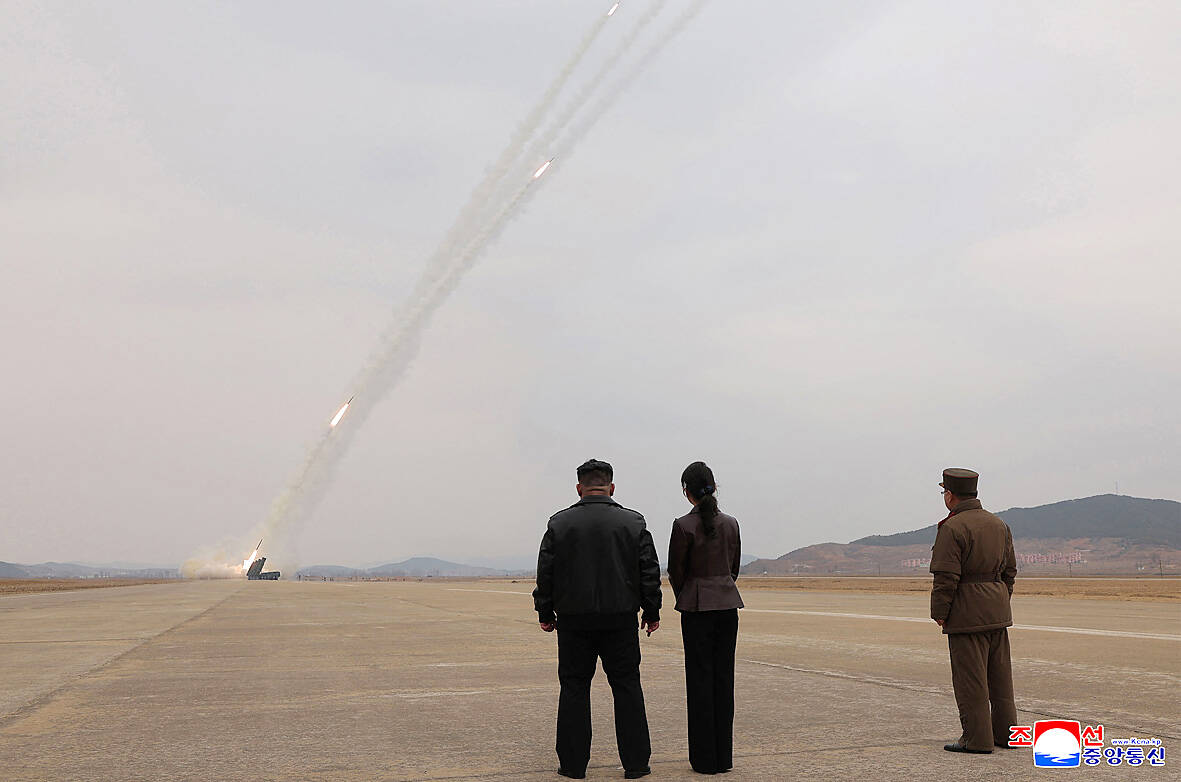
The latest development unfolded on March 16, 2026, when North Korea's Korean Central News Agency (KCNA) announced a successful live-fire drill involving 600 mm multiple rocket launchers, described as "nuclear-capable" by international observers. These systems, capable of striking targets with pinpoint accuracy over extended ranges, were fired in a simulated strike scenario, hitting mock targets with what state media called "overwhelming destructive power." Confirmed details include the launchers' ultra-precision guidance, allowing for salvo fire that could overwhelm air defenses, and their potential integration with North Korea's growing arsenal of tactical nuclear warheads. This firepower strike drill represents a significant escalation in North Korea's series of rocket tests, emphasizing advanced military capabilities.
What sets this test apart is the public involvement of Kim Jong Un alongside his daughter, Kim Ju Ae, estimated to be around 13-15 years old based on prior appearances. Photographs released by KCNA show the pair observing the launches from an elevated platform, with Kim Jong Un applauding as rockets streaked skyward in fiery trails. This is not the first time Ju Ae has appeared publicly—having debuted at missile tests in late 2022—but her presence here amplifies the human element, portraying a multi-generational commitment to the regime's military posture. North Korean rhetoric amplified the spectacle, labeling the launchers "deadly yet attractive," a phrase that blends menace with an almost aesthetic allure, suggesting weapons that are both fearsome and mesmerizing. The Kim Ju Ae rocket test appearance has sparked global speculation about North Korea's leadership succession plans.
Confirmed facts from sources: The drill occurred at a western coastal site, involved 10 launch vehicles firing multiple rounds, and was framed as a "drill for super-powerful strike at the enemies' bases." No immediate provocations, such as incursions, were reported as triggers, distinguishing it from prior tests. Unconfirmed elements include the exact nuclear integration status—while South Korean and U.S. intelligence assess these as nuclear-capable, Pyongyang has not explicitly claimed arming them with warheads in this instance.
This event fits into North Korea's broader signaling strategy, projecting internal unity to its populace amid economic hardships from sanctions and isolation. For global audiences, it's a reminder of Pyongyang's ability to stage theatrics that dominate headlines, forcing reactions from Washington, Seoul, and Tokyo without direct confrontation. As North Korea rocket tests intensify, they serve as a key barometer for regional stability.
Context & Background
North Korea's rocket tests are rarely isolated; they form a deliberate escalation ladder, rooted in a strategy of psychological buildup that began intensifying post-2025. The timeline reveals a step-by-step provocation: On December 27, 2025, Kim Jong Un and Russian President Vladimir Putin forged a public alliance, ostensibly against Ukraine aid but signaling deeper military-technical cooperation, including potential rocket technology exchanges. This pact, which ties into Russia's Expanding African Footprint: How Iran Shahed Drone Deals Fuel Geopolitical Ventures in Africa and Beyond, emboldened Pyongyang, leading to a missile test off the East Coast on January 3, 2026, followed by a ballistic missile launch on January 4—both splashing down in Japan's exclusive economic zone, ratcheting up tensions.
Escalation continued on January 12, 2026, when North Korea issued a sharp rebuke to South Korea over alleged drone incursions near the border, accusing Seoul of "hostile acts" and vowing retaliation. This verbal salvo preceded the January 27 announcement of plans to expand its nuclear deterrent, including mass production of warheads and enrichment facilities—a direct response to perceived U.S.-South Korea military drills.
Recent events layer on further context: February 26, 2026, saw Kim Jong Un threaten South Korea with "total destruction" in state media. By March 9-10, analyses from The World Now highlighted "North Korea attack risks" at medium-to-high levels, amid reports of troop movements. On March 12, Pyongyang backed Iran in a geopolitical signal, aligning with anti-Western axes as explored in Escalating Shadows: How Iran Tensions Are Redrawing Global Alliances in Unexpected Ways.
This pattern mirrors historical precedents, like the 2017 "fire and fury" cycle, where tests built a narrative of inevitability. The current rocket drill, coming months after initial salvos, demonstrates mastery of incremental provocation—each step normalizing aggression, deterring intervention by portraying North Korea as an unpredictable wildcard in a volatile landscape shaped by U.S.-China rivalry and Russia's Ukraine war. These dynamics also influence broader Asia-Pacific security, including Asian Navies Rising: How India's and Japan's Roles Are Reshaping Middle East Security Amid Hormuz Tensions.
Why This Matters
Beyond technical specs, North Korea's demonstrations excel in psychological warfare, wielding spectacles like the Kim family duo to craft an aura of legitimacy and resolve. Kim Ju Ae's presence humanizes the regime, signaling continuity to a domestic audience starved of positive news amid famine risks and blackouts. It whispers to elites: "The line endures," fostering loyalty through familial symbolism that echoes dynastic propaganda from the Kim Il Sung era. Globally, it unnerves adversaries—U.S. policymakers see a unified front less prone to internal collapse, while South Koreans grapple with the emotional toll of a leader grooming his heir amid threats.
The "deadly yet attractive" rhetoric is a masterstroke of soft power inversion. By aestheticizing destruction, Pyongyang normalizes its arsenal, shifting discourse from outright terror to reluctant fascination. This fosters inevitability: Weapons aren't just tools of war but icons of sovereignty, pressuring negotiators to engage rather than isolate. In the Asia-Pacific, it ripples outward—Japan bolsters missile defenses, South Korea debates preemptive strikes, and China urges restraint to avoid refugee crises. Check the Global Risk Index for real-time assessments of these escalating threats.
Original analysis: This isn't mere brinkmanship; it's perceptual deterrence. Historical data shows such displays correlate with negotiation leverage—post-2018 summits, tests resumed to reset bargaining power. Economically strained (GDP per capita ~$1,300), North Korea uses these for psychological dividends, deterring sanctions enforcement by raising escalation costs. Human impact: For 26 million North Koreans, it's morale booster amid defections; for border families in South Korea, it's trauma reignited, with PTSD rates spiking post-tests.
Market-wise, geo-escalations trigger risk-off cascades, as seen in prior crises. This test, amid Iran backing, amplifies that, with potential ties to US-Iran Escalation Hits Home: Midwest Communities Face Unprecedented Geopolitical Pressures.
Catalyst AI Market Prediction
The World Now Catalyst AI engine forecasts immediate market reactions to North Korea's tests, blending geo-risk with historical precedents:
- BTC: Predicted - (medium confidence) — Risk-off sentiment from geo-escalations prompts deleveraging in leveraged crypto positions despite ETF inflows. Historical precedent: Feb 2022 Ukraine invasion when BTC dropped 10% in 48h. Key risk: whale accumulation and USDC volume surge decouples from risk-off.
- SPX: Predicted - (high confidence) — Broad risk-off positioning as Middle East war fears (echoed by NK-Iran ties) trigger algorithmic selling and VIX spike. Historical precedent: 2006 Israel-Lebanon War when S&P fell 2% in a week. Key risk: contained oil supply fears limit equity derating.
- SOL: Predicted + (medium confidence) — SOL benefits from BTC ETF inflow halo effect and altcoin rotation in risk-on crypto sentiment. Historical precedent: 2024 ETF approval saw SOL +25% in 48h tracking BTC. Key risk: Aviation/geo risk-off sells high-beta alts.
- BTC: Predicted + (high confidence) — $767M ETF inflows over 5 days and whale accumulation at $71K directly boost spot demand, overriding minor regulatory noise. Historical precedent: January 2024 ETF approval drove BTC +20% in 48h on inflow momentum. Key risk: Sudden risk-off cascade from Hormuz escalation hits leveraged longs.
- SPX: Predicted - (medium confidence) — Missouri storms disrupt ag/transport, sparking localized risk-off and aviation volatility contagion (compounding geo-fears). Historical precedent: Hurricane Katrina Aug 2005 caused SPX -2% in 48h on energy fears. Key risk: Damage assessments prove minimal.
Predictions powered by The World Now Catalyst Engine. Track real-time AI predictions for 28+ assets.
What People Are Saying
Social media erupted with reactions blending alarm, analysis, and memes. On X (formerly Twitter), @GordonGChang tweeted: "Kim's daughter at rocket test? Pyongyang's signaling dynasty forever. West must respond firmly—#NorthKorea." (12K likes, March 16). South Korean netizen @SeoulWatcher posted: "Another test, families in DMZ on edge again. When does this end? #KimJuAe" (8K retweets), humanizing the border anxiety.
Experts weighed in: Bruce Klingner, Heritage Foundation, told Fox News, "The 'attractive' line is psyops gold—makes nukes seem inevitable." KCNA quoted Kim praising troops' "loyalty." Anti-regime voices like @NKWatch: "Ju Ae's smile hides starvation—propaganda for parades, not people."
What to Watch
Expect heightened diplomacy: U.S.-South Korea joint statements within 48 hours, possibly UNSC sessions. China may mediate quietly, fearing instability. Predictions: Renewed U.S. talks if tests persist, leveraging economic concessions like aid for freezes—historical trend post-2019.
Risks loom: Miscalculation with South Korea/Japan patrols could spark skirmishes, especially amid NK's economic strains (food shortages up 20%). Proxy conflicts via Iran-Russia ties possible. Internally, tests consolidate Kim's power; backlash might pivot to covert ops like cyberattacks.
Broader: Watch VIX spikes, BTC volatility per Catalyst AI. If pattern holds, April tests likely, testing alliances. Stay updated via the Global Risk Index for comprehensive threat tracking.
Looking Ahead
As North Korea's rocket tests in 2026 evolve, the international community must navigate this delicate balance of deterrence and diplomacy. The involvement of Kim Ju Ae signals long-term strategic continuity, potentially reshaping succession narratives and alliance dynamics. Monitor for further escalations that could impact global markets and security frameworks, with psychological deterrence remaining a cornerstone of Pyongyang's approach.
This is a developing story and will be updated as more information becomes available.