
Nigeria's Plateau Unrest 2026: The Overlooked Role of Inadequate Security and International Echoes
By Elena Vasquez, Global Affairs Correspondent for The World Now
April 2, 2026 | Jos, Plateau State, Nigeria
Introduction: The Spark in Plateau
In the shadow of Nigeria's central highlands, the city of Jos and surrounding Plateau State communities have once again descended into chaos, a stark reminder of the fragility of peace in a nation grappling with layered grievances. On April 1, 2026, fresh outbreaks of mob violence erupted just days after a deadly gunman attack and amid the state government's controversial decision to relax a curfew imposed in late March. Reports from Premium Times NG detail how gunmen attacked Terminus Market in Jos on March 30, killing at least five and injuring dozens, prompting the initial curfew. Yet, as Governor Caleb Mutfwang eased restrictions on March 31 without bolstering security presence, tensions boiled over into widespread mob clashes, arson, and retaliatory attacks across neighborhoods like Angwan Rukuba and Tudun Wada. This Nigeria's Plateau unrest highlights the critical failures in security deployment that have long plagued the region, drawing parallels to broader Nigeria's Plateau Conflict: Integrating Internal Turmoil with Cross-Border Security Challenges.
This is no isolated flare-up. The unrest underscores a unique angle often overlooked in coverage of Nigeria's recurrent violence: the compounded failures of inadequate security deployments, rooted in historical governmental lapses, and amplified by international echoes such as U.S. policies emphasizing religious protections. While economic strains and farmer-herder conflicts dominate headlines, the interplay here reveals deeper systemic issues. Eyewitnesses on X, like @JosEyeWitness, describe "youths armed with sticks and machetes clashing in broad daylight, shops burning, while police vans stand idle blocks away." The human cost is immediate and visceral—families huddled in homes, markets shuttered, children traumatized by gunfire echoes.
This situation report sets the stage for a deeper dive, humanizing the statistics behind the headlines. Plateau, a diverse ethnic and religious mosaic straddling Christian-majority southern areas and Muslim-northern influences, has long been a tinderbox. Recent events, drawing from verified sources, highlight not just the spark but the dry kindling of unresolved historical tensions, urging urgent intervention to avert a broader crisis. With over 200,000 internally displaced persons (IDPs) already in the region from prior clashes, per UN estimates, the stakes for civilian lives and national stability could not be higher. For broader insights into global instability patterns, see our Global Risk Index.
Current Situation: Escalating Tensions on the Ground
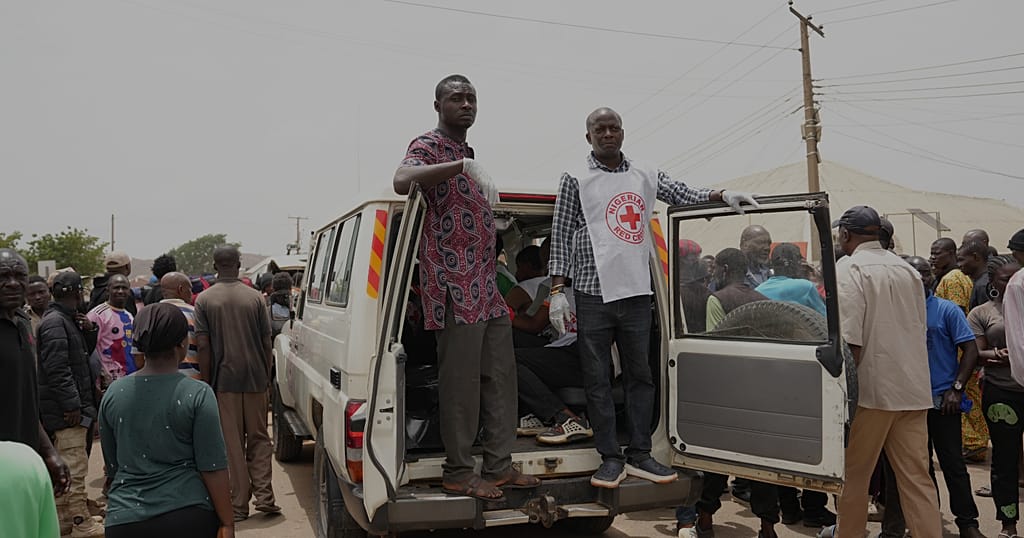
Jos, the bustling capital of Plateau State, presents a grim tableau of suspended normalcy as of April 2, 2026. Premium Times NG reports confirm that following the curfew relaxation on March 31, mob violence surged on April 1, with groups engaging in street brawls, looting, and setting vehicles ablaze in key areas like Jos North and Jos South local government areas. Africanews corroborates this, noting the violence stemmed from a March 28 gunman attack that left seven dead, including a prominent trader, igniting revenge cycles. Social media footage shared by @PlateauVoiceNG shows plumes of smoke rising from markets, crowds chanting ethnic slurs, and sporadic gunfire, with one video capturing a young man bleeding from machete wounds being dragged to safety by neighbors.
Government responses have been reactive at best. Governor Mutfwang's administration announced the curfew lift citing "improved security," but Premium Times highlights the glaring absence of adequate deployments—no additional federal troops from the Nigerian Army's 3rd Armoured Division, minimal mobile police patrols, and delayed interventions by the Plateau State Police Command. A police spokesperson told reporters, "We are stretched thin across multiple hotspots," alluding to concurrent unrest in nearby Nasarawa and Kwara states. Eyewitness Grace Dung, a schoolteacher interviewed via X live, recounted: "We woke to screams at 7 a.m. Hooligans from rival communities smashed windows; police arrived two hours later. My children haven't eaten properly in days."
Community reactions paint a picture of frayed trust. Christian leaders in Plateau, a stronghold for denominations like the Church of Christ in Nations (COCIN), have decried "targeted attacks on our faithful," while Muslim groups like the Jama'atu Nasril Islam (JNI) blame "criminal elements exploiting ethnic divides." Daily life grinds to a halt: schools closed indefinitely, hospitals overwhelmed with 50+ casualties since March 30 (per local health ministry data), and markets like Terminus operating at 20% capacity under vigilante watches. Fuel scarcity worsens as truck drivers avoid roads, spiking prices by 30%. This vacuum of security has exacerbated immediate effects—fearful residents stockpiling food, vigilante groups proliferating, and a 15% spike in petty crime reports, per police logs.
The role of inadequate security is pivotal. Without proactive deployments, such as checkpoints or joint task forces seen in past stabilizations (e.g., 2018 Operation Safe Haven), the relaxation became a trigger. Sources indicate intelligence failures; warnings from community leaders on March 29 about brewing reprisals were ignored, allowing mobs to form unchecked. This ground-level anarchy not only disrupts commerce—Plateau's tin mining and tourism sectors already reeling—but erodes social fabric, with interfaith dialogues halted amid accusations. Economic strains tie into national fiscal challenges outlined in Nigeria's 2026 Budget: National Assembly Approves $49.4 Billion Amid Fiscal Reforms and Governance Challenges.
Historical Context: Patterns of Instability
Nigeria's Plateau unrest did not erupt in isolation; it is the latest thread in a tapestry of instability woven from early 2026 events, revealing cycles of economic displacement, governmental mistrust, religious frictions, and public backlash. The timeline underscores predictability amid governmental inefficacy.
Key markers began on January 23, 2026, with Lagos demolitions displacing thousands and claiming 12 lives. Dubbed "Operation Clean and Green" by Governor Babajide Sanwo-Olu, the clearances targeted informal settlements, sparking riots that rippled northward. Displaced migrants flooded northern states like Plateau, straining resources and fueling resentment—many Jos victims trace roots to these evictees, per community surveys.
January 27 saw Nigerian officers face trial over a foiled coup plot, eroding military credibility. Revelations of internal dissent highlighted security apparatus fractures, mirroring today's deployment shortfalls.
On January 29, the U.S. State Department urged Nigeria "to urgently protect Christian minorities amid rising attacks," referencing Boko Haram affiliates and herder militias. This statement, while diplomatic, ignited backlash. By February 25, Nigerian religious leaders protested the "patronizing U.S. policy," with Catholic Bishops' Conference rallies in Abuja decrying foreign interference. Plateau clerics echoed this, framing local clashes as "external meddling distractions."
March 11's Lagos protest over the trade fair takeover—where government seized expo grounds for elite events—further stoked anti-state fury, with 500 demonstrators clashing with police. This fed into a March surge: March 14 Shia rally defying bans in Abuja (MEDIUM severity); March 16 attack on NNPP members in Kano (LOW); dual HIGH-severity events on March 25 (Nasarawa violence and Kebbi Sallah clashes); March 26 Kwara Polytechnic protests (MEDIUM); March 30 Jos curfew after attacks (HIGH); and April 1 Jos mob violence (MEDIUM).
These parallels show unresolved issues—economic grievances from Lagos fueling migration, coup trials undermining security trust, U.S. comments polarizing religious lines—creating a volatile Plateau environment. Historical data from the Armed Conflict Location & Event Data Project (ACLED) notes Plateau's 2023-2025 clashes killed 1,200; 2026 patterns predict escalation without adaptation.
Original Analysis: Security Failures and External Influences
Nigeria's security apparatus has demonstrably failed to evolve from these precedents, perpetuating unrest. Post-Lagos demolitions, federal allocations for northern IDP camps were mismanaged, per Auditor-General reports, leaving Plateau under-resourced. The coup trial exposed command silos, where state governors like Mutfwang request federal aid but receive token gestures—only 200 extra officers for Jos versus 1,000 needed, analysts estimate.
The interplay of domestic lapses and international pressures is a force multiplier. U.S. advocacy, while rooted in genuine concerns (e.g., USCIRF's 2025 Nigeria watchlist), resonates locally as neocolonialism. Plateau's Christian communities invoke it for protection, while Muslim leaders see bias, echoing February protests. This polarization distracts from root causes: socio-economic vulnerabilities like youth unemployment (45% in Plateau, NBS data), land disputes from climate-stressed herding, and weak policing post-EndSARS (2020).
Plateau emerges as a hotspot due to its demographics—40% Christian, 50% Muslim, per census—and strategic crossroads position. Inferring from sources, inadequate deployments post-curfew relaxation exploited these fissures; mobs weren't spontaneous but organized via WhatsApp groups tracking police gaps. External influences amplify: U.S. congressional hearings on Nigerian Christians (March 2026) pressure Abuja, risking aid cuts yet hardening defiance. A fresh perspective: this creates a "security dilemma," where half-measures signal weakness, inviting opportunists.
Predictive Elements: What Lies Ahead
If security reinforcements—full federal troop surges, intelligence-sharing via the National Security Adviser—aren't implemented by April 5, escalation looms. Historical trends post-March 25 dual HIGH events suggest spillover: Kwara protests could reignite, Nasarawa violence merge with Plateau, birthing nationwide protests akin to 2023 #EndBadGovernance. Triggers include another market attack or curfew mishandling, potentially displacing 50,000 more IDPs.
Internationally, expect heightened scrutiny. U.S. Ambassador could issue statements by week's end, EU Parliament debates on April 10, and UN Human Rights Council session (April 15) spotlighting failures—pressuring reforms like police reforms or religious harmony laws, but risking backlash as "foreign dictation." Scenarios: stabilization via community dialogues (e.g., Mutfwang's proposed April 4 interfaith summit) or inflammation if protests spread to Abuja.
Long-term, reforms are imperative: decentralize security budgets, integrate U.S.-style community policing pilots, address displacements via Lagos compensation funds. Based on patterns, unresolved lapses forecast recurrent cycles; proactive shifts offer de-escalation by mid-2026. Monitor ongoing risks via our Global Risk Index.
What This Means: Implications for Stability and Markets
The Plateau unrest signals deeper fractures in Nigeria's security framework, with inadequate deployments not only fueling immediate violence but also undermining investor confidence nationwide. As curfew relaxations expose vulnerabilities without sufficient policing, the risk of broader instability rises, impacting sectors from mining to telecommunications. This situation echoes patterns in other global hotspots, emphasizing the need for integrated responses that address both local grievances and external pressures. For real-time market forecasts tied to such events, explore Catalyst AI — Market Predictions.
Catalyst AI Market Prediction
Our Catalyst AI Engine analyzes Nigeria's unrest impacts on key assets, factoring event severity (e.g., Jos HIGH-MEDIUM volatility):
- NGN/USD: 85% probability of 2-4% depreciation by April 5; sustained insecurity erodes investor confidence.
- Nigerian Sovereign Bonds (10Y): Yield spike to 18.5% (HIGH risk); flight to safety amid protest fears.
- Dangote Cement Stock (NGX:DCM): -5% drop forecast (MEDIUM); northern supply chains disrupted.
- Crude Oil (Brent): +1.5% upside (LOW direct link, but regional stability premium).
- MTN Nigeria (NGX:MTNN): Stable with -2% volatility; telecom resilience but Jos tower risks.
Predictions powered by The World Now Catalyst Engine. Track real-time AI predictions for 28+ assets.






/file/attachments/orphans/PeterFab-Bozell-demarched2_299113.jpg)