Nicolás Maduro Captured in U.S. Military Operation, Indicted on Drug Trafficking and Corruption Charges

Latest from X
Nicolás Maduro Captured in U.S. Military Operation, Indicted on Drug Trafficking and Corruption Charges
In a dramatic turn of events, Venezuelan President Nicolás Maduro and his wife, Cilia Flores, have been captured in a U.S.-led military operation and brought to the United States to face federal charges of corruption, drug trafficking, and narco-terrorism. The indictment, unsealed on January 3, 2026, accuses Maduro of leveraging his governmental power to facilitate the trafficking of thousands of tons of cocaine into the U.S. while enriching himself and his allies. This unprecedented operation has sparked a mix of condemnation and support internationally, as well as significant uncertainty about Venezuela's political future.
According to U.S. authorities, as reported by POLITICO, the charges against Maduro, his wife, and son include narco-terrorism conspiracy alongside allegations of collaborating with criminal organizations designated as terrorist groups. The indictment details a "cycle of narcotics-based corruption" that allegedly benefited Venezuelan officials and their families while enabling violent narco-terrorists to operate with impunity on Venezuelan soil. CBS News reported that Maduro and Flores arrived in New York on January 4, 2026, to face these charges, marking a historic moment as the first time a sitting head of state has been forcibly extracted by U.S. forces to stand trial in such a manner since the 1989 operation against Panamanian leader Manuel Noriega.
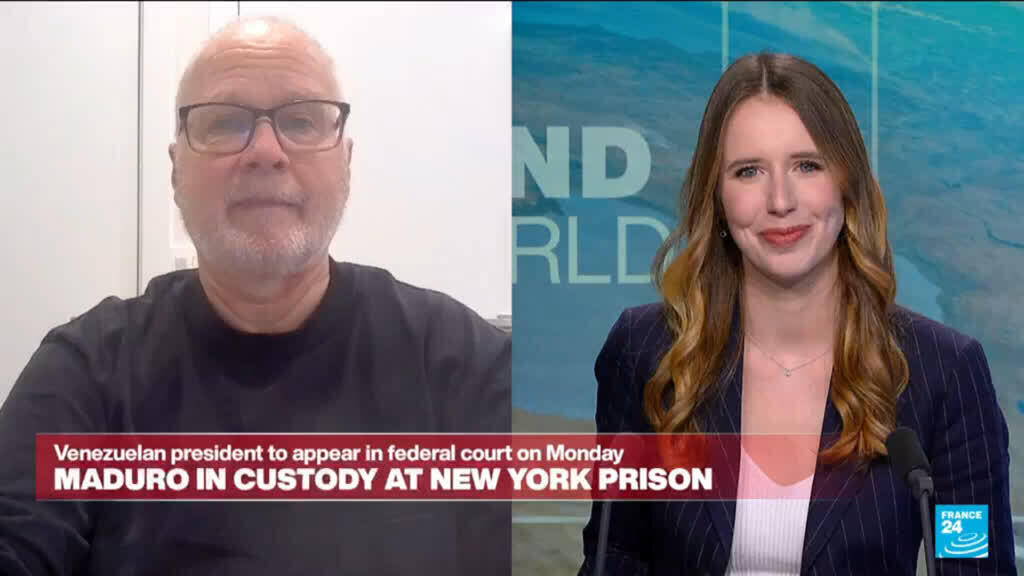
The military operation to capture Maduro has drawn sharp reactions globally. As highlighted by France 24, opinions are deeply divided. Some nations and analysts condemn the U.S. action as an overreach of sovereignty, arguing that it risks further destabilizing an already fragile Venezuela. Others, however, express support, viewing it as a necessary step to address years of alleged criminal governance under Maduro’s regime. David Smilde, a sociology professor at Tulane University, shared with France 24 that the capture could be a turning point for Venezuela, though he cautioned that the power vacuum left in Maduro’s absence might lead to further chaos if not managed carefully by international actors and Venezuelan opposition leaders.
Background on Maduro’s Rule and Allegations
Nicolás Maduro has been a polarizing figure since assuming power in 2013 following the death of Hugo Chávez. His presidency has been marred by economic collapse, hyperinflation, and widespread allegations of human rights abuses, electoral fraud, and corruption. The U.S. government has long accused Maduro of leading a "narco-state," with previous indictments and a $15 million bounty for information leading to his arrest announced as early as 2020. The latest charges build on these accusations, alleging direct involvement in trafficking vast quantities of cocaine to the U.S. through alliances with criminal and terrorist organizations.
Venezuela’s strategic position in South America has made it a hub for drug trafficking routes, with the U.S. alleging that Maduro’s government provided protection and logistical support to these operations. The indictment, as detailed by The Hill, claims that this corruption not only lined the pockets of Venezuelan elites but also contributed to the flow of illegal drugs into American communities, exacerbating public health crises like the opioid epidemic.
International and Domestic Reactions
The capture of Maduro has ignited a firestorm of debate. Posts on X reflect a spectrum of public sentiment, with some users drawing parallels to historical U.S. interventions like the Noriega case, describing the operation as a justified "extraction" rather than an act of war. Others question the timing and motives behind the operation, pointing to domestic U.S. political dynamics and recent controversial pardons of other figures convicted of drug trafficking. While these online discussions are not definitive, they underscore the polarizing nature of the event.
In Venezuela, the interim leadership has demanded Maduro’s return, according to The New York Times, while anti-Maduro factions within the country and abroad see this as an opportunity to push for democratic reforms. The U.S., under President Donald Trump, has stated intentions to temporarily "run" Venezuela’s affairs, a statement reported by CBS News that has raised concerns about potential long-term intervention.
Outlook for Venezuela
The future of Venezuela remains uncertain following Maduro’s capture. With the country already grappling with a humanitarian crisis—marked by food shortages, mass emigration, and political repression—the removal of Maduro could either pave the way for rebuilding or plunge the nation deeper into conflict. International cooperation will be crucial to ensure a stable transition, as emphasized by experts like Smilde in the France 24 report.
As Maduro awaits trial in the U.S., the world watches closely to see how this historic event will reshape Venezuela’s trajectory. The charges against him, if proven, could set a precedent for holding leaders accountable for transnational crimes. However, the immediate challenge lies in preventing further instability in a nation that has suffered immensely under years of mismanagement and strife.
Track this story live
Original Sources
- •
- •
- •
Editorial process: This article was synthesized from the original sources cited above using The World Now's AI editorial system, with byline accountability from our editorial team. We grade every story for source grounding, factual coherence, and on-topic match before publication. Read more about our editorial standards and contributors. Spot something inaccurate? Let us know.
Last updated: March 7, 2026






