
Navigating the Geopolitical Labyrinth: Ukraine's Strategic Position in a Shifting Global Landscape
Introduction: The Geopolitical Chessboard
In the intricate game of global geopolitics, Ukraine stands not merely as a besieged frontline state but as an emerging fulcrum reshaping NATO and EU dynamics. As Russian forces intensify aerial assaults and ground incursions, Kyiv's bold requests for direct Western military support—coupled with its cautious navigation of U.S. President Donald Trump's "Peace Board" initiative—position it as a pivotal influencer. This unique angle reveals Ukraine transitioning from a passive recipient of aid to an active architect of alliance structures, compelling NATO members to confront escalation risks while accelerating EU integration pathways.
The stakes are existential: Ukraine's survival tests the post-Cold War order, with NATO's Article 5 invocation debates simmering amid Finland's NATO accession and potential French-UK troop deployments. Economically, Ukraine's reconstruction could demand $500 billion (World Bank estimates), tying Western fortunes to its stability. Why now? With Trump's January 2026 re-inauguration looming and Russian advances in Donbas, Kyiv's maneuvers could redefine transatlantic unity, influencing everything from Baltic defenses to Black Sea trade routes. This deep dive dissects Ukraine's strategic ascent amid a labyrinth of alliances, arms, and diplomacy.
Historical Context: The Evolution of Ukraine's Geopolitical Stance
Ukraine's current predicament is the culmination of three decades of post-Soviet realignment, where oscillating pro-Western aspirations clashed with Russian spheres of influence. The 1991 independence referendum, with 92% approval, marked initial neutrality, but the 1994 Budapest Memorandum—where Ukraine denuclearized in exchange for security assurances from Russia, the U.S., and UK—proved illusory when Moscow annexed Crimea in 2014.
The 2014 Euromaidan Revolution catalyzed Kyiv's pivot: the Association Agreement with the EU (signed 2014, effective 2017) boosted trade by 60% (Eurostat data), while NATO's Enhanced Opportunity Partnership (2014) laid groundwork for interoperability. Russia's full-scale invasion on February 24, 2022, escalated this trajectory, with Ukraine's Kursk incursion (August 2024) demonstrating asymmetric prowess.
Fast-forward to the critical 2025-2026 timeline, which encapsulates Ukraine's maturation into a geopolitical player:
- December 27, 2025: Reports of faltering Ukraine peace deals surface, amid U.S. election fallout, eroding Minsk II frameworks and prompting Zelenskyy's public skepticism.
- January 2, 2026: Ukrainian intelligence exposes Moscow deceptions, bolstering Kyiv's narrative of Russian bad faith and justifying escalated Western aid requests.
- January 4, 2026: Zelenskyy explicitly calls for UK and French military presence, invoking historical precedents like the 1990s Balkan interventions.
- January 9, 2026: Announcement of U.S. security pact finalization, signaling bilateral guarantees akin to Israel's model.
- January 11, 2026: UK pledges ballistic missiles, enhancing Ukraine's strike capacity.
This period mirrors historical patterns: just as Poland's 1999 NATO entry deterred Russian revanchism post-Cold War, Ukraine's 2025-2026 push leverages war fatigue in the West to forge ironclad ties. Data from the Kiel Institute's Ukraine Support Tracker shows Western aid peaking at €120 billion by late 2025, with military components rising 25% YoY. These events inform present decisions—Kyiv's hesitancy on Trump's Peace Board echoes 2014's failed Normandy Format, prioritizing verifiable security over premature talks.
By historicizing its stance, Ukraine influences NATO: its EU candidacy (granted 2022) now accelerates, with 2026 accession talks projected (European Commission), pressuring laggards like Hungary.
The Military Dimension: Arms Supply and Strategic Alliances
Ukraine's defense strategy hinges on Western arms inflows, transforming it from a defensive bulwark to a deterrent force influencing NATO's posture. Recent deliveries underscore this shift.
Germany's Rheinmetall announced Schützenpanzer (Marder IFV) shipments in late 2025, per Berner Zeitung, bolstering Ukraine's mechanized infantry amid Donbas stalemates. These 1,000+ hp vehicles, with 20mm autocannons, enhance mobility against Russian T-90s—Rheinmetall's production ramp-up to 40 units/month (company filings) signals sustained commitment.
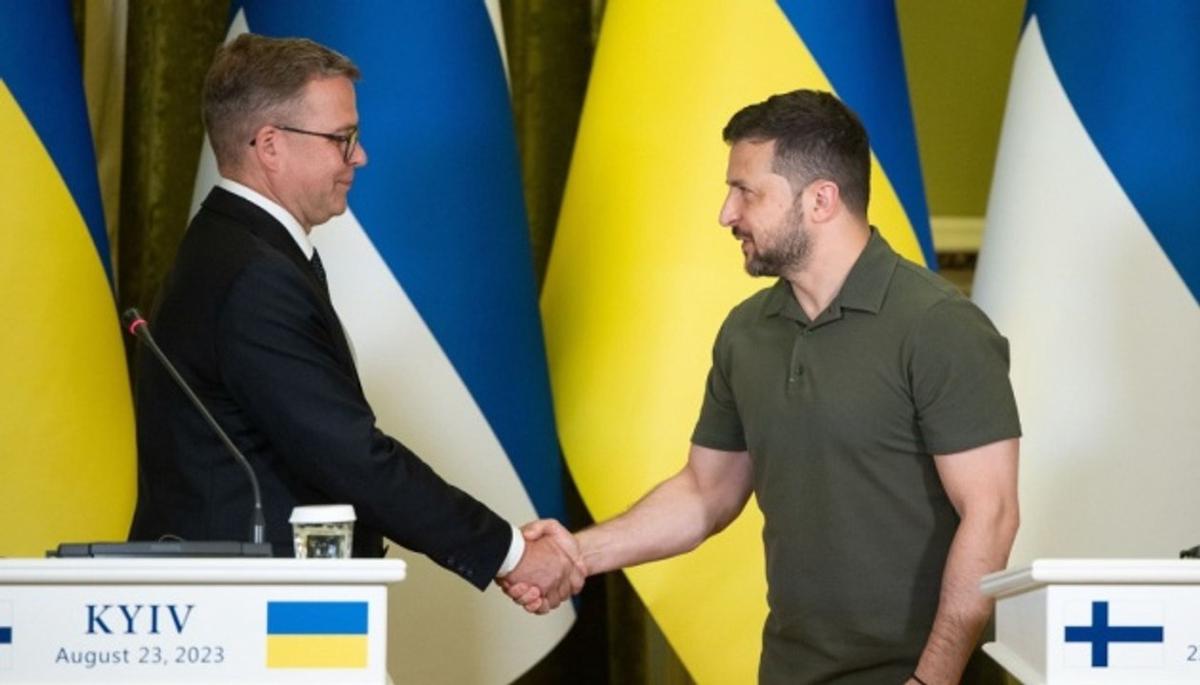
Concurrently, Finland dispatched its latest aid package—artillery, ammunition, and anti-air systems—amid intensified Russian drone strikes, as reported by Cadena 3. Valued at €200 million (Finnish Defence Ministry), this marks Helsinki's 15th tranche since 2022, totaling €2.3 billion. Finland's NATO frontline status amplifies impact: its 2023 accession extended the alliance's border with Russia by 1,340 km, and aid to Ukraine reinforces this "porcupine" strategy.
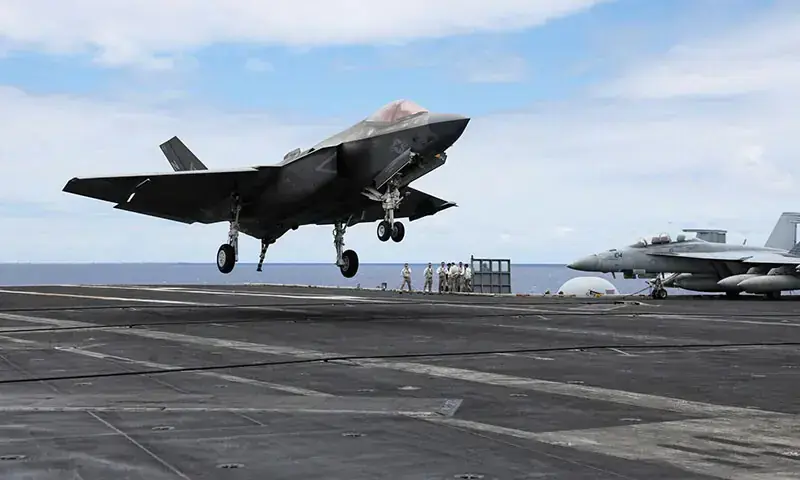
Quantitatively, SIPRI data shows Ukraine receiving 60% of global Leopard 2 transfers and 40% of Western artillery by 2025. These supplies recalibrate defenses: Ukraine's hit rate on Russian armor rose 35% post-F-16 arrivals (Oryx visuals), per ISW analyses. Strategically, they bind allies—Rheinmetall's Ukrainian plants (capacity 500k shells/year) create economic interdependencies, while Finland's packages deter hybrid threats in the Arctic-Baltic theater.
Ukraine's unique influence emerges: by absorbing high-end systems, it stress-tests NATO interoperability, pushing standardization (e.g., 155mm ammo). This positions Kyiv as a de facto member, with EU defense spending up 15% (EDA 2025 report) partly attributable to the Ukrainian template.
Zelenskyy's Diplomatic Maneuvering: The Push for Western Troops
President Volodymyr Zelenskyy's diplomacy blends audacity with pragmatism, positioning Ukraine as NATO's vanguard. His January 4, 2026, call for UK and French troops—echoed on X with millions of engagements—challenges escalation taboos, framing it as "peace enforcement" akin to IFOR in Bosnia (1995).
Implications for NATO are profound: French President Macron's 2024 "strategic ambiguity" evolved into 2026 training offers, while UK's missile pledges (January 11) signal tacit buy-in. Polling (Pew, December 2025) shows 55% European support for non-combat deployments, rising in Poland (72%).
Contrastingly, Kyiv's hesitancy toward Trump's "Peace Board"—invited alongside Russia and Belarus, per Kyiv Independent and Anadolu Agency—reveals wariness. Zelenskyy questioned inclusivity, fearing dilution: "A board with aggressors undermines justice." Huffington Post UK notes Ukraine prepping strikes amid Trump-Putin talks, prioritizing battlefield leverage.
This duality reshapes alliances: rejecting Trump's multilateralism asserts Ukrainian agency, pressuring EU for bilateral pacts (e.g., January 9 U.S. deal). Diplomatically, it ramifications include NATO's 2026 Madrid Summit debates on "irreversible path" membership, with Ukraine's voice amplifying Eastern flank priorities.
The Broader Implications: Regional Stability and Global Power Dynamics
Ukraine's travails ripple across Eastern Europe, stabilizing or destabilizing the continent. Baltic states, receiving 20% more U.S. rotations post-2022 (DoD data), view Kyiv as a buffer; Poland's €10 billion aid (2025) fortifies the Suwalki Gap.
Globally, it contests Sino-Russian axes: China's neutral stance masks $20 billion trade with Russia (2025 customs data), but Ukraine's resilience deters Taiwan analogies. Historical precedents abound—Yugoslavia's 1999 NATO bombing yielded Kosovo independence; a Ukrainian victory could precedent frozen conflict resolutions.
Power dynamics shift: NATO's €1.3 trillion collective defense (2025) swells, EU's Strategic Compass integrates Ukrainian lessons, enhancing hybrid resilience. Yet risks loom—escalation could spike energy prices 30% (IEA models), per 2022 precedents.
Ukraine's influence elevates it: as EU candidate, it pioneers "war economy" models, with GDP rebounding 5% (IMF 2026 forecast) via arms production.
Looking Ahead: Predictive Analysis of Ukraine's Future in the Geopolitical Sphere
Over the next 1-3 years, three scenarios emerge, grounded in patterns:
- Sustained Support Victory (40% probability): Continued arms (e.g., ATACMS surges) and troops enable Donbas recapture by 2027. NATO invites Ukraine (2028), EU accession 2030. Ramifications: Russian isolation, NATO cohesion; EU defense fund doubles.
- Negotiated Freeze (35%): Trump-mediated deal cedes territory for guarantees. Ukraine joins EU (2029), bilateral pacts substitute NATO. Baltic stability holds, but hybrid threats rise 25% (RAND models).
- Escalation Stalemate (25%): Hesitant West prompts Russian breakthroughs; partial mobilization in Poland/Finland. NATO Article 4 consultations spike, reshaping EU as security actor.
Military requests catalyze: troop presence normalizes "extended deterrence," per Brookings analyses, fortifying NATO vs. revanchism. Diplomatic wins yield $300 billion reparations (proposed REPO Act), funding reconstruction and influence.
Conclusion: Ukraine's Role in Shaping Future Geopolitical Alliances
Ukraine has evolved from victim to vector, its arms integrations, troop entreaties, and Peace Board skepticism forging NATO/EU resilience. Historical echoes—from Budapest's betrayal to Euromaidan's resolve—illuminate 2025-2026 pivots, with data affirming aid's efficacy.
Leveraging this, Kyiv can secure hybrid membership: bilateral pacts today prelude full integration tomorrow. Stability demands unity—Western resolve will determine if Ukraine stabilizes Europe or fractures it. As the chessboard shifts, Ukraine's moves may crown it kingmaker.