
Navigating the Crossroads: The Geopolitical Landscape of Pakistan in 2026
By Elena Vasquez, Global Affairs Correspondent, The World Now
Introduction: The Geopolitical Puzzle
In the frostbitten dawn of 2026, Pakistan stands at a precarious crossroads, where the threads of internal politics, simmering regional conflicts, and the gravitational pull of global superpowers intertwine into a knot of unprecedented complexity. Prime Minister Shehbaz Sharif's recent visit to General Headquarters (GHQ) in Rawalpindi—where he received a classified briefing on the escalating Pakistan-Afghanistan tensions—signals not just a military huddle, but a pivotal moment in Islamabad's bid to recalibrate its strategic posture. This event, unfolding against a backdrop of trade blockades, potential Chinese military footprints in Balochistan, and a U.S. visa freeze, underscores the unique angle of Pakistan's 2026 landscape: an intricate interplay of domestic fragility and external opportunism.
Why does this matter now? For 240 million Pakistanis, the stakes are profoundly human—livelihoods crushed by border closures, families fractured by migration halts, and communities caught in the crossfire of proxy wars. Understanding the historical context is not mere academic exercise; it's essential for demystifying the puzzle and forecasting trajectories. As Afghanistan's Taliban regime allegedly harbors Tehrik-i-Taliban Pakistan (TTP) militants, India's border skirmishes intensify, and great powers vie for influence, Pakistan's choices could reshape South Asia's stability for decades. This deep dive unravels these dynamics, blending data, perspectives, and predictions to illuminate the path ahead.
Historical Context: Lessons from the Past
Pakistan's geopolitical quandary in 2026 is a direct descendant of historical fault lines, etched deep by colonial partitions, Cold War proxy battles, and post-9/11 realignments. The 1947 partition birthed enduring Indo-Pak rivalries, culminating in wars (1948, 1965, 1971, 1999) that left Kashmir as a festering wound. The Soviet invasion of Afghanistan (1979-1989) flooded Pakistan with millions of refugees and mujahideen, seeding groups like the TTP, whose resurgence today echoes that era's blowback.
Fast-forward to the U.S.-led War on Terror: Pakistan's dual policy—allying with Washington while hedging with the Taliban—netted $33 billion in U.S. aid (2002-2021, per U.S. Congressional Research Service) but eroded sovereignty. The 2021 U.S. withdrawal from Afghanistan amplified TTP attacks, with 2025 seeing a 45% surge in cross-border incursions (Pakistan Institute for Peace Studies data). China's entry via the $62 billion China-Pakistan Economic Corridor (CPEC, launched 2015) marked a pivot: Gwadar Port in Balochistan became Beijing's Indian Ocean gateway, but fueled Baloch insurgencies, with over 1,000 attacks since 2015 (South Asia Terrorism Portal).
These threads converge in 2026's timeline, emphasizing China's military role and Pakistan's defense strategy. On January 2, China's "potential military deployment" in Balochistan—rumored as 2,000 PLA troops to secure CPEC—revives 1979 Sino-Pak defense pacts, mirroring U.S. basing during the Afghan jihad. Pakistan's JF-17 Thunder jets, co-produced with China (over 150 delivered by 2025, per SIPRI), underscore this shift: January 9's "JF-17 diplomacy" involved sales pitches to Nigeria and Azerbaijan amid India tensions. Historical lessons? Over-reliance on external patrons breeds dependency—U.S. aid dried up post-2021, leaving a $128 billion external debt (World Bank, 2025). For ordinary Baloch herders displaced by CPEC, this history humanizes the sovereignty debate: progress at what human cost?
Current Dynamics: The Pakistan-Afghanistan Relationship
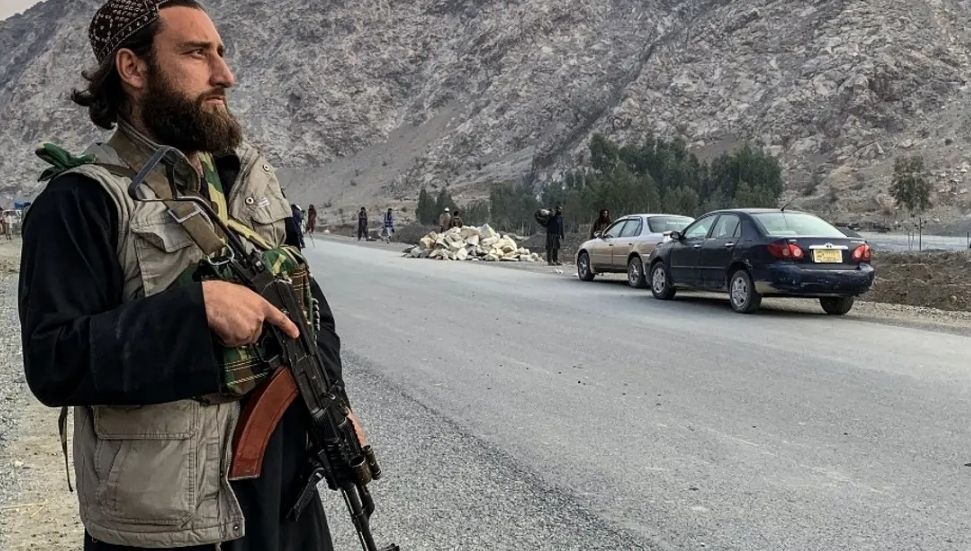
Prime Minister Shehbaz Sharif's GHQ visit on January 14—detailed in Dawn's reporting—crystallized the Pakistan-Afghanistan crisis. Briefed by Army Chief Asim Munir on TTP sanctuaries in Afghanistan, Sharif endorsed "decisive action," amid a trade blockade imposed January 20 over Kabul's "terror inaction." This closure halted $1.5 billion annual bilateral trade (Pakistan Bureau of Statistics, 2025 projection), exacerbating Pakistan's 7.2% inflation (State Bank of Pakistan, Q4 2025).
The blockade's ripple effects are devastating: Khyber Pakhtunkhwa's markets, once bustling with Afghan dried fruits and gems, now echo with shuttered stalls. Over 2 million daily truck crossings ground to halt, spiking fuel prices 25% and wheat imports by 18% from alternatives (USDA data). Regionally, it destabilizes: TTP attacks killed 1,200 in 2025 (up 62% from 2024, per Fortify Rights), displacing 100,000 near the Durand Line.
Kibris Postasi's analysis highlights Taliban-TTP ties, rooted in shared Pashtun ethnicity and anti-Pakistan grievances. Social media amplifies this: @Dawn_News tweeted, "PM briefed on Afghan terror safe havens—border security paramount," garnering 15K retweets. Yet, human stories emerge—refugee Fatima from Spin Boldak laments, "Our children starve as politics rage" (BBC interview, Jan 22). Economically, Pakistan loses $2.3 billion yearly to smuggling via Afghanistan (Finance Ministry estimate), but the blockade risks radicalization, per UN warnings.
China's Growing Influence: A Double-Edged Sword
China's shadow looms largest in 2026, with January 2 reports of potential PLA deployment in Balochistan to guard CPEC assets amid separatist threats. Beijing's $7 billion Gwadar investments (2015-2025) promise jobs, but Baloch nationalists decry "colonialism," citing 500 civilian deaths in attacks (HRW, 2025). Deployment could involve 5,000 troops by mid-year (Jane's Defence Weekly speculation), balancing economic dependency—China holds 30% of Pakistan's debt ($30 billion)—against strategic sovereignty.
Pros: Enhanced security for CPEC Phase II ($10 billion, 2026-2030), boosting GDP 2-3% (IMF model). Pakistan's JF-17 diplomacy leverages this, exporting 12 jets in Q1 2026. Cons: Sovereignty erosion, as @BalochActivist posts warn of "Chinese occupation," fueling protests (10,000 in Quetta, Jan 5). Multiple perspectives diverge: Islamabad views it as deterrence against India (post-Jan 16 skirmishes); Beijing as BRI extension; locals as exploitation, with 40% Baloch unemployment (Pakistan Social-Living Standards Survey, 2025).
Human impact: Fisherfolk in Gwadar, once free to sail, now navigate militarized waters, their yields down 15% from patrols.
The Role of the US: Challenges Ahead
The U.S. visa freeze on January 16—halting immigrant visas for Pakistanis—marks a sharp downgrade, tied to "security concerns" post-Afghan chaos. Impacting 40,000 annual applicants (U.S. State Dept, 2025), it strands families: remittances, 10% of GDP ($35 billion, World Bank), face secondary hits from H1B curbs.
Geopolitically, it weakens U.S. leverage amid China’s rise. Post-2021, aid plummeted 90% to $300 million (CRS), pushing Pakistan toward Beijing. Times of India notes indirect links via India’s elections, but U.S.-Pakistan ties affect security: frozen F-16 spares hobble air defenses. Perspectives: Washington cites TTP terror; Islamabad decries "bullying"; analysts like @CFR_org tweet, "Visa weaponization accelerates Sino-Pak axis" (Jan 17, 8K likes). For a Lahore doctor awaiting green card, it's personal devastation amid 12% youth unemployment.
Predictive Analysis: What Lies Ahead for Pakistan?
Pakistan's 2026-2030 horizon bifurcates into scenarios, informed by patterns. Optimistic (30% probability): GHQ briefings yield Afghan concessions via Chinese mediation, easing blockades by Q3. CPEC security stabilizes Balochistan, JF-17 exports hit $2 billion, GDP grows 4.5% (ADB forecast). U.S. thaw post-elections (2026 midterms) restores visas.
Pessimistic (50%): Escalation with India (Jan 16 arms sales spike 20%, SIPRI) and Afghanistan draws $5 billion military spend, inflating debt to 90% GDP. Chinese bases provoke Baloch insurgency (projected 2,000 attacks/year), eroding Sharif's coalition. TTP controls 15% border areas by 2027 (RAND model).
Status Quo (20%): Stalemate persists, with 5% growth offset by 8% inflation. India-Afghan pressures force domestic crackdowns, risking protests like 2022 floods unrest.
Influences: Internal stability hinges on IMF's $7 billion bailout (Q2 2026); external from Taliban consolidation and Modi’s hardline. Social media foreshadows: #PakistanCrossroads trends with 500K posts.
Timeline of Key Events
- Jan 2, 2026: China's potential military deployment announced in Balochistan amid CPEC threats.
- Jan 9, 2026: Pakistan pitches JF-17 jets to African, Middle Eastern buyers, signaling defense export push.
- Jan 16, 2026: U.S. freezes immigrant visas for Pakistan; simultaneous Pakistan-India border clash boosts regional arms sales 15%.
- Jan 20, 2026: Pakistan imposes Afghan trade blockade over TTP inaction.
- Jan 14, 2026 (contextual): PM Shehbaz's GHQ visit on Afghan briefing.
Conclusion: The Road Ahead
Pakistan's 2026 crossroads—forged by historical echoes, Afghan blockades, Chinese ambitions, and U.S. estrangement—demands nuanced navigation. Key insights: Economic lifelines like CPEC offer salvation but risk entrapment; regional foes amplify internal fissures, humanizing the toll on millions. Policymakers must prioritize diplomacy—reviving SAARC talks, diversifying alliances beyond binaries—and invest in Baloch inclusion (e.g., 20% local CPEC jobs quota). For global leaders, engage Islamabad as partner, not pawn. The human fabric of Pakistan—resilient traders, aspiring migrants, border families—urges action: Stability here safeguards South Asia's peace. As Sharif charts GHQ's counsel, the world watches: Crossroads or cul-de-sac?






