
Multiple Indonesian Volcanoes Show Heightened Activity: Marapi Erupts, Semeru and Merapi Remain Active, Ibu Spews Ash
Jakarta, Indonesia – Indonesia's volcanic landscape has entered a period of elevated unrest, with Gunung Marapi erupting on January 8, 2026, triggering lahar flood warnings, alongside ongoing activity at Semeru and Merapi volcanoes, and a fresh eruption at Gunung Ibu on January 9. Authorities have urged vigilance in affected regions as the archipelago, situated on the Pacific Ring of Fire, grapples with simultaneous volcanic threats.
Gunung Marapi, located in West Sumatra, erupted early on Thursday, January 8, 2026, at approximately 03:39 GMT. The event, classified as medium severity by monitoring agencies, prompted immediate warnings from authorities about potential lahar floods—fast-moving mudflows triggered by rainwater mixing with volcanic debris. Lahars pose significant risks to downstream communities, infrastructure, and agriculture, especially during the rainy season prevalent in Sumatra. No immediate casualties were reported, but evacuation advisories were issued for nearby villages, emphasizing preparedness for secondary hazards.
Just a day later, on Friday, January 9, 2026, at around 11:10 GMT, both Semeru in East Java and Merapi in Central Java were reported as actively erupting at medium severity levels. Semeru, Indonesia's most active volcano, has been in a state of near-continuous eruption since 2020, characterized by lava flows, ash plumes, and pyroclastic surges. Its ongoing activity continues to displace thousands and disrupt air travel in the region. Similarly, Merapi, one of the country's most dangerous volcanoes due to its proximity to densely populated areas like Yogyakarta, exhibits persistent dome growth and gas emissions, maintaining a medium alert status.
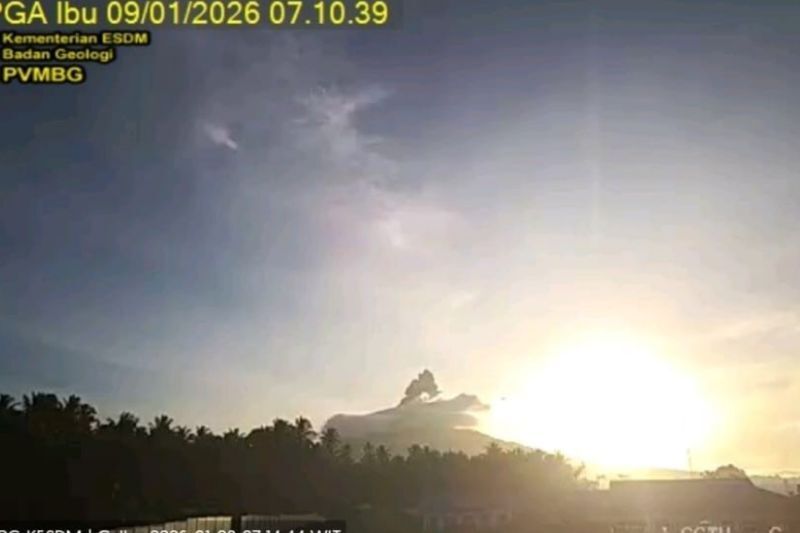
Adding to the concerns, Gunung Ibu on Halmahera Island in North Maluku erupted on January 9, 2026, spewing ash columns up to 400 meters high, as reported by local media and the Pusat Vulkanologi dan Mitigasi Bencana Geologi (PVMBG). According to Elshinta and Koran Jakarta, the eruption scattered ash over the surrounding area, prompting flight restrictions at nearby airports and alerts for residents in West Halmahera. The ash plume's height underscores the volcano's potential for broader atmospheric impacts, though no major evacuations were immediately ordered.
Background on Indonesia's Volcanic Hotspot
Indonesia hosts over 120 active volcanoes, more than any other nation, owing to its position straddling multiple tectonic plates in the Ring of Fire. This geologically dynamic zone accounts for about 90% of the world's earthquakes and 75% of its active volcanoes. Recent years have seen intensified activity: Marapi's December 2023 eruption killed 11 hikers and injured dozens, highlighting vulnerabilities in popular trekking areas. Semeru's 2021 collapse triggered deadly pyroclastic flows, killing 44, while Merapi's 2010 eruption claimed 353 lives and forced over 350,000 evacuations.
PVMBG maintains a multi-level alert system, with Level III (medium, as in these cases) indicating heightened unrest requiring restricted access zones, typically 3-5 km from craters. The agency employs seismic monitoring, gas sampling, and satellite imagery to track developments. Climate factors, such as monsoon rains, exacerbate risks by increasing lahar probabilities.
Official Responses and Impacts
Indonesia's National Disaster Mitigation Agency (BNPB) has coordinated with local governments to distribute masks, monitor air quality, and prepare shelters. For Marapi, lahar-prone rivers like the Batang Puni are under close watch. Semeru's activity has led to the extension of its exclusion zone to 5 km on the southeast flank and 13 km on the Kobokan River drainage. Merapi's alert perimeter stands at 3-7 km, with warnings against climbing.
Airlines have adjusted routes to avoid ash clouds from Ibu and Semeru, which can damage engines and reduce visibility. Economic fallout includes disruptions to tourism in Java and Sumatra, key sectors employing millions. Agriculture faces threats from ashfall blanketing farmlands, potentially affecting rice and coffee production.
Experts note that while these events are within normal parameters for these volcanoes, simultaneous activity across Sumatra, Java, and Maluku warrants sustained monitoring. PVMBG Director General Agus Budi Darmono stated in recent updates that "volcanic systems are interconnected through tectonics, but each eruption is assessed independently."
Outlook
As of January 10, 2026, all four volcanoes remain at Level III alerts. Forecasters predict possible escalation, with rain-induced lahars a primary concern for Marapi. Residents are advised to heed evacuation drills and avoid prohibited zones. International volcanologists, including from the USGS, continue to support Indonesia's efforts through data sharing.
Indonesia's robust early warning systems have mitigated worst-case scenarios in past events, but the clustering of activity serves as a reminder of the archipelago's inherent risks. Ongoing vigilance from authorities and compliance from the public will be crucial in the coming days.
(Word count: 612)