
Minor Earthquakes Rattle Peru: M4.6 Near Changuillo and M3.5 in Arequipa Over Weekend
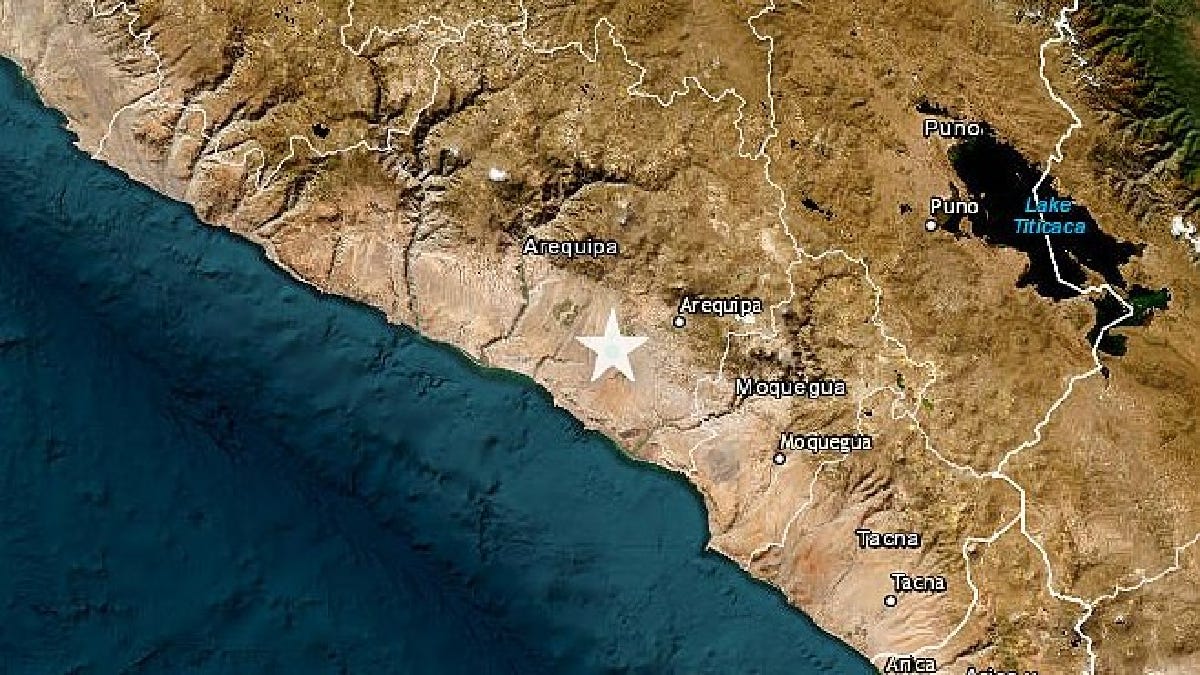
LIMA, Peru — Two low-severity earthquakes struck Peru over the January 9-10 weekend, prompting routine monitoring by authorities but causing no immediate reports of damage or injuries. The first, a magnitude 4.6 tremor centered 29 kilometers southwest of Changuillo in the Ica region, occurred on Friday evening, followed by a magnitude 3.5 quake in the Arequipa region the next day.
The initial event hit at 21:36:53 UTC on January 9, 2026 (4:36 p.m. local time in Peru), at a depth of 53 kilometers, according to seismic data. Classified as low severity, the quake was felt in nearby areas but did not trigger widespread alerts. Changuillo, a small community in the Nazca province, lies in a seismically active zone along Peru's southern coast.
Less than a day later, on Saturday, January 10 at 17:39:35 UTC (12:39 p.m. local time), a magnitude 3.5 earthquake shook the Arequipa region. Local media outlet RPP reported the tremor as having "remeció la región esta mañana" (shaken the region this morning), noting its occurrence without specifying immediate impacts. Arequipa, Peru's second-largest city and a major economic hub in the south, experienced the shaking amid clear skies and routine weekend activity.
Peru's Geophysical Institute (IGP) and the Center for Seismic and Tsunami Studies (CENSITAD), which monitor national seismic activity, classified both events as low intensity on the Modified Mercalli Intensity scale, typically correlating with magnitudes below 5.0. No tsunami warnings were issued, as both quakes originated inland or at moderate depths insufficient for significant wave generation.
Eyewitness accounts from social media and preliminary reports indicated light shaking in affected areas. For the Changuillo event, residents in Ica and surrounding provinces described brief jolts that rattled windows and dishes but led to no structural concerns. In Arequipa, the shallower tremor was felt across urban and rural zones, with some locals evacuating buildings out of caution, a common response in earthquake-prone Peru.
Seismic Context in Peru
Peru sits squarely on the Pacific Ring of Fire, a 40,000-kilometer horseshoe-shaped belt where 90% of the world's earthquakes occur due to tectonic plate interactions. The country experiences over 1,000 tremors annually, most minor, stemming from the subduction of the Nazca Plate beneath the South American Plate at rates of up to 7-10 centimeters per year. This process generates frequent intermediate-depth quakes like the 53-kilometer Changuillo event, as well as shallower ones near the coast.
Historically, southern Peru has borne the brunt of major seismic activity. The 2007 Pisco earthquake (magnitude 8.0) devastated Ica, killing over 500 and injuring thousands, while Arequipa was scarred by the 2001 Camaná quake (magnitude 8.4), which claimed 26 lives. More recently, a 7.5-magnitude quake struck northern Peru in November 2021, underscoring the region's vulnerability. Despite these, low-magnitude events like the recent pair rarely cause harm, serving primarily as reminders for preparedness.
The National Civil Defense Institute (INDECI) maintains a network of over 600 seismic stations nationwide, integrated with international bodies like the USGS and GFZ German Research Centre for Geosciences. Post-event protocols include rapid assessments via apps like "Sismo Móvil" and public alerts through the national emergency system. Following the weekend quakes, IGP issued standard advisories urging residents to identify safe zones indoors and prepare emergency kits.
Government and Expert Response
Peruvian authorities responded swiftly with situation reports. CENSITAD confirmed the parameters of both events via real-time bulletins, emphasizing no aftershock sequences of note as of Sunday morning. "These are typical for our geography," an IGP spokesperson noted in a standard release, aligning with patterns observed in 2025, which saw over 500 quakes above magnitude 3.0.
Experts attribute the uptick in detections to improved instrumentation rather than anomalous activity. Peru's seismic rate remains steady at 3-5 events per day on average, with magnitudes 4.0-5.0 comprising about 10%. International monitoring confirms no escalation in stress along the Nazca-South American boundary.
Outlook and Preparedness
While these quakes pose minimal risk, they highlight Peru's ongoing need for resilience. The government has invested in retrofitting infrastructure, particularly in high-risk cities like Arequipa and Lima, following recommendations from the World Bank and UNDRR. Public drills, such as the annual "Perú se prepara," simulate major events to build awareness.
As monitoring continues, seismologists watch for potential aftershocks, though probabilities remain low. Residents are advised to follow INDECI guidelines: drop, cover, and hold during tremors, and check utilities afterward. With no damage reported, life in Changuillo, Arequipa, and beyond resumes normally, but the events reinforce Peru's status as one of Latin America's most seismically vigilant nations.
(Word count: 712)