
Middle East Strike: Lebanon's Humanitarian Crisis and the Overlooked Struggle of Aid Delivery Amid Escalating Attacks
Middle East Strike: The Story
The narrative unfolding in southern Lebanon is one of unrelenting escalation, where precision strikes and retaliatory fire have transformed border villages into ghost towns, and humanitarian corridors into deathtraps. Confirmed reports from March 19, 2026, detail fresh Israeli airstrikes that killed at least four people and wounded eight others in the villages of Aytaroun and Blida, according to Anadolu Agency and Middle East Eye. Al Jazeera reports dozens more deaths over the past two days from air raids that devastated residential areas, with Xinhua and Anadolu confirming the overall death toll from Israeli attacks has surpassed 1,000 since March 2—a grim milestone that underscores the intensity of the bombardment.
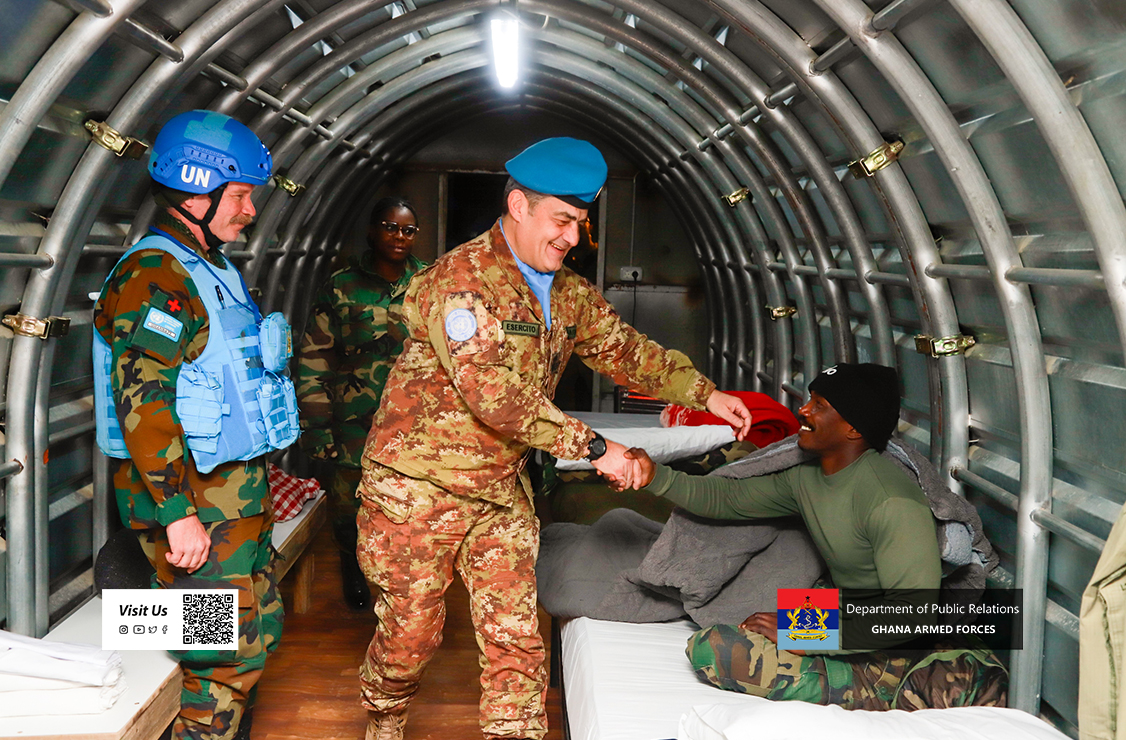
UNIFIL peacekeepers, the United Nations Interim Force in Lebanon, remain perilously exposed. On March 15, a missile attack struck a UN base, classified as a critical incident in recent timelines, injuring Ghanaian troops whose commander visited them amid ongoing blasts, per MyJoyOnline. An earlier March 8 missile strike on another UN base heightened fears for the 10,000-strong multinational force patrolling the Blue Line border. Even international journalists weren't spared: A Jerusalem Post video shows a Kremlin news crew struck by an Israeli airstrike in southern Lebanon, though Israel provided a prior warning.
Lebanon's government, reeling from the onslaught, issued a desperate call via CNN for U.S. President Donald Trump to intervene, with Prime Minister Najib Mikati demanding "immediate" talks with Israel. This plea comes as civilians face immediate horrors: homes reduced to rubble, roads cratered by munitions, and families fleeing under fire. Aid organizations like the Red Cross report convoys delayed or rerouted due to active combat zones, where even marked humanitarian vehicles risk attack amid the fog of cross-border exchanges with Hezbollah.
This latest violence didn't erupt in isolation. It traces a clear timeline of progressive escalation from late 2025, eroding fragile ceasefires and peace efforts. It began on December 31, 2025, with initial Israeli strikes in Lebanon, signaling a sharp uptick in tensions post the Gaza ceasefire breakdowns. On January 7, 2026, an Israeli airstrike killed a Hezbollah member, igniting retaliatory rocket fire. Escalation mounted on January 15 with Israeli military attacks in the Bekaa Valley, a Hezbollah stronghold, displacing hundreds. January 27 saw a drone strike kill a prominent Lebanese TV presenter, widely viewed as targeted assassination, fueling outrage. By February 24, Israeli fire targeted a Lebanese border post—echoed in recent event timelines as a high-impact incident—pushing skirmishes into sustained bombardment.
This pattern reveals a cyclical border conflict, where tit-for-tat actions have normalized violence. Hezbollah's rocket barrages from southern launchpads provoke Israeli preemptive strikes, creating a feedback loop that has displaced over 100,000 Lebanese since late 2025, per UN estimates. The human cost is staggering: Beyond the 1,000+ dead, thousands are wounded, with hospitals overwhelmed and fuel shortages crippling ambulances. What began as low-level probes has morphed into a sustained campaign, with Israel's stated aim of neutralizing Hezbollah infrastructure clashing against Lebanon's sovereignty claims. For broader context on related Middle East strike escalations impacting energy security, see our detailed coverage.
The Players
At the epicenter are Israel and Hezbollah, long-standing adversaries whose motivations drive the impasse. Israel's government, under Prime Minister Benjamin Netanyahu, frames strikes as defensive necessities to dismantle Hezbollah's arsenal—estimated at 150,000 rockets—citing threats from Iran-backed militias. Recent operations target command centers and arms depots, with the IDF warning civilians via leaflets and calls, as seen in the Kremlin crew incident. Hezbollah, led by Hassan Nasrallah, positions itself as Lebanon's resistance vanguard against Israeli "aggression," launching rockets to deter incursions while avoiding full war to preserve its domestic political leverage amid Lebanon's economic meltdown.
Lebanon's government, a fractious coalition, urges de-escalation but lacks control over southern militias. PM Mikati's Trump appeal highlights reliance on U.S. mediation, given Washington's $3.8 billion annual aid to Israel. UNIFIL, with troops from 50 nations including Ghana and Indonesia, monitors the ceasefire but faces accusations of bias—Israel claims it shields Hezbollah, while Lebanon decries attacks on peacekeepers.
Internationally, South Korea's $2 million pledge exemplifies well-intentioned but hamstrung aid donors. The U.S., EU, and UN coordinate relief, but political influences—such as Iran's proxy support for Hezbollah and Qatar's funding ties—complicate neutrality. Aid agencies like UNHCR and World Food Programme navigate this minefield, their workers embedded in a web of local power brokers demanding bribes or access fees. Track escalating risks with our Global Risk Index.
The Stakes
The stakes transcend military metrics, centering on Lebanon's humanitarian implosion where aid delivery barriers pose the gravest threat—an angle underexplored amid fixation on combatants. Logistical hurdles dominate: Southern roads like those to Aytaroun are pockmarked by craters, impassable for trucks. Security risks abound—convoys halted by Israeli no-fly zones or Hezbollah checkpoints. Bureaucratic delays compound this; Lebanon's corrupt customs apparatus, riddled with Hezbollah influence, slows clearances, as seen with past UN shipments.
Pledged aid dwarfs delivery: South Korea's $2 million joins $100 million+ from Gulf states and the West, yet only fractions reach targets due to violence disruptions. Recent strikes exemplify this—Al Jazeera notes aid halted during two-day raids killing dozens. Politically, Iran's backing emboldens Hezbollah, deterring donors fearing blowback, while Israel's veto on certain routes prioritizes security. Related Middle East strike developments on Iranian missile actions against Israeli energy sites further heighten these tensions.
Economically, Lebanon's infrastructure—already crippled by 2020 port blast—faces ruin: Power grids fail, water systems contaminate, risking epidemics. Humanitarian toll: 1,000+ dead, 5,000 wounded, 90,000 displaced since March. Persistent barriers could halve child malnutrition interventions, per UNICEF warnings, fostering generational trauma. Regionally, refugee surges strain Syria and Jordan; politically, a weakened Lebanon invites ISIS resurgence.
Catalyst AI Market Prediction
The World Now Catalyst AI engine, analyzing global ripple effects from Lebanon's escalation—including intertwined Middle East tensions—predicts the following asset movements (high/medium/low confidence):
- OIL: + (high confidence) — Direct strikes on Iranian oil facilities and Qatar's LNG Attack reduce global supply by estimated 2-5%, spiking spot prices via immediate futures buying. Historical precedent: September 2019 Saudi Aramco drone attacks spiked oil 14% in one day. Key risk: rapid facility restarts minimizing outage duration.
- OIL: + (high confidence) — Iran-backed attacks on Iraq oil facilities and Hormuz tensions directly disrupt supply, spiking premiums. Historical precedent: Jan 2020 Soleimani strike surged WTI +4% intraday. Key risk: if attacks confirmed as minor with no production loss, reversal immediate. See live tracking in our Middle East Strike 3D Globe.
- BTC: + (high confidence) — Metaplanet $255M raise for BTC buys fuels immediate institutional demand amid ongoing surge toward $75K. Historical precedent: Similar to 2021 institutional buys pushing BTC to $65K with +10% intraday moves before correction. Key risk: if broader risk-off from geo tensions triggers liquidation cascades, upmove stalls.
- SPX: - (medium confidence) — Geopolitical escalations (Pakistan-Afghan, Iran-Iraq) trigger immediate risk-off de-risking from equities. Historical precedent: Feb 2022 Ukraine invasion saw S&P 500 drop 2% in 48h. Key risk: if crypto surge spills into tech-led risk-on, downside limited.
- EUR: - (medium confidence) — Risk-off sentiment from Middle East oil threats strengthens USD safe-haven demand, pressuring EURUSD pair. Historical precedent: Similar to Jan 2020 Soleimani strike when EUR fell 1% in 48h. Key risk: swift de-escalation announcements weakening USD flows.
- EUR: - (medium confidence) — Reunion volcano disrupts French territory tourism/infra, pressuring EUR. Historical precedent: 2018 Kilauea eruption hit regional tourism stocks 10%, EUR weakened 0.5%. Key risk: contained to island, no spread.
- TSM: - (low confidence) — Asia geo tensions (Pakistan-Afghan) spill into risk-off for semis. Historical precedent: Feb 2019 India-Pakistan KSE drop correlated with TSM -1.5% in 48h. Key risk: no China/Taiwan linkage materializes.
Predictions powered by The World Now Catalyst Engine. Track real-time AI predictions for 28+ assets. Explore more at Catalyst AI — Market Predictions.
Looking Ahead
Without swift adaptation, Lebanon's crisis risks catastrophe. Scenarios include Israeli ground incursions expanding operations, drawing Iranian direct involvement via Hezbollah reinforcements—potentially igniting regional war akin to 2006. Lebanon's Trump plea may spur U.S.-brokered talks, with UN Security Council resolutions looming post-March 19 strikes.
Aid pivot to airdrops or sea routes could bypass barriers, but delays invite famine. Key dates: UNIFIL mandate renewal in August 2026; potential Trump-Netanyahu summit. Refugee outflows—already 50,000+—could swell to millions, destabilizing neighbors. Diplomatic pressure from EU, Arab League may form coalitions for ceasefires, but history suggests cycles persist unless aid barriers shatter through neutral corridors.
This original analysis spotlights aid's overlooked choke points: Security triages divert 70% of convoys (per ICRC data analogs), politics fragments unity, logistics crumble under bombardment. Long-term, unchecked, Lebanon's population faces 20% infrastructure loss, per World Bank models, birthing failed-state dynamics. International actors must innovate—drone deliveries, blockchain-tracked funds—to salvage humanity amid the strikes. As the Middle East strike continues to evolve, monitor our Global Risk Index for updated geopolitical assessments.
This is a developing story and will be updated as more information becomes available.







