
Strike Russia: Ukraine Targets Oil Sites and Ships, Killing Eight
Ukraine conducted strikes on Russian oil sites and ships, resulting in at least eight people killed in exchanges between the two countries.[1] These actions are part of a broader pattern of daily drone attacks exchanged by both Russia and Ukraine throughout their four-year war, with no progress reported in talks to end the conflict.[1] Ukrainian President Volodymyr Zelensky has vowed to increase retaliatory strikes on Russian energy sites should Moscow persist in its operations.[1] Meanwhile, Russian airstrikes have resulted in at least 10 deaths and dozens of injuries across Ukrainian cities.[4] Ukrainian drones specifically targeted Russia's Primorsk port, oil tankers, and military ships in these recent strike Russia operations.[5]
Overview of Recent Strikes
The ongoing conflict between Russia and Ukraine has seen an intensification of mutual drone and airstrike exchanges, with both sides reporting significant activity over the past 24 hours.[1][2][4] Ukraine announced strikes on several Russian ships, including a cruise missile carrier and three shadow fleet tankers, amid a barrage of hundreds of drones launched by both nations.[1] This spree of attacks underscores the relentless nature of the warfare, where explosive-packed drones have become a daily fixture since the war's outset four years ago.[1] Russian officials and Ukrainian sources alike have documented these exchanges, highlighting a lack of advancement in diplomatic efforts to halt the hostilities.[1][2]
In the latest developments, the exchanges have involved major air and drone strikes overnight, as confirmed by officials on both sides.[4] International media, including BBC World News, have corroborated the scale of these operations, noting impacts across multiple regions.[4] The pattern of daily drone volleys has persisted without interruption, contributing to a cycle of retaliation that shows no signs of abating.[1] Ukrainian forces have focused on key Russian assets, while Russian responses have targeted urban areas in Ukraine, leading to widespread disruptions.[4] This overview captures the reciprocal nature of the strikes, where each side's actions prompt immediate counteractions, perpetuating the conflict's momentum.[1][2]
The past 24 hours alone have featured waves of drones from both directions, with Ukraine claiming hits on strategic Russian maritime targets and Russia conducting airstrikes on Ukrainian positions.[1][4] Such exchanges are not isolated but represent a continuation of tactics employed throughout the war, where drones serve as primary tools for long-range engagements.[1] Reports indicate that these strikes have caused material damage and human losses, though precise assessments remain contested between the warring parties.[2][4] The absence of progress in peace talks amplifies the significance of these events, as military actions fill the void left by stalled negotiations.[1]
Ukrainian Attacks on Russian Targets
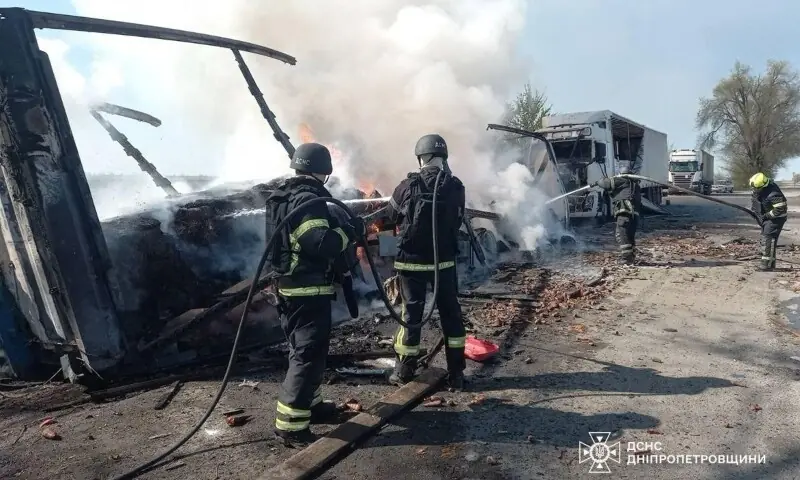
Ukrainian drones have struck key Russian infrastructure, including oil sites, ships, and ports, in a series of targeted operations.[1][5] Specifically, attacks hit Russia's Primorsk port, a major export gateway, along with oil tankers and military ships.[5] Among the vessels targeted were a cruise missile carrier and three shadow fleet tankers, which are integral to Russia's energy export operations.[1] These strike Russia efforts are framed as retaliatory measures against ongoing Russian aggression, focusing on energy infrastructure to disrupt Moscow's capabilities.[1][5]
The Primorsk port, one of Russia's largest facilities for energy exports, sustained damage from Ukrainian drone incursions, highlighting the precision and reach of Kyiv's unmanned aerial capabilities.[5] Oil tankers within the shadow fleet—vessels often used to circumvent sanctions—were also engaged, potentially affecting Russia's ability to transport fuel.[1] Military ships, including those equipped for cruise missile launches, faced direct hits, signaling Ukraine's intent to neutralize threats posed by Russian naval assets.[1][5] These operations demonstrate a strategic shift toward high-value targets in Russia's energy and military sectors.[1]
Details from Ukrainian announcements emphasize the coordination involved in these strikes, with drones navigating to strike multiple assets simultaneously.[1] The focus on oil sites aligns with broader efforts to impose economic pressure, as energy exports remain a cornerstone of Russia's war economy.[5] Shadow fleet tankers, operating outside traditional oversight, represent a vulnerability that Ukraine has exploited in recent actions.[1] The cumulative effect of these attacks on ports like Primorsk could ripple through Russia's logistics, though immediate operational statuses remain under assessment.[5]
{IMAGE_2}
Russian Attacks on Ukraine
Russian airstrikes have inflicted heavy tolls on Ukrainian territories, with officials reporting deaths and injuries across multiple cities.[4] Overnight exchanges saw Russia launch major air operations, resulting in at least 10 people killed and dozens more wounded.[4] These strikes targeted various locations, contributing to the broader pattern of reciprocal attacks between the two nations.[4]
International media outlets, such as BBC World News, have detailed the impacts, confirming 10 fatalities and 76 injuries from Russian airstrikes over the past 24 hours.[4] The strikes spanned several Ukrainian cities, underscoring their widespread nature and the challenges faced by Ukrainian defenses in mitigating such barrages.[4] Officials on the Ukrainian side have attributed these losses directly to Russian aerial campaigns, which involved both manned aircraft and possibly drone support.[4]
The intensity of these Russian attacks mirrors the scale of Ukrainian responses, forming a tit-for-tat dynamic in the air domain.[4] Urban areas bore the brunt, with civilian infrastructure likely affected amid the chaos of overnight operations.[4] This wave of strikes represents a continuation of Moscow's strategy to pressure Ukrainian positions through sustained aerial bombardment.[4]
Casualties and Immediate Impacts
Casualties from the recent exchanges have mounted on both sides, with at least eight people killed across Russia and Ukraine combined.[1] Russian strikes alone accounted for at least 10 deaths and dozens of injuries in Ukraine, as per official reports.[4] Drone operations contributed to additional losses, including four deaths linked to hits on oil tankers.[3]
In Ukraine, the toll from Russian airstrikes reached 10 killed and 76 injured, affecting multiple cities over the past day.[4] These figures, drawn from international media and local officials, illustrate the human cost of the overnight barrages.[4] On the Russian side, the Ukrainian strikes on ships and oil sites resulted in fatalities that contributed to the overall count of eight across both nations.[1] Drones hitting oil tankers specifically caused four deaths, amplifying the immediate impacts.[3]
The exchanges have led to disruptions beyond casualties, with damage to energy infrastructure and maritime assets.[1][3] Ukrainian reports highlight losses in Russian ports and tankers, while Russian actions have strained emergency responses in affected Ukrainian regions.[4] The combined death toll underscores the escalating risks posed by daily drone warfare.[1][3][4]
{IMAGE_3}
Context of the Ongoing Conflict
The four-year war between Russia and Ukraine has been characterized by daily exchanges of explosive-packed drones, with no meaningful progress in talks to resolve the conflict.[1] This relentless cycle has defined the aerial dimension of the fighting, where both sides deploy hundreds of drones in waves.[1] Ukrainian President Volodymyr Zelensky's statement on Sunday vowed to escalate retaliatory strikes on Russian energy sites if Moscow continues its operations, signaling potential for further intensification.[1]
Throughout the conflict's duration, drone attacks have become a staple tactic, filling the gap left by stalled diplomatic efforts.[1] Zelensky's pledge reflects Kyiv's strategy of targeting Russia's economic lifelines, such as oil infrastructure, to counterbalance Moscow's advances.[1] The absence of negotiation breakthroughs has entrenched this pattern, making military escalation the primary mode of engagement.[1]
Leaders' rhetoric, including Zelensky's warnings, provides insight into future trajectories, where energy sites may face increased pressure.[1] The daily drone volleys persist amid this backdrop, sustaining a war of attrition without resolution.[1]
What to Watch Next
Monitor Zelensky's vowed escalation of strikes on Russian energy sites should Moscow persist, alongside the continuation of daily drone exchanges that have defined the four-year conflict.[1] Russian responses to Ukrainian hits on ports and tankers could further intensify the aerial campaigns reported in recent overviews.[4][5]