
Magnitude 6.2 Earthquake Shakes Japan, No Tsunami Risk or Major Damage Reported
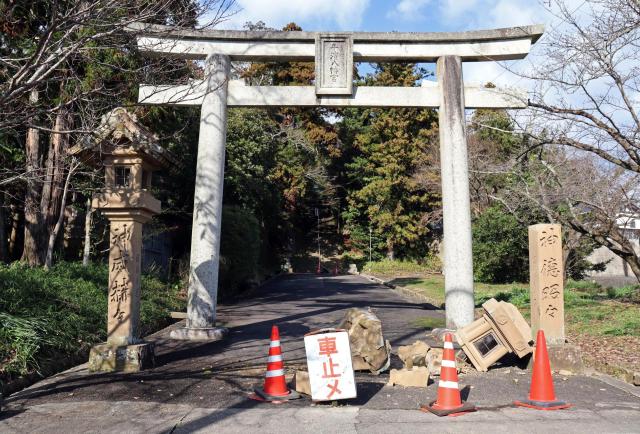
Tokyo, Japan – A 6.2-magnitude earthquake struck Japan early on January 7, 2026, rattling the seismically active nation but causing no immediate reports of significant damage or tsunami threats, according to initial assessments from monitoring agencies.
The quake, which occurred at 01:39 UTC (10:39 a.m. Japan Standard Time), was classified as medium severity by global event trackers. Japan's Japan Meteorological Agency (JMA) and other seismic networks quickly issued updates confirming the event's parameters, with no immediate tsunami warnings triggered. Preliminary data indicated the epicenter was located within Japanese territory, though exact coordinates were still being refined in early reports. Residents in affected areas reported feeling strong shaking, but infrastructure held firm, reflecting Japan's stringent seismic building standards.
Eyewitness accounts shared via social media described brief moments of alarm, with some Tokyo-area residents noting swaying buildings and activated emergency alerts on mobile devices. However, no casualties, structural collapses, or widespread disruptions to power, transportation, or utilities were documented in the immediate aftermath. The JMA, which maintains one of the world's most advanced earthquake detection systems, rated the intensity at around 5 on its seven-point scale in some regions, a level capable of causing unease and minor effects like falling objects but rarely severe harm.
This event underscores Japan's position as one of the most earthquake-prone countries globally. Situated on the Pacific Ring of Fire, where multiple tectonic plates—including the Pacific, Philippine Sea, Eurasian, and North American plates—converge, Japan experiences approximately 1,500 earthquakes annually that are strong enough to be felt. The archipelago accounts for about 20% of the world's earthquakes of magnitude 6 or higher, according to data from the United States Geological Survey (USGS). The 6.2 magnitude places it in the "strong" category on the moment magnitude scale, capable of causing damage in populated areas if shallow and near urban centers, but Japan's preparedness mitigated impacts.
Historical and Geological Context
Japan's seismic history is marked by devastating events that have shaped its disaster resilience. The 2011 Tohoku earthquake and tsunami, a 9.0-9.1 magnitude event, remains the most powerful in modern records, killing over 15,000 people and triggering the Fukushima nuclear disaster. More recently, a 7.6-magnitude quake struck the Noto Peninsula on January 1, 2024, claiming at least 55 lives and causing widespread destruction in Ishikawa Prefecture. That event highlighted vulnerabilities in older infrastructure despite advancements in quake-resistant design.
In response to such threats, Japan has invested heavily in mitigation. Nationwide building codes, updated after the 1995 Kobe earthquake (magnitude 6.9, over 6,400 deaths), mandate base isolation systems, dampers, and flexible materials in new constructions. The JMA's Earthquake Early Warning (EEW) system, operational since 2007, provides seconds-to-minutes of advance notice via TV, radio, apps, and sirens, allowing trains to halt and elevators to stop automatically. Retrofitting programs have strengthened schools, hospitals, and bridges, while public drills like the annual Disaster Prevention Day simulate megaquakes.
Global seismic monitoring, including contributions from the USGS and the Global Disaster Alert and Coordination System (GDACS), rated this January 7 event as low-impact initially. The absence of a tsunami risk was confirmed swiftly, as the quake's depth and location did not meet criteria for generating large waves—a critical factor given Japan's 30,000 kilometers of coastline vulnerable to tsunamis.
Ongoing Monitoring and Response
As of early January 7, authorities continued aftershocks monitoring, with smaller tremors expected in the coming days—a common occurrence following moderate quakes. The JMA urged residents to prepare for potential replicas and avoid coastal areas unnecessarily. Fire departments and local governments conducted routine inspections, but no evacuations were ordered.
This quake arrives amid Japan's broader efforts to bolster resilience against the anticipated "Nankai Trough megaquake," a once-in-100-to-150-years event forecasted by experts with a 70-80% probability within the next 30 years. Government simulations predict up to 300,000 deaths and $1.8 trillion in damages from such a scenario, prompting ongoing infrastructure upgrades and public awareness campaigns.
Internationally, the event drew minimal attention due to its contained impact, but it serves as a reminder of the Ring of Fire's volatility, which also affects neighboring Indonesia, the Philippines, and the U.S. West Coast. Organizations like the UN Office for Disaster Risk Reduction praised Japan's rapid response as a model for others.
In summary, while the 6.2-magnitude earthquake briefly disrupted daily life, it caused no major harm, affirming the effectiveness of Japan's world-leading defenses. Monitoring persists, with updates expected as data analysis continues.
(Word count: 612)