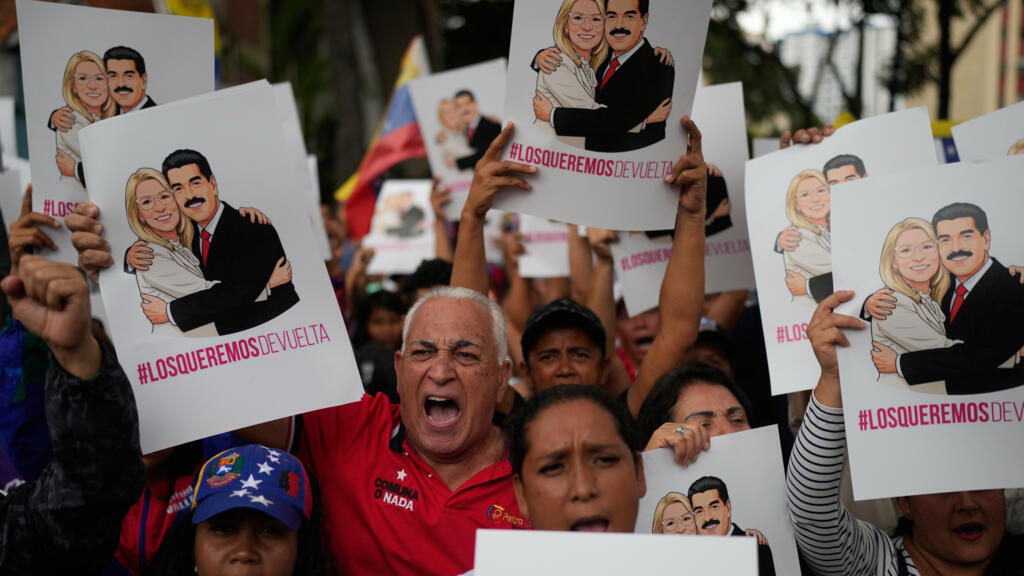

Maduro Loyalists Rally in Caracas Against U.S. Intervention as Trump Issues Oil Revenue Protection Order
Caracas, Venezuela – Supporters of Venezuela's recently ousted leader Nicolás Maduro took to the streets of Caracas on Saturday, protesting what they described as aggressive U.S. actions, including his shock capture by American forces one week prior. The demonstration, which unfolded amid heightened tensions, coincided with U.S. President Donald Trump's signing of an emergency executive order safeguarding U.S.-held revenues from Venezuelan oil sales.
The rally, originating on January 4, drew crowds expressing significant public discontent toward perceived U.S. attacks on Venezuelan sovereignty. According to reports, participants gathered in the capital to voice opposition to Maduro's ouster and capture, framing the events as foreign interference in Venezuela's internal affairs. The severity of the unrest has been rated as medium, reflecting organized protests without reports of widespread violence at the time of publication.
France 24 reported that the protesters, identifiable as Maduro loyalists, rallied in Caracas on January 10, exactly one week after U.S. forces executed the surprise operation leading to Maduro's detention. Visuals from the scene showed demonstrators chanting anti-U.S. slogans and waving flags associated with Maduro's United Socialist Party of Venezuela (PSUV). The event underscored lingering divisions in a nation long polarized by political and economic crises.
In parallel developments across the border, President Trump signed the executive order on the same day, aiming to shield revenues held in the U.S. from Venezuelan oil sales. The White House stated that the measure prevents these funds from being seized by courts or creditors, a move designed to stabilize U.S. financial interests tied to Venezuela's vast oil reserves. Venezuela possesses the world's largest proven oil reserves, estimated at over 300 billion barrels, making its energy sector a focal point of international disputes.
The order comes at a critical juncture, as the U.S. has maintained a complex relationship with Venezuela's oil industry for years. Historically, U.S. sanctions imposed since 2017 under both Trump and Biden administrations targeted Maduro's government over allegations of human rights abuses, election fraud, and corruption. These measures froze billions in Venezuelan assets abroad, including oil revenues, while PDVSA – Venezuela's state oil company – faced creditor lawsuits totaling tens of billions of dollars. Trump's new directive builds on this framework, prioritizing protection of U.S.-based funds amid Maduro's downfall.
Background on Venezuela's Turmoil
Venezuela's political landscape has been marked by instability since the death of former President Hugo Chávez in 2013, whom Maduro succeeded. Maduro's tenure saw hyperinflation peak at over 1 million percent in 2018, mass emigration of more than 7 million people, and repeated U.S. recognition of opposition figures like Juan Guaidó as interim president in 2019. Tensions escalated with U.S. sanctions that curtailed oil exports, Venezuela's primary revenue source, exacerbating shortages of food and medicine.
The "shock capture" of Maduro by U.S. forces, referenced in recent coverage, represents a dramatic escalation. While specifics of the operation remain limited in public reports, it aligns with longstanding U.S. designations of Maduro and his associates as narco-traffickers under the 2020 Rewards for Justice program, which offered up to $15 million for his arrest. The rally highlights persistent support bases for Maduro, particularly among working-class constituencies benefiting from Chávez-era social programs, despite economic collapse.
Opposition leaders and the interim government, backed by the U.S. and much of the international community, have not immediately commented on the protests. However, the demonstrations signal potential challenges to post-Maduro stabilization efforts, including restoring oil production – which has plummeted from 3 million barrels per day in the early 2000s to under 800,000 in recent years due to mismanagement and sanctions.
Outlook Amid U.S.-Venezuela Flashpoint
The Caracas rally and Trump's executive order illustrate intersecting domestic unrest and geopolitical maneuvering over Venezuela's resources. As Maduro's supporters mobilize, questions persist about the fate of detained PSUV officials and the trajectory of oil fund repatriation. International observers, including the United Nations and European Union, continue monitoring for human rights implications.
U.S. protection of oil revenues could facilitate smoother transactions for buyers like Chevron, which resumed limited operations in Venezuela last year under license. Yet, it risks inflaming anti-American sentiment, potentially prolonging civil unrest rated at medium severity.
Analysts note that Venezuela's opposition-led transition hinges on economic recovery, with oil revenues central to any revival. The White House emphasized the order's role in "protecting American interests," but its timing amid protests may deepen divisions.
As events unfold, The World Now will track developments in Caracas and Washington, providing real-time updates on this pivotal South American flashpoint.
(Word count: 612)






