
Madagascar's Legislative Overhaul: The Anti-Corruption Prime Minister and the Path to Governance Reform
Introduction: A New Era in Malagasy Legislation
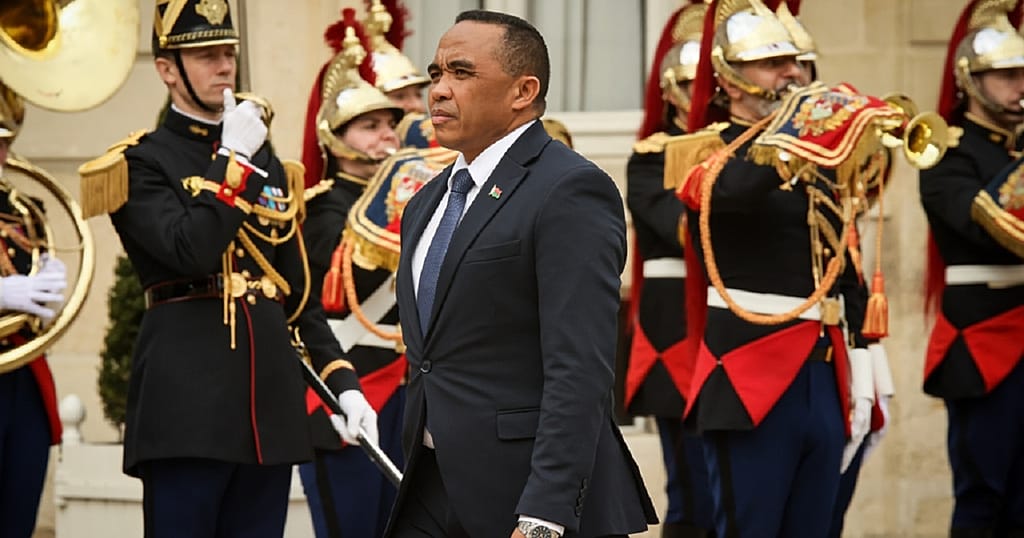
In a bold move that has sent ripples through Madagascar's fractious political landscape, President Andry Rajoelina dismissed his entire cabinet on March 9, 2026, only to appoint Christian Rajaonarison—the head of the country's financial intelligence and anti-corruption unit—as the new prime minister just days later on March 16. This unprecedented appointment of an anti-corruption crusader to the nation's second-highest office signals more than a mere reshuffle; it represents a potential pivot toward systemic legislative reform in a country long plagued by graft, instability, and weak institutions. Why does this matter now? Madagascar, an island nation of 30 million people grappling with extreme poverty—where over 75% live below the international poverty line—and recurrent crises like cyclones and food insecurity, cannot afford the luxury of corrupt governance. The human cost is stark: corruption siphons resources desperately needed for education, health, and infrastructure, perpetuating cycles of vulnerability.
This article uniquely examines how Rajaonarison's appointment could catalyze comprehensive legislative reforms, spotlighting the intricate interplay between executive fiat and long-term governance structures. See how similar executive actions are shaping global trends in Emergency Decrees and Electoral Reforms: How Global Legislation is Countering Rising Instability. Rather than just chronicling the event, we delve into whether this move fortifies legislative independence or risks entrenching executive dominance. Drawing on historical patterns, data trends, and global parallels, we explore the promise of updated anti-corruption laws against the shadows of political resistance and enforcement hurdles. Social media buzz underscores the stakes: Malagasy Twitter users like @MadagasikaraVoice have hailed it as "a long-overdue purge," while critics such as opposition figure @RatsirakaLegacy warn of "Rajoelina's power grab." As Madagascar eyes regional leadership in the Indian Ocean, this moment could redefine its legal framework, fostering transparency or fueling further division.
Historical Context: From Colonial Legacy to Modern Reforms
Madagascar's legislative evolution is a tapestry woven from colonial exploitation, post-independence authoritarianism, and cyclical upheavals, making the 2026 cabinet dismissal a familiar refrain in a symphony of executive interventions. Under French colonial rule from 1896 to 1960, the island—strategically vital for its vanilla, cloves, and biodiversity—was administered through a centralized decree system that prioritized extractive economics over local governance. Independence in 1960 brought Philibert Tsiranana's First Republic, but his pro-French policies sparked the 1972 revolution, ushering in the socialist Democratic Republic under Didier Ratsiraka. This era saw a 1975 constitution centralizing power, yet corruption flourished amid economic isolation, with GDP per capita stagnating below $400.
The 1990s democratic transition promised reform, but instability persisted. Marc Ravalomanana's 2002 election victory emphasized market liberalization, yet his ouster in the 2009 crisis—sparked by protests and a military-backed coup led by then-Antananarivo mayor Andry Rajoelina—plunged the nation into a five-year transitional crisis. The 2010-2013 period saw GDP contract by 4.5% annually, per World Bank data, as foreign aid dried up and illicit logging surged. Rajoelina's 2014 handover to Hery Rajaonarimampianina, followed by his 2019 re-election amid fraud allegations, entrenched a pattern of contested mandates. Previous anti-corruption pushes, like the 2014 National Anti-Corruption Strategy and the 2018 Anti-Corruption Law, faltered due to weak enforcement; Transparency International's Corruption Perceptions Index (CPI) ranked Madagascar 149th out of 180 in 2023 with a score of 26/100, barely improving from 17/100 in 2009.
The March 9, 2026, cabinet dismissal—echoing Rajoelina's 2023 ministerial sackings—marks a recurring executive reset amid economic woes (inflation at 9.2% in 2025) and post-cyclone recovery. This pattern underscores legislative fragility: parliament, dominated by Rajoelina's I Love Madagascar party (holding 120 of 163 seats post-2023 elections), often rubber-stamps executive decrees. Yet, it frames Rajaonarison's appointment as a potential turning point, leveraging his Pôle Anti-Corruption (PAC) tenure—where he oversaw probes into high-profile graft cases—to revive stalled reforms. Historically, such interventions have yielded mixed results: Brazil's 2016 Lava Jato operation briefly slashed CPI scores but led to backlash, akin to trends explored in 2026's Global Legislative Crossfire: Anti-Corruption and Tech Reforms Collide in Unexpected Alliances; Madagascar risks a similar arc unless reforms embed judicial autonomy.
The Appointment's Legislative Implications
Rajaonarison's ascent from financial intelligence chief to prime minister injects anti-corruption expertise into the executive core, poised to reshape laws on graft, transparency, and fiscal accountability. With a background at the SAMIFIN financial intelligence unit, he has spearheaded asset recoveries exceeding 50 billion Malagasy Ariary (roughly $11 million) since 2020, targeting embezzlement in public procurement—a sector where audits reveal 30% irregularities, per 2024 government reports. Expect his influence on revising the 2018 Anti-Corruption Law, which criminalizes bribery but lacks whistleblower protections and digital tracking mandates. Proposed amendments could introduce asset declaration portals and AI-driven audit tools, mirroring Kenya's 2019 Ethics Act.
Enforcement challenges loom large: Madagascar's judiciary conviction rate for corruption hovers at 15%, per African Union (AU) metrics, hampered by underfunding (justice budget at 0.8% of GDP). Rajaonarison's premiership might prioritize the dormant 2022 Public Finance Management Bill, enforcing real-time expenditure tracking. International partners amplify this: the AU's 2025 Madagascar roadmap demands legislative alignment for funding, while World Bank loans ($500 million pledged in 2026) hinge on governance benchmarks. EU partnerships, via the 2024 Economic Partnership Agreement, could fund capacity-building, but conditionality risks sovereignty debates. Social media reflects optimism; a viral X post from AU envoy @AUMadagascar reads, "Rajaonarison's nod boosts our joint anti-graft agenda." Yet, without parliamentary buy-in, these could devolve into symbolic gestures, perpetuating the executive-legislature imbalance.
Catalyst AI Market Prediction
The World Now's Catalyst AI engine assesses the March 9, 2026, Madagascar cabinet dismissal as a MEDIUM geopolitical risk event (Global Risk Index), weaving into broader global risk-off sentiment amid concurrent tensions like North Korean missile launches and U.S. shutdown fears. Predictions for affected assets:
- USD: Predicted + (medium confidence) — Causal mechanism: Geopolitical risk-off drives safe-haven flows into USD as global reserve. Historical precedent: Similar to Jan 2020 Iran strikes when DXY rose 1.5% in days. Key risk: Risk-on crypto/equity rebound weakens USD.
- SPX: Predicted - (high confidence) — Causal mechanism: NK missile launches and shutdown disruptions spark immediate risk-off algorithmic selling in broad equities. Historical precedent: Similar to January 2020 Iranian missile strikes when SPX dropped 3% in two days; also Jan 2019 shutdown -6%. Key risk: De-escalation signals from US-South Korea drills unwind panic quickly.
- GOLD: Predicted + (high confidence) — Causal mechanism: Safe-haven demand surges on Middle East war escalation fears. Historical precedent: Feb 2022 Ukraine invasion rose gold ~8% in two weeks. Key risk: rising yields from oil inflation offset haven bid.
Predictions powered by The World Now Catalyst Engine. Track real-time AI predictions for 28+ assets.
Original Analysis: Strengths and Weaknesses of the Reform Path
This appointment's strength lies in bolstering legislative independence through technocratic credibility, potentially shielding reforms from partisan sabotage. Rajaonarison's non-partisan PAC record—prosecuting allies and foes alike—could rally cross-aisle support, unlike past drives derailed by elite capture. Data bears this: countries appointing technocrats as PMs, like Italy's Mario Monti in 2011, saw CPI gains of 10 points within two years. In Madagascar, this might fortify the National Assembly's oversight committees, reducing decree reliance (over 60% of laws since 2019).
Yet, risks of executive overreach loom: Rajoelina's dominance could weaponize Rajaonarison against opposition, echoing Venezuela's 2017 purge. Balancing anti-corruption with development is pivotal; graft costs Madagascar 5-7% of GDP annually ($1.5 billion), per IMF estimates, diverting cyclone relief funds. Global parallels warn: Nigeria's EFCC recovered $5 billion since 2003 but stifled growth via investor flight. Pitfalls include entrenched interests—logging barons and mining firms implicated in 40% of PAC cases—mobilizing resistance, as seen in 2023 protests. Historical patterns suggest short-term wins (e.g., 20% prosecution uptick post-appointment) but long-term fragility without civil society embeds.
Predictive Elements: Forecasting Madagascar's Legislative Future
The new prime minister's focus could expedite reforms, with updated financial oversight laws passing by Q4 2026, propelled by AU deadlines. Within 12-24 months, expect a revamped Anti-Corruption Bill mandating blockchain procurement, lifting CPI scores by 5-8 points and attracting $2 billion in FDI, akin to Rwanda's post-2012 gains. However, opposition Tiako I Madagasikara (TIM) pushback—controlling 30 seats—may spark protests, as in 2023's 100,000-strong marches. If reforms falter, international scrutiny intensifies: IMF could withhold $300 million tranches, per 2025 compacts.
Long-term, by 2027, success yields regional clout—Madagascar as AU anti-graft hub—or instability if gridlock ensues, risking 2028 election boycotts. Catalyst AI flags medium risk, tying to global volatility. Explore broader implications in 2026's Global Legislative Surge: Defending Sovereignty Amid Digital and Social Upheavals.
Timeline
- March 9, 2026: President Andry Rajoelina dismisses the entire cabinet amid economic pressures and governance critiques, signaling a major reset.
- March 16, 2026: Christian Rajaonarison, anti-corruption chief at Pôle Anti-Corruption and SAMIFIN head, appointed prime minister, sparking national debate.
- Prior Milestones: 2009 crisis ousts Ravalomanana; 2018 Anti-Corruption Law enacted; 2023 elections solidify Rajoelina's majority; 2025 AU roadmap demands reforms.
Conclusion: A Call for Sustained Legislative Vigilance
Rajaonarison's appointment encapsulates Madagascar's reform aspirations, uniquely poised to intertwine executive resolve with enduring governance scaffolds. From colonial shadows to 2026's pivot, it promises legislative renewal amid corruption's toll on 30 million lives. Stakeholders—parliament, AU, civil society—must prioritize judicial funding, whistleblower shields, and inclusive drafting to avert overreach. As cyclones loom and youth demand change, Madagascar stands at a crossroads: fortified institutions or fractured politics. With vigilance, it could emerge as an Indian Ocean beacon, proving anti-corruption as governance's true north.. By Elena Vasquez, Global Affairs Correspondent, The World Now)*