
Lebanon announces partial ceasefire in conflict lebanon between Israel and Hezbollah but attacks continue
Lebanon announced a partial ceasefire in conflict lebanon between Israel and Hezbollah, yet the move has not halted the violence that has defined the fighting. The limited agreement represents a narrow step toward de-escalation without resolving the underlying conflict lebanon that has produced thousands of deaths and mass displacement.
Partial Ceasefire Announcement
Lebanon announced a partial ceasefire between Hezbollah and Israel on Monday in what would amount to a limited de-escalation of a conflict that has killed thousands of people. According to Lebanon’s embassy in Washington, the agreement would not end the conflict in that country but calls for a restricted pause in certain operations. [5] The announcement followed intensive American diplomacy aimed at formalising the partial truce between Israel and Hezbollah. [2] This limited framework leaves broader issues unaddressed while offering a temporary reduction in some cross-border exchanges.
Continued Hostilities in Conflict Lebanon
Heavy fighting continues to rock southern Lebanon despite the partial US truce accepted by Israel and Hezbollah. [2] Clashes continued in Lebanon after Israel and Hezbollah accept partial US truce, with persistent combat underscoring the difficulty of separating localised border violence from wider regional dynamics. [2] Overnight exchanges took place even as preparations advanced for further talks. Airstrikes and ground engagements have not ceased in the affected zones, showing that the partial ceasefire has not produced a complete halt to operations.
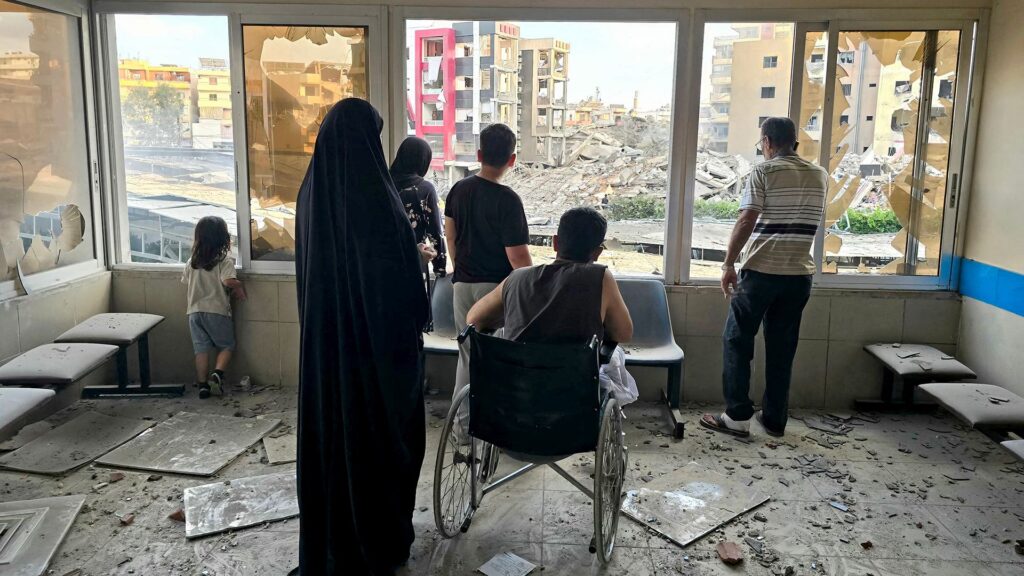
Clashes continue in southern Lebanon despite the partial US truce between Israel and Hezbollah. — Source: myjoyonline
Casualties and Displacement
Israeli attacks killed over 3,000 people, with over 1 million displaced people reported by Lebanese authorities. [1] Lebanon has suffered more than 3,000 deaths and over 1 million displaced people, with no end to this situation in sight according to statements from the Lebanese president. [1] These figures reflect the scale of losses accumulated before and during the period surrounding the partial truce announcement. The displacement has strained resources across multiple regions inside Lebanon.
Diplomatic Context
The announcements came on the eve of a fourth round of US-hosted direct negotiations between Israel and Lebanon. [4] US-hosted direct negotiations between Israel and Lebanon are scheduled amid overnight clashes that preceded the talks. [4] Both Israel and Hezbollah accepted the partial US truce, yet the acceptance has not prevented continued exchanges in southern areas. [2] The diplomatic channel remains active even as field conditions stay volatile.
Operational Environment
The operational environment in Lebanon remains highly volatile, with continued hostilities undermining already fragile ceasefire conditions. [3] Despite the extension of the ceasefire until 1 July 2026, airstrikes and displacement orders persist, affecting at least 61 localities across southern Lebanon, particularly in Nabatieh and Tyre districts, as well as areas south of the Zahrani River. [3] These conditions illustrate how the partial agreement has not yet stabilised daily security for residents in the impacted zones.
What to watch next: Further rounds of US-hosted talks between Israel and Lebanon will be monitored alongside any changes in the number of localities affected by ongoing airstrikes and displacement orders under the ceasefire extended until 1 July 2026.






