
Landfill Collapse in Binaliw, Philippines, Kills One and Leaves Dozens Missing in Ongoing Rescue Operation
Binaliw, Philippines — A massive collapse at a landfill site in Binaliw, Philippines, on January 8 has resulted in at least one confirmed death and more than two dozen people reported missing, with rescue teams racing against time to locate up to 50 sanitation workers buried under tons of refuse.
The incident occurred on Thursday, January 8, 2026, when a large pile of waste at the landfill suddenly gave way, engulfing workers who were operating in the area. According to reports, approximately 50 sanitation workers were caught in the disaster, prompting a high-severity emergency response. As of the latest updates, one fatality has been confirmed, while at least 27 individuals remain unaccounted for, highlighting the perilous conditions faced by waste management personnel in the region.
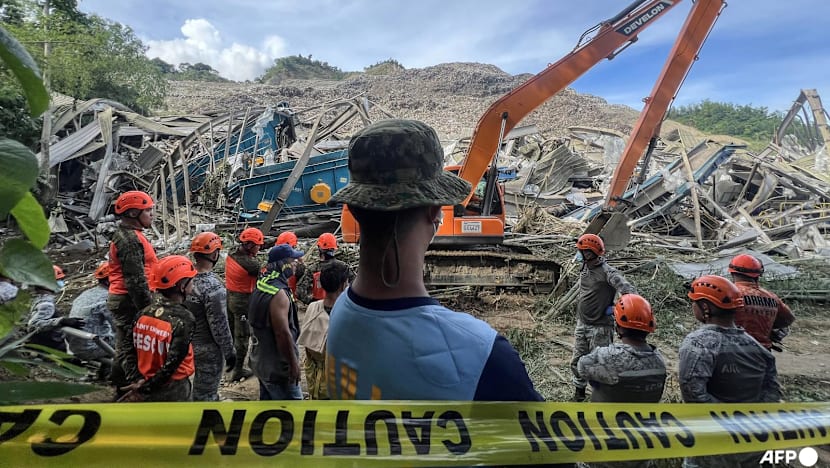
Rescue operations were swiftly initiated following the collapse, which was reported around early Friday, January 9, local time. Emergency teams, including local disaster response units and heavy machinery operators, have been deployed to the site in Binaliw, a area known for its waste disposal facilities. The Channel News Asia report indicates that the death toll has begun to climb as recovery efforts continue, underscoring the scale of the tragedy amid challenging terrain and unstable debris.
Eyewitness accounts and initial assessments describe a sudden toppling of refuse that buried workers without warning. Sanitation workers, often tasked with sorting and managing overflowing waste under precarious conditions, were the primary victims. The event has drawn national attention, with authorities coordinating with regional disaster management agencies to provide support, including medical aid for any survivors pulled from the rubble.
Incident Details and Immediate Response
The collapse struck at approximately 04:51 GMT on January 9 (corresponding to early morning local time), transforming a routine workday into a nightmare for those on site. Binaliw's landfill, like many in the Philippines, handles substantial volumes of municipal waste from surrounding urban areas. The failure appears to have been triggered by the instability of accumulated trash, though official investigations are underway to determine exact causes such as overloading, poor structural maintenance, or recent weather factors.
Local government units in the area have mobilized excavators, sniffer dogs, and thermal imaging equipment to aid in the search. As of Saturday, January 10, efforts were ongoing, with reports of intermittent recoveries amid fears that the number of casualties could rise. The high severity classification of the event reflects the potential for further slides and the difficulty in accessing trapped individuals.
Philippine disaster authorities, including the National Disaster Risk Reduction and Management Council (NDRRMC), have issued alerts for similar facilities nationwide, emphasizing the need for heightened safety protocols. Temporary evacuations have been ordered in adjacent areas to prevent secondary incidents.
Background on Waste Management Challenges in the Philippines
Landfill collapses are not isolated incidents in the Philippines, a archipelago nation grappling with rapid urbanization, population growth, and inadequate waste infrastructure. The country generates over 40,000 tons of solid waste daily, much of which ends up in open dumpsites that frequently exceed capacity. Historical precedents include the devastating 2000 Payatas landfill landslide in Quezon City, where heavy rains caused a garbage avalanche that killed at least 218 people and left hundreds missing. More recent events, such as collapses in Cebu and Davao regions, have claimed lives and prompted temporary closures.
Government data from the Department of Environment and Natural Resources (DENR) reveals that only about 95% of the nation's 686 sanitary landfills and controlled dumps meet basic standards, with many operating under chronic overload. Monsoonal rains, common in the typhoon-prone archipelago, exacerbate risks by saturating waste piles and inducing slides. In response, the Ecological Solid Waste Management Act of 2000 mandates modern facilities, but implementation lags due to funding shortages and enforcement issues.
Binaliw's site, situated in a seismically active zone, underscores these vulnerabilities. Advocacy groups like Zero Waste Asia have long called for a shift to recycling and composting to reduce reliance on landfills, noting that the Philippines ranks among Southeast Asia's top waste producers per capita.
Outlook and Broader Implications
As rescue operations persist into their second day, optimism for additional survivors diminishes with each passing hour, though teams remain committed. President Ferdinand Marcos Jr.'s administration has pledged support, including potential aid from the national budget for affected families. Investigations by the DENR and local engineers will likely scrutinize compliance with safety regulations, potentially leading to site closures or upgrades.
This tragedy serves as a stark reminder of the human cost of waste mismanagement in developing economies. With the Philippines facing increasing waste volumes projected to reach 77,000 tons daily by 2025 according to World Bank estimates, experts anticipate stricter oversight and investments in sustainable alternatives. For now, the focus remains on Binaliw, where communities mourn and rescuers toil amid the debris.
(Word count: 682)