
Kīlauea Volcano Intensifies Activity in Hawaii, Signaling Potential Episode 40 Eruption
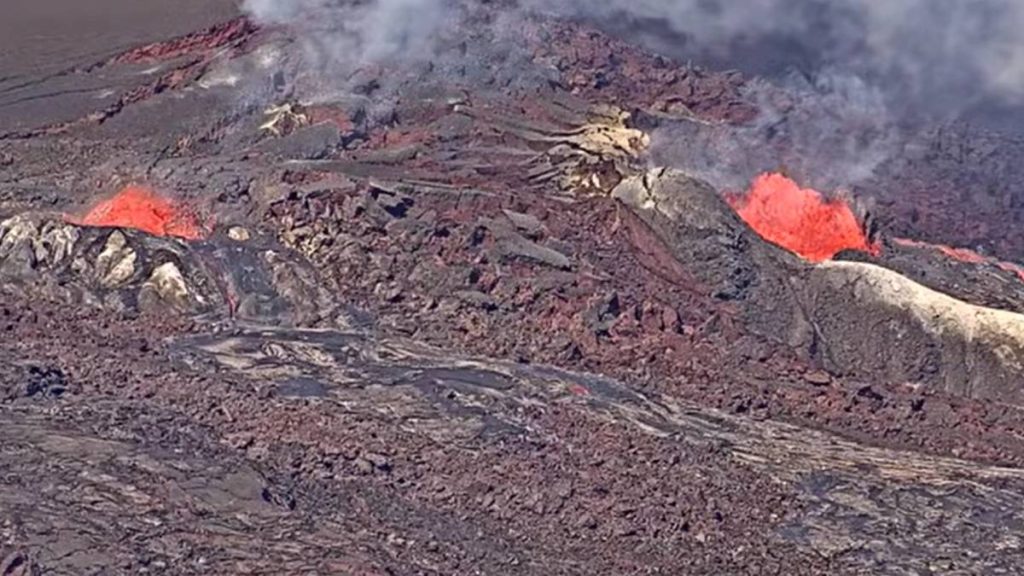
BIG ISLAND, Hawaii — Kīlauea, one of the world's most active volcanoes, is exhibiting heightened unrest in its summit region, with increased dome fountaining and lava spattering observed as it appears to gear up for what volcanologists are calling Episode 40 of its ongoing eruption cycle. The activity ramped up notably around 11:40 p.m. UTC on January 10, 2026, prompting close monitoring by the U.S. Geological Survey (USGS) Hawaiian Volcano Observatory.
The latest developments come amid a series of episodic eruptive events that have characterized Kīlauea's behavior since late 2024. According to reports from Big Island Now, fountaining from a central dome within the Halemaʻumaʻu crater has grown more vigorous, accompanied by intensified lava spattering. This surge in activity marks a continuation of the volcano's medium-severity unrest, which has been ongoing without significant pauses. No immediate threats to surrounding communities have been reported, but the observatory has maintained an advisory-level alert, urging caution for visitors to Hawaiʻi Volcanoes National Park.
Kīlauea, located within the national park on the southeastern flank of Hawaii's Big Island, has been in a state of near-continuous eruption since December 2023. The current summit activity stems from a reactivation following pauses in earlier phases. Episodes 1 through 39 have featured brief but spectacular bursts of lava fountains, typically lasting hours to days, confined largely to the crater floor. The buildup to Episode 40 suggests a pattern of inflating magma reservoirs beneath the summit caldera, driving surface deformation and gas emissions upward.
USGS monitoring data, corroborated by ground-based and satellite observations, indicates that inflation rates have accelerated in recent days. Sulfur dioxide emissions, a key indicator of magma movement, have remained elevated, averaging several thousand tons per day. Webcam imagery from the observatory shows bright glows and spatter cones actively forming, with fountains occasionally reaching heights of tens of meters. These visuals align with the description of a "revving up" phase, where pre-eruptive vigor builds pressure for a more substantive outburst.
Background on Kīlauea's Recent Activity
Kīlauea holds the distinction of being the most active shield volcano on Earth, responsible for about 60-90% of documented volcanic activity globally over the past century. Its current eruptive phase began in 2020 after a brief pause triggered by the May 2018 eruption and collapse sequence, which destroyed over 700 homes in the Leilani Estates subdivision during the lower East Rift Zone (LERZ) event.
Since late 2023, eruptions have been confined to the summit caldera, specifically Halemaʻumaʻu, a pit crater revered in Hawaiian culture as the dwelling place of the volcano goddess Pele. The episodic nature—now approaching Episode 40—reflects pulsations in magma supply from deeper mantle sources. Each episode typically involves rapid drain-back of lava into the conduit post-fountaining, followed by recharge and renewed inflation.
Historically, Kīlauea's 2018 eruption was its most voluminous in over 200 years, producing more than 800 million cubic meters of lava and reshaping 13.7 square miles of land. The LERZ remains quiet, but seismicity there is monitored closely due to past fissure events. No such activity is currently reported.
The volcano's medium severity rating underscores risks like hazardous vog (volcanic smog) carried by trade winds toward communities such as Volcano Village and Pāhala, as well as ballistic ejecta within the park. Park closures around the crater rim are standard during active phases to protect visitors, with Chain of Craters Road and other areas accessible but under advisories.
Community and Scientific Response
Local authorities on Hawaii Island have emphasized preparedness, with no evacuations ordered as of January 11, 2026. The Hawaii Emergency Management Agency coordinates with USGS, issuing updates via social media and official channels. Scientists note that while Episode 40 could commence imminently—potentially within hours—the confinement to the summit limits broader impacts.
Global context places Kīlauea alongside other U.S. volcanic hotspots like Mount St. Helens and Alaska's Aleutian chain, though none match its frequency. The USGS Volcano Hazards Program classifies Kīlauea at Alert Level WATCH / Aviation Color Code ORANGE, signaling elevated unrest but no imminent eruption beyond the current pattern.
Looking ahead, experts anticipate Episode 40 to mirror predecessors: intense but short-lived fountaining, followed by deflation. Continued monitoring via GPS, tiltmeters, infrasound, and thermal cameras will provide real-time data. If patterns hold, the volcano could transition to another pause before Episode 41.
This ongoing activity not only draws scientific interest in mantle plume dynamics but also bolsters Hawaii's geothermal energy prospects and tourism, once safely accessible. Residents and visitors are advised to heed official updates from the Hawaiian Volcano Observatory at volcanoes.usgs.gov/hvo.
(Word count: 612)