
Japan Earthquake: Magnitude 7.5 Strikes Off Coast, Triggers Tsunami Warnings
A magnitude 7.5 earthquake struck off Japan's northeast coast, triggering tsunami warnings across affected regions including Honshu and Hokkaido.[1][4][5] This earthquake Japan event prompted immediate evacuations and heightened alerts from authorities, though subsequent updates indicated a reduced immediate threat as waves remained below initial projections.[2][3][5]
The Earthquake Event
The earthquake Japan tremor originated off the coast near Iwate prefecture, a region in Japan's northeast known for its vulnerability to seismic activity.[5] Reported with a magnitude of 7.5 by initial accounts, the event was described as a major quake that struck on Monday, sending ripples of concern through the region.[4][5] Some reports specified a magnitude of 7.7, underscoring the intensity of the shaking felt across coastal areas.[5]
This powerful seismic event occurred at a time when monitoring systems were on high alert, with the Japan Meteorological Agency (JMA) quickly responding to the data from offshore sensors.[5] The quake's epicenter positioned it close enough to land to generate significant tsunami risks, leading to the prompt issuance of warnings.[4] Published reports from early in the day captured the immediacy of the situation, with headlines emphasizing the 7.5 magnitude and the activation of tsunami protocols.[4] The occurrence near Iwate prefecture amplified concerns, as this area has historical precedence for strong quakes, though specific damage assessments were not detailed in initial dispatches.[5]
Evacuations began almost immediately following the detection, with residents and visitors urged to move to higher ground as a precautionary measure.[5] The timing, around midday UTC on April 20, aligned with peak travel and daily activities, potentially affecting thousands in the vicinity.[4] This earthquake's offshore nature meant that while direct structural impacts on land were not elaborated in early reports, the associated tsunami threat dominated the response efforts.[4][5] The event's scale—major 7.5 magnitude—placed it in the category of high-intensity quakes capable of widespread disruption, prompting a coordinated national response.[4]
Tsunami Warnings and Updates
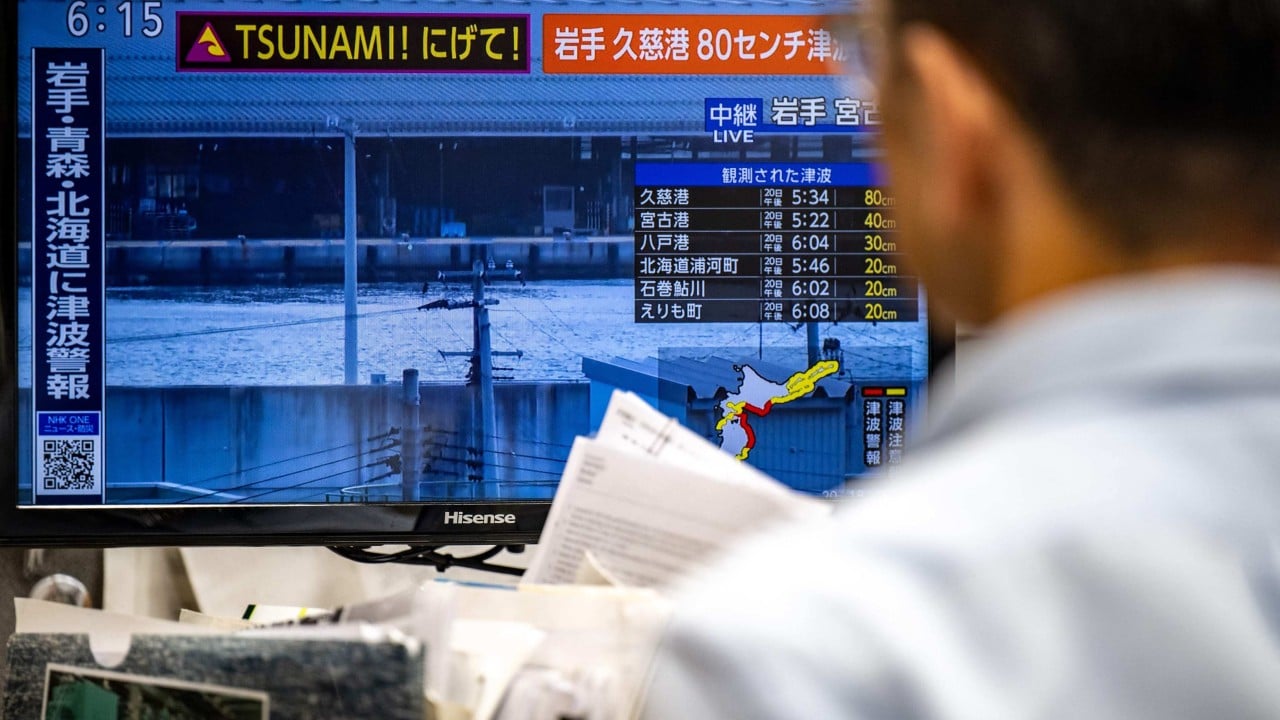
Tsunami warnings were swiftly issued by the Japan Meteorological Agency following the earthquake, forecasting waves of up to three meters along the coasts of Honshu and Hokkaido.[5] This alert covered key areas including the northeast coast, where the quake's energy was most directly channeled toward land.[5] The directive for immediate evacuations to higher ground reflected the standard protocol for such events, aiming to safeguard coastal populations from potential inundation.[5]
Subsequent observations led to a downgrading of the warnings, as recorded waves reached a maximum height of only one meter.[5] This easing of the alert was confirmed in updates from Japanese authorities, signaling that the immediate tsunami danger had passed without the catastrophic surges initially feared.[2][3][5] Reports highlighted the transition from heightened warnings to reduced alerts, providing relief to those under evacuation orders.[2]
The process unfolded rapidly, with the initial warning published shortly after the quake's onset around 12:45 UTC, followed by easing announcements by early afternoon.[2][4] The government's ability to monitor wave heights in real-time through buoys and coastal stations played a crucial role in this timely downgrade.[5] Despite the reduction, the episode underscored the precision required in tsunami forecasting, where initial overestimations are preferred to err on the side of caution.[3][5] By 14:00 UTC, further updates emphasized the lowered risk, allowing some areas to lift evacuation measures while maintaining vigilance.[2][3]
Safety of Affected Travelers
Hong Kong travelers in Japan received confirmation of their safety amid the earthquake and tsunami alerts, with at least one major tour operator reporting all groups accounted for.[1] Specifically, EGL Tours stated that its approximately 40 tour groups across Japan were safe, including three groups in the northeast region and four in Hokkaido—areas directly under the tsunami advisory.[1]
This reassurance came from Steve Huen Kwok-chuen, executive director of EGL Tours, who verified the well-being of customers in the most impacted zones.[1] The Hong Kong Immigration Department also noted it was closely monitoring the situation for any Hong Kong nationals affected by the quake off the northeast coast.[1] These updates provided critical comfort to families and organizers back home, as the groups were traveling in regions covered by the initial tsunami warnings.[1]
The confirmation process involved direct communication with tour participants, ensuring no injuries or disruptions were reported from the seismic event.[1] With groups present in both the epicentral northeast and northern Hokkaido, the all-clear status highlighted effective coordination between local Japanese authorities and international operators.[1] This incident drew attention to the vulnerabilities of group travel during natural disasters, yet the swift safety verifications demonstrated robust emergency protocols in place.[1]
Government Response and Cautions
Japanese government officials responded decisively to the earthquake, with monitoring efforts focused on both immediate aftereffects and longer-term risks.[3][5] A government spokesperson, Minoru, addressed the public amid the event, emphasizing ongoing assessments.[5] The administration cautioned about the potential for a megaquake, a warning issued in parallel with the tsunami downgrade to maintain public preparedness.[3][5]
The Japan Meteorological Agency's role was central, issuing and then adjusting the tsunami advisory based on real-time data.[5] This included the initial three-meter wave projection and subsequent confirmation of one-meter maximums, allowing for measured de-escalation.[5] Government communications stressed continued vigilance, particularly in light of the quake's proximity to Iwate prefecture.[5]
The caution on megaquake risk reflected deeper concerns about seismic patterns in the region, with officials urging sustained awareness even as immediate threats waned.[3] This approach balanced reassurance with prudence, ensuring that evacuations and preparations were not prematurely relaxed.[3][5] Published updates around 14:30 UTC captured this dual messaging: tsunami risks downgraded, but broader quake hazards under scrutiny.[3]
Current Situation Summary
As reports consolidated, the earthquake off Japan's northeast coast—measured at 7.5 magnitude in several accounts and 7.7 in others—had triggered but not escalated into a major tsunami crisis.[1][4][5] Warnings for up to three-meter waves on Honshu and Hokkaido were downgraded after peaks of one meter, easing evacuations while authorities maintained oversight.[2][3][5] All 40 Hong Kong tour groups, including those in northeast Japan and Hokkaido, were confirmed safe by EGL Tours, with Hong Kong's Immigration Department tracking developments.[1]
Near Iwate prefecture, initial evacuations proceeded smoothly, underscoring effective public response systems.[5] Government statements, including from spokesperson Minoru, highlighted monitoring for aftershocks and explicitly cautioned on megaquake possibilities.[3][5] The sequence—from quake detection around 12:45 UTC, to alert easing by 14:00 UTC—demonstrated rapid adaptation to incoming data.[2][4]
Travelers and residents alike benefited from these updates, with no major incidents reported among monitored groups.[1] The event, while powerful, aligned with Japan's preparedness for frequent seismic activity, though the megaquake advisory prolonged national alertness.[3] Overall, the situation stabilized without widespread damage detailed in available reports, focusing attention on precautionary measures.[1][2][3][4][5]
What to watch next: Authorities continue to monitor for potential aftershocks and the elevated risk of a megaquake, as cautioned by the government, while tsunami advisories remain fully lifted.[3][5]





:strip_icc():format(jpeg)/kly-media-production/medias/9375633/original/041819800_1792194157-1001768681.jpg)