
Israel's Ambulance Threats in Lebanon: Escalating Conflict and International Law Violations
The Story
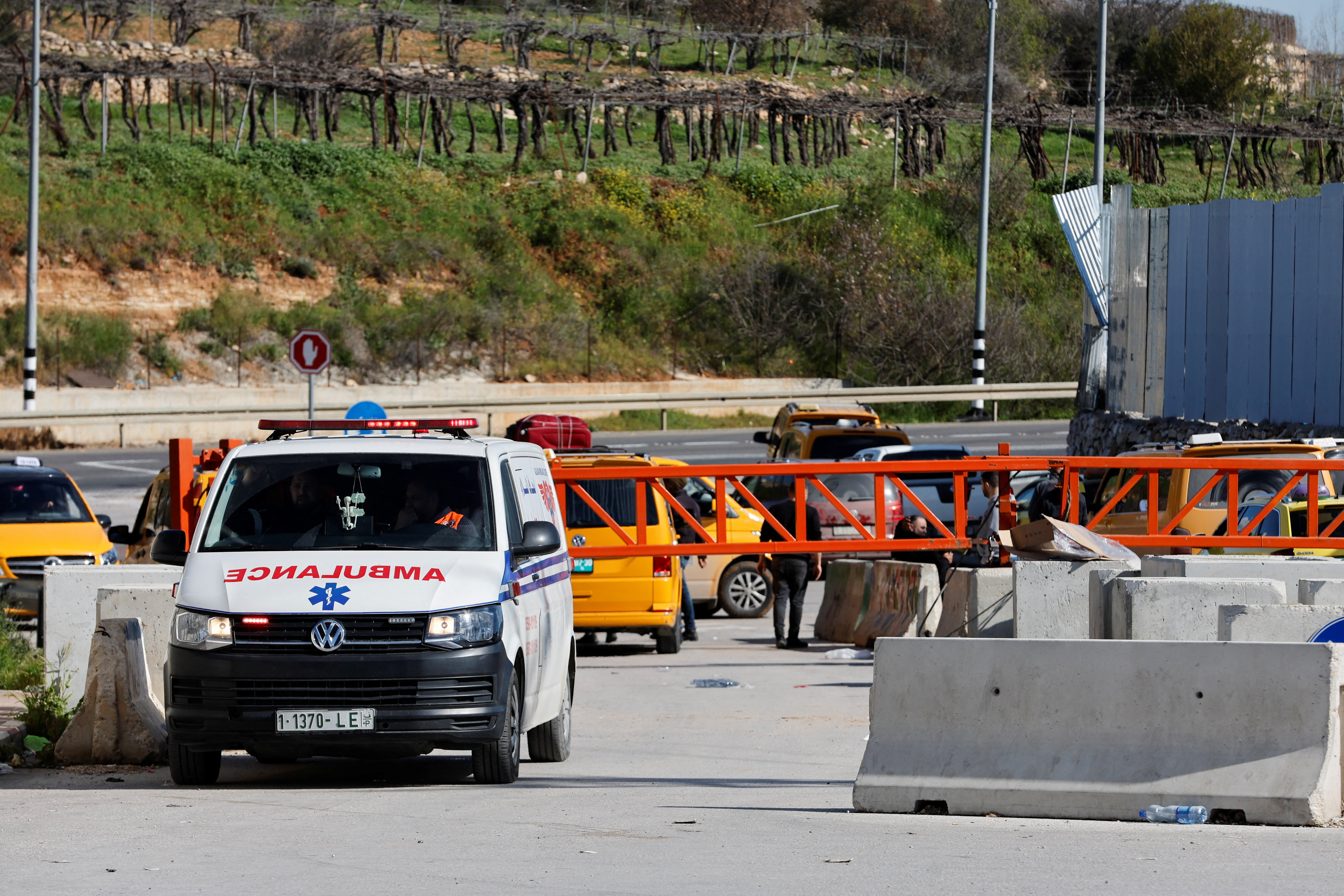
The narrative of escalation in southern Lebanon has unfolded with grim predictability since early 2026, transforming sporadic border skirmishes into a full-throated confrontation that now imperils even the most sacred protections of war: medical aid. On March 14, 2026, the Cyprus Mail broke the story of Israeli Defense Forces (IDF) spokespersons warning that ambulances ferrying Hezbollah militants would be treated as legitimate targets. "Any vehicle, including ambulances, used to transport terrorists will be struck," an IDF official stated, echoing similar rhetoric from March 8 warnings to Lebanese villages north of the Blue Line. Anadolu Agency corroborated this with reports of Israeli plans to advance beyond current positions, seizing a buffer zone south of the Litani River—approximately 30 kilometers from the Israeli border—to neutralize Hezbollah's rocket launch sites and tunnel networks.
ReliefWeb's Flash Update #8, covering March 12-13, paints a vivid picture of the immediate fallout: Israeli airstrikes hit over 20 Hezbollah positions, prompting retaliatory rocket fire into northern Israel, displacing 15,000 Lebanese civilians and wounding dozens, including medical personnel. Eyewitness accounts from Lebanese Red Cross workers describe ambulances weaving through debris under drone surveillance, with one paramedic posting on X (formerly Twitter) as @LebRescueMed: "IDF drones overhead as we evacuate wounded—threats to strike us are real. #LebanonUnderFire" (March 13, 2026, 1.2K retweets). Another viral thread from @HezbollahMediaOffice claimed three ambulances were fired upon near Aita al-Shaab, though unconfirmed by neutral observers.
This is no isolated incident but the culmination of a step-by-step escalation traced through the timeline:
-
January 2, 2026: Israeli gunfire near the Blue Line—the UN-demarcated border—targets suspected Hezbollah observers, killing two civilians and marking the first lethal exchange post-2024 ceasefire. UNIFIL (United Nations Interim Force in Lebanon) reports confirmed the incident, noting it as a breach of Resolution 1701, which mandates Hezbollah's withdrawal south of the Litani. Read more on UN Peacekeepers in the Line of Fire: Escalating Israeli Strikes Threaten Lebanon's Fragile Ceasefire Prospects.
-
January 12, 2026: Amid ongoing strikes, Lebanon floats a "disarmament plan" for Hezbollah's southern units, but Israeli airstrikes intensify, hitting Beirut suburbs and destroying alleged weapons depots. Diplomatic overtures via Qatar and Egypt falter as Hezbollah vows retaliation. Explore potential paths forward in Lebanon's Diplomatic Breakthrough: How Direct Israel-Lebanon Talks Could Reshape Hezbollah's Grip on Power.
-
February 25, 2026: Revelations of deepening Hezbollah-Iran ties— including Iranian drone shipments via Syria—heighten tensions. U.S. intelligence leaks (via Axios) detail IRGC advisors embedding with Hezbollah, framing the group as an Iranian proxy in a broader "Axis of Resistance."
-
March 8, 2026: Israel issues direct warnings to 28 Lebanese villages, via leaflets and calls, urging evacuation ahead of "imminent operations." This psychological warfare precedes the ambulance threats, normalizing civilian endangerment. Details in Israel's Psychological Warfare in Lebanon: Fueling Panic Beyond Evacuation Orders.
These events illustrate a pattern of incremental aggression: Israel leverages precise intelligence—often from Mossad drones and U.S.-supplied satellites—to degrade Hezbollah's capabilities, while Hezbollah embeds military assets in civilian areas, complicating IDF targeting. Past diplomatic failures, like the collapsed November 2024 ceasefire, have eroded trust; early UN interventions post-January incidents yielded only temporary halts. Now, threats against ambulances—vehicles marked with Red Cross emblems—cross a red line, shifting from tactical strikes to overt challenges of IHL. Social media amplifies the horror: A video from @AmnestyLebanon (March 14, 2026, 500K views) shows shelled medical convoys, underscoring the human toll amid 50,000 displaced since January. Track the evolving Israel-Hezbollah conflict on our Global Conflict Map — Live Tracking.
The Players
At the epicenter are the Israeli Defense Forces (IDF), motivated by existential security threats from Hezbollah's estimated 150,000 rockets, many precision-guided by Iranian tech. Prime Minister Benjamin Netanyahu's government views a Litani buffer as non-negotiable, echoing 1982 Operation Peace for Galilee, to prevent repeats of the October 2024 barrage that killed 60 Israelis. IDF Chief Herzi Halevi has positioned this as "preemptive necessity," citing Hezbollah's violation of UNSCR 1701.
Hezbollah, led by Secretary-General Hassan Nasrallah (in hiding since 2024), operates as Iran's vanguard, motivated by solidarity with Hamas and deterrence against Israeli incursions. Its Radwan Force specializes in cross-border raids, using civilian infrastructure—including ambulances for casualty evacuations—as cover, per IDF claims. Iran's Islamic Revolutionary Guard Corps (IRGC) provides funding ($700M annually) and arms, escalating via proxies to avoid direct U.S. confrontation.
Lebanon's fragile government, under President Joseph Aoun, is paralyzed: army deployments south are under-resourced, and Hezbollah dominates parliament. UNIFIL (13,000 troops from 50 nations) monitors but lacks enforcement power, with Italian and Irish contingents reporting 200+ attacks on peacekeepers since 2024.
The U.S., Israel's primary backer ($3.8B annual aid), urges restraint via Ambassador Mike Huckabee's statements, balancing alliance with Biden-era ceasefire pushes. Qatar and Egypt mediate, but Iran's shadow looms, tying this to Yemen's Houthis and Gaza. See related insights on Diplomatic Gambit in the Shadows: How Non-Traditional Mediators Could Alter the Israel-Hezbollah War.
The Stakes
Politically, Israel's actions risk isolating it further: EU parliaments debate arms embargoes, and even U.S. Democrats call for IHL probes. Economically, Lebanon teeters—GDP contracted 6% in 2025 amid war—facing refugee surges into Syria, as highlighted by our Global Risk Index. Humanitarily, targeting ambulances endangers 1.2M southern residents; ReliefWeb notes 300+ medical evacuations disrupted last week.
Original Legal Analysis: The unique lens here is the profound violation of IHL. Article 18 of the Fourth Geneva Convention (1949) mandates protection of hospitals and ambulances "at all times," emblem-bearing vehicles immune unless "used outside their humanitarian function" and after warning. Threats alone may constitute "intimidation of civilians" (Additional Protocol I, Art. 51(2)), prosecutable as war crimes under Rome Statute Article 8. Precedent: ICTY's Blaškić case (1998) convicted for shelling ambulances. Hezbollah's alleged misuse—ferrying fighters—provokes but doesn't absolve; proportionality demands verification, not blanket threats. This cycle endangers non-combatants: IDF strikes killed 15 medics since January (Human Rights Watch). Broader norms erode—Russia cited similar pretexts in Ukraine—threatening jus in bello universality. If unaddressed, expect ICC preliminary exams, galvanizing Global South anti-Israel sentiment.
Market Impact Data
Markets convulsed on March 14: Oil (WTI) surged 3.2% to $82.50/bbl on supply fears, echoing 2019 Abqaiq. Lebanon's sovereign bonds plunged 15% (to 25¢/dollar), while Israeli shekel weakened 1.8% vs. USD. Crypto mirrored risk-off: BTC dipped 4.1% to $58K, SOL -6.2% to $145.
Catalyst AI Market Prediction
Powered by The World Now's Catalyst Engine, our AI models forecast:
-
SOL: Predicted ↓ (medium confidence) — Causal mechanism: Crypto risk-off selling as Middle East oil shocks trigger algorithmic deleveraging and liquidation cascades in high-beta assets like SOL. Historical precedent: Feb 2022 Ukraine invasion when BTC/SOL proxies dropped 10% in 48h. Key risk: sudden de-escalation headlines sparking risk-on rebound.
-
BTC: Predicted ↓ (medium confidence) — Causal mechanism: BTC leads crypto risk-off as collateral for leveraged trades unwinds on oil shock headlines. Historical precedent: Jan 2020 Soleimani BTC -8% in 24h. Key risk: institutional FOMO on dip.
-
SPX: Predicted ↓ (medium confidence) — Causal mechanism: Risk-off flows from oil shock inflation fears hit energy-consumer sectors like manufacturing/transport. Historical precedent: 2019 Aramco attacks caused SPX -1% intraday. Key risk: oil gains boost energy stocks dominating index rebound.
-
OIL: Predicted ↑ (high confidence) — Causal mechanism: Direct supply hits from Iran/Iraq strikes and Hormuz tensions reduce output 60%+, spiking spot prices. Historical precedent: 2019 Soleimani strike jumped oil 4% intraday, scaling to critical severity here. Key risk: US SPR releases accelerate.
Predictions powered by The World Now Catalyst Engine. Track real-time AI predictions for 28+ assets.
Looking Ahead
Scenarios diverge sharply. Base case (60% probability): Tit-for-tat persists through April, with Hezbollah barrages (200+ rockets/day) forcing IDF ground ops by mid-April, seizing 10-20km depth. Bullish de-escalation (20%): U.S.-brokered talks, leveraging March 15 UNSC session, yield expanded UNIFIL and Hezbollah pullback—historical pattern post-2006 war.
Bearish (20%): Full invasion if Iran resupplies, drawing IRGC and risking Hormuz closure (oil to $120+). Humanitarian crisis looms: 500K displaced, aid blockades if ambulances targeted. Key dates: March 20 UNIFIL report; April 1 U.S. election shadow (Trump hints at harder line). Retaliatory Hezbollah strikes likely by March 16; UN resolutions (e.g., arms embargo) by month's end. De-escalation windows narrow—Qatar-mediated calls could pivot if Netanyahu reins in rhetoric—but failure invites 1982 redux, with 20K+ casualties. Monitor live developments on the Global Conflict Map — Live Tracking.
This is a developing story and will be updated as more information becomes available.