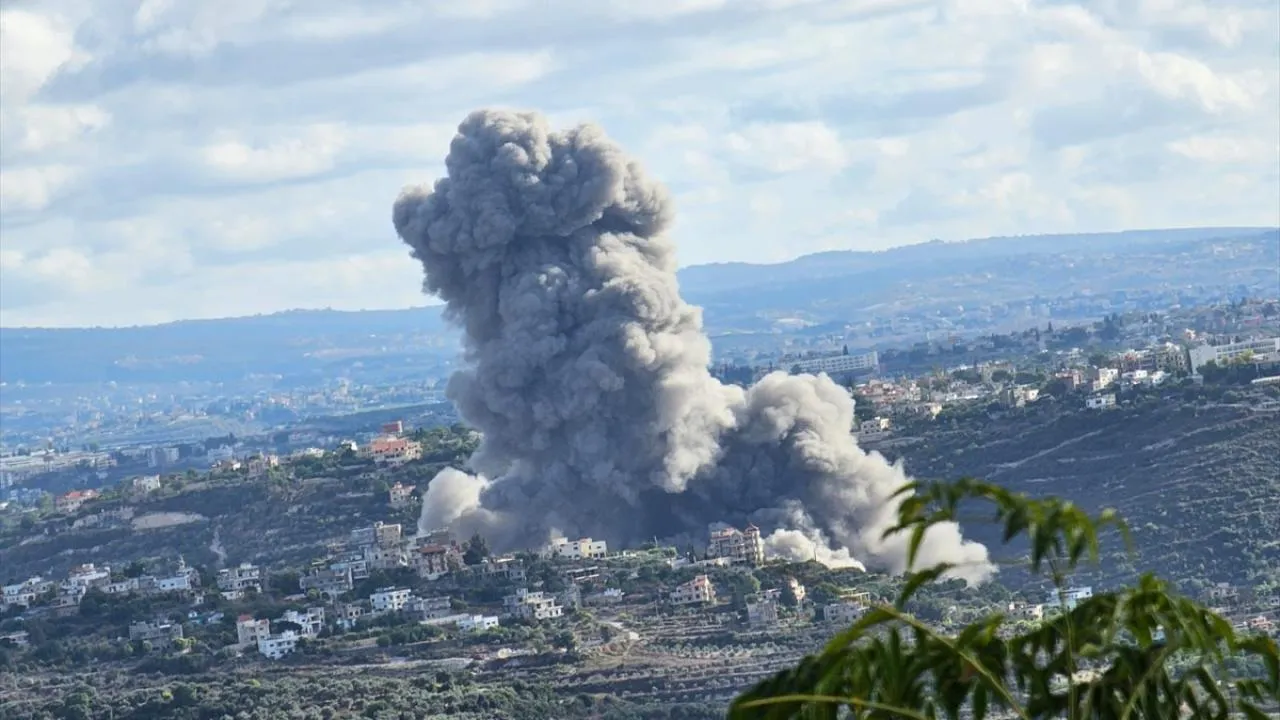

Israeli Strikes Hit Southern Lebanon Amid Rising Tensions with Hezbollah
In a significant escalation of hostilities, Israel has conducted airstrikes in southern Lebanon, amidst increasing tensions with Hezbollah regarding arms supplies. The strikes began on December 31, 2025, and have raised concerns about the potential for further regional conflict.
Reports indicate that the Israeli air force targeted positions associated with Hezbollah, a militant group based in Lebanon that has been involved in ongoing conflicts with Israel. The strikes come at a time when diplomatic efforts, reportedly facilitated by Turkey and Qatar, are attempting to de-escalate tensions between the two sides.
The airstrikes are seen as a direct response to Hezbollah's alleged buildup of weaponry, which Israel claims poses a significant threat to its national security. According to Israeli military sources, the strikes were aimed at preventing the transfer of advanced weapons to Hezbollah, which could enhance the group's military capabilities.
The situation in Lebanon remains precarious. The Lebanese government has condemned the airstrikes, calling them a violation of its sovereignty and an act of aggression. Local residents have reported widespread fear and anxiety following the strikes, as the impacts of such military actions are deeply felt in communities already suffering from economic and social instability.
Background
The conflict between Israel and Hezbollah has a long and complex history, characterized by periodic flare-ups of violence. Since the end of the 2006 Lebanon War, tensions have remained high, particularly regarding Hezbollah's military capabilities and its relationship with Iran. The group has been a key player in the regional power dynamics, often acting in opposition to Israeli interests.
In recent months, the situation has been further complicated by the ongoing Israel-Gaza conflict, which escalated sharply in October 2023. The broader regional instability has made the situation in Lebanon even more volatile, with Hezbollah often finding itself drawn into the fray.
Diplomatic attempts to mitigate the conflict have been ongoing, with Turkey and Qatar reportedly leading efforts to engage Hezbollah in discussions around disarmament and regional security. However, these initiatives face significant challenges, particularly given the deep-seated mistrust between the parties involved.
Outlook
As the situation continues to develop, observers are closely monitoring the potential for further escalation. The Israeli government has indicated that it will not hesitate to act against what it perceives as threats from Hezbollah, while the Lebanese government is under pressure to respond to the strikes in a way that preserves national dignity and sovereignty.
The coming days will be critical in determining whether diplomatic efforts can succeed in de-escalating tensions or whether the region will see a return to more widespread conflict. As both sides prepare for potential further military engagements, the humanitarian implications for civilians in Lebanon remain a pressing concern.






