
Israeli Police Investigate Officer Who Threw Stun Grenade Into West Bank Car
Israeli police have opened an investigation after video emerged of a Border Police officer throwing a stun grenade into a car in the occupied West Bank, as separate incidents in the same area saw a 16-year-old boy shot dead and a critically ill baby die after troops blocked an ambulance.
Police Launch Investigation Over Stun Grenade Video
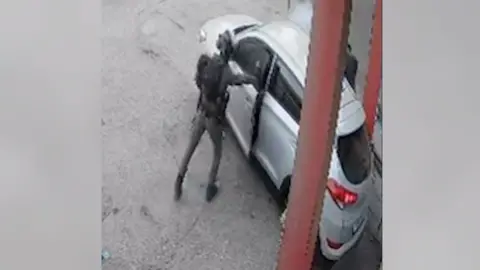
Israeli police have opened an investigation after CCTV emerged of a Border Police officer throwing a stun grenade into a car in the occupied West Bank. [1] The footage shows the officer approaching the car in the Palestinian refugee camp Qalandia and shouting at those inside. [1] After a brief exchange, he throws the stun grenade through the open door and forces it closed as the driver tries to escape. [1] There is a blast and smoke is visible. [1] The two passengers escape from the other side before the officer appears to fire his rifle as they duck for cover. [1] Israeli rights group B'Tselem said everyone in the car survived. [1] Police told Israeli media the officer had not acted in accordance with procedure. [1] It said the incident had been transferred to the department of internal police investigations. [1] The video shows the officer forcing the driver's side door closed as smoke rises from the passenger side. [1] Israeli police have opened an investigation after CCTV emerged of a Border Police officer throwing a stun grenade into a car in the occupied West Bank. [1] The footage shows the officer approaching the car in the Palestinian refugee camp Qalandia and shouting at those inside. [1] After a brief exchange, he throws the stun grenade through the open door and forces it closed as the driver tries to escape. [1] There is a blast and smoke is visible. [1] The two passengers escape from the other side before the officer appears to fire his rifle as they duck for cover. [1]
Fatal Shooting of Teenager During West Bank Clash
In a separate incident in Qalandia on Sunday, Israeli forces shot and killed a 16-year-old boy, Walid Abu Sneineh, according to the Palestinian health ministry. [1] Two other children suffered gunshot wounds to their lower limbs, it added. [1] Israeli authorities told the BBC that Israeli forces perceived an imminent threat to their lives after a violent riot erupted during which they came under a massive barrage of stones. [1] They said the forces responded with gunfire to a suspect throwing stones at them from a rooftop. [1] In a separate incident in Qalandia on Sunday, Israeli forces shot and killed a 16-year-old boy, Walid Abu Sneineh, according to the Palestinian health ministry. [1] Two other children suffered gunshot wounds to their lower limbs, it added. [1] Israeli authorities told the BBC that Israeli forces perceived an imminent threat to their lives after a violent riot erupted during which they came under a massive barrage of stones. [1] They said the forces responded with gunfire to a suspect throwing stones at them from a rooftop. [1] In a separate incident in Qalandia on Sunday, Israeli forces shot and killed a 16-year-old boy, Walid Abu Sneineh, according to the Palestinian health ministry. [1] Two other children suffered gunshot wounds to their lower limbs, it added. [1]
Israeli police investigate Border Police officer who threw stun grenade into car in West Bank refugee camp. — Source: anadolu
Critically Ill Infant Dies After Checkpoint Delay
Also on Sunday, a critically ill four-month-old baby, Ahmed Zaid, died after Israeli troops refused to open a gate blocking the main entrance to his village west of Ramallah, delaying his access to urgent medical care, according to the head of the local UN human rights office. [1] Ajith Sunghay said an ambulance was waiting on the other side of the gate outside Deir Ammar to take Ahmed to hospital. [1] He described the death as senseless and emblematic of an occupying power continuing to show utter disregard for the humanity and rights of Palestinians living under occupation. [1] However, the Israeli military told the BBC that its troops allowed the baby and his family to pass without any delay to continue receiving medical treatment. [1] Also on Sunday, a critically ill four-month-old baby, Ahmed Zaid, died after Israeli troops refused to open a gate blocking the main entrance to his village west of Ramallah, delaying his access to urgent medical care, according to the head of the local UN human rights office. [1] Ajith Sunghay said an ambulance was waiting on the other side of the gate outside Deir Ammar to take Ahmed to hospital. [1] He described the death as senseless and emblematic of an occupying power continuing to show utter disregard for the humanity and rights of Palestinians living under occupation. [1] However, the Israeli military told the BBC that its troops allowed the baby and his family to pass without any delay to continue receiving medical treatment. [1]
Hamas Moves to Dissolve Gaza Governing Bodies
Hamas has announced plans to dissolve the bodies that have governed the Gaza Strip for almost two decades, marking the biggest political shift inside the territory since the group took control in 2007. [3] The decision comes as Israeli military aggression continued across Gaza and southern Lebanon on Monday, with Palestinian and Lebanese officials reporting new casualties despite ceasefire arrangements in both territories. [3] Hamas has announced plans to dissolve the bodies that have governed the Gaza Strip for almost two decades, marking the biggest political shift inside the territory since the group took control in 2007. [3] The decision comes as Israeli military aggression continued across Gaza and southern Lebanon on Monday, with Palestinian and Lebanese officials reporting new casualties despite ceasefire arrangements in both territories. [3]
Detention of Gaza Doctor Sparks Supreme Court Action
Israel’s continued imprisonment of prominent Palestinian doctor Hussam Abu Safiya is political, not legal and keeping him behind bars despite mounting evidence of torture brings him closer to death, Medical Aid for Palestinians has told The New Arab, as Israel's Supreme Court ordered the government to justify his detention. [5] Israel's Supreme Court on Sunday ordered the state to respond, by Tuesday, to a petition demanding the release of 14 Palestinian doctors detained from Gaza and held without charge. [5] The petition, filed by Physicians for Human Rights Israel, calls for the release of Abu Safiya, the renowned director of Kamel Adwan Hospital. [5] Rights organisations have repeatedly warned that his health has severely deteriorated while being held in solitary confinement and subjected to abuse by Israeli prison guards. [5] Aseel Baidoun, Medical Aid for Palestinians' Deputy Director of Advocacy and Communications, told The New Arab that if Israel extends Abu Safiya's imprisonment, it would push him closer to death and further demonstrate that his detention was arbitrary. [5] Under international law, doctors are meant to be protected, not punished, for treating patients, Baidoun said. [5] To hold a Palestinian doctor without charge, on secret allegations, while credible reports describe severe torture and life-threatening conditions, is a direct assault on that protection and on the absolute prohibition of torture and cruel, inhuman or degrading treatment. [5] Baidoun added that the UK was not a distant observer to what was happening to Abu Safiya and other Palestinian doctors held in Israeli detention. [5] The petition seeking the release of Abu Safiya and 13 other Palestinian doctors was first submitted on 30 April. [5] Since then, the Israeli government has repeatedly sought extensions to delay responding to the case, requests the Supreme Court has granted. [5] After the government sought yet another postponement, the court on Sunday ordered it to submit its response by Tuesday. [5] The deadline comes as rights groups continue to warn that Abu Safiya's life is in imminent danger. [5] Following a recent prison visit, his lawyer, Nasser Odeh, said the 53-year-old was barely recognisable because of the injuries he had sustained in Israeli detention. [5] In a statement to The New Arab, PHRI said it became clear that Dr. Abu Safiya had been subjected to severe and repeated beatings and was suffering from serious injuries that made it difficult for his lawyer to recognise him. [5] The organisation said it had asked a Supreme Court justice hearing the case to visit Abu Safiya personally in their capacity as an official prison visitor, alongside a cardiologist and legal team, to assess his condition and prevent irreversible harm. [5] Tuesday's deadline marks the Israeli government's final opportunity to justify the continued detention of Abu Safiya and the other doctors before the court considers the release petition. [5] Israeli forces detained Abu Safiya during a military raid on Kamal Adwan Hospital on 27 December 2024. [5] Last month, his son told The New Arab that one of his greatest fears was his father dying in Israeli custody. [5] He said seeing Abu Safiya appear virtually before an Israeli court, visibly weakened and suffering from skin diseases, had left the family heartbroken. [5] Since launching its war on Gaza in October 2023, which leading human rights organisations have characterised as genocide, Israel has detained at least 612 healthcare workers across Gaza and the occupied West Bank. [5] At least five have died in Israeli detention. [5]
Other Global Conflict Developments
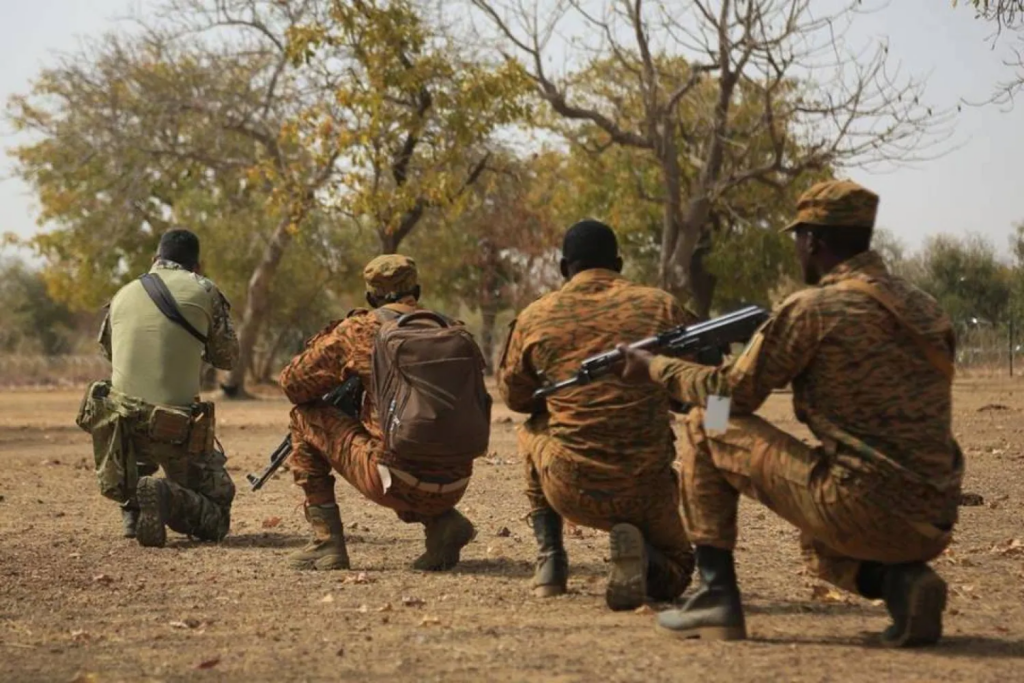
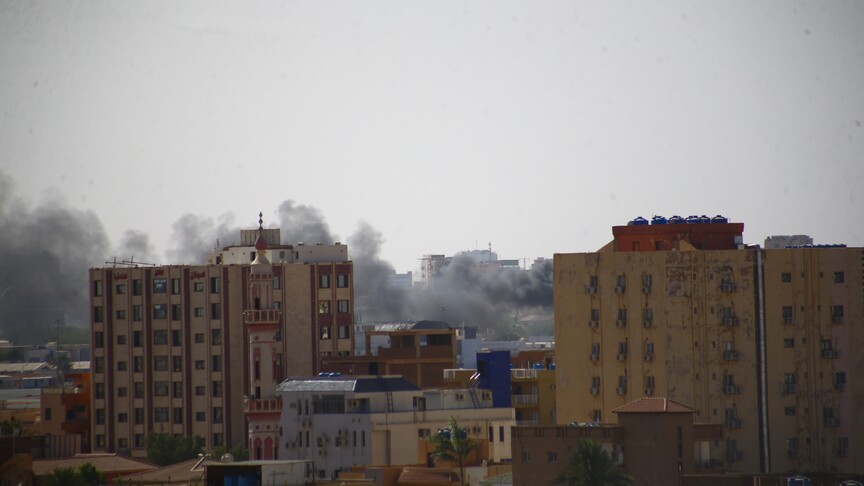
UN Human Rights Council tasks fact-finding mission with conducting urgent investigation into violations in El Obeid. [2] Tuareg separatists and al-Qaeda affiliates appear to have secured control of a key town in northern Mali following a coordinated offensive by the rebels over the weekend. [4] The Malian army and Russian mercenaries have been holed up in the key camp of Anéfis after the rebels launched their offensive on Saturday 4 July. [4] Coordinated attacks in northern Mali over the weekend saw some of the heaviest fighting in months following an offensive by the Azawad Liberation Front and Jama'a Nusrat ul-Islam wa al-Muslimin. [4] The rebels targeted army positions backed by Russian paramilitaries. [4] According to a statement by the Malian army, the cities and towns included Anéfis, Aguelhoc, Gao, Sévaré and Kenioroba, just south of the capital Bamako. [4] The coordinated attacks by the rebels on the northern city of Anéfis are significant, given it is about 100 kilometres from Kidal, considered to be the capital of the Tuareg nationalist cause, which has been under FLA control since 25 April. [4] Speaking to RFI, Paul Melly, a fellow with a focus on the Sahel and West Africa at Chatham House, said Anéfis appears to be under rebel control following the offensive on Sunday. [4] Reports have also confirmed that Malian troops have been captured by the rebels, but many of their Russian allies are holding out in the town's main military base, Melly added. [4] Army helicopters had attempted to deploy to Anéfis on Sunday to evacuate the wounded and deliver supplies, but were reportedly unable to land after coming under fire early in the day. [4] The loss of control of Anéfis is a serious military setback, while the other attacks highlight the ongoing scale of the rebel threat and the government's continuing inability to reassert its control nationwide, Melly told RFI. [4] The Malian army only issued a brief statement mid-morning on Monday 6 July to assure citizens of victory over these hostile enemies. [4]
What to watch next: Israel's Supreme Court deadline on Tuesday for the government to justify the continued detention of Hussam Abu Safiya and other doctors arrives amid ongoing warnings that his life is in imminent danger.