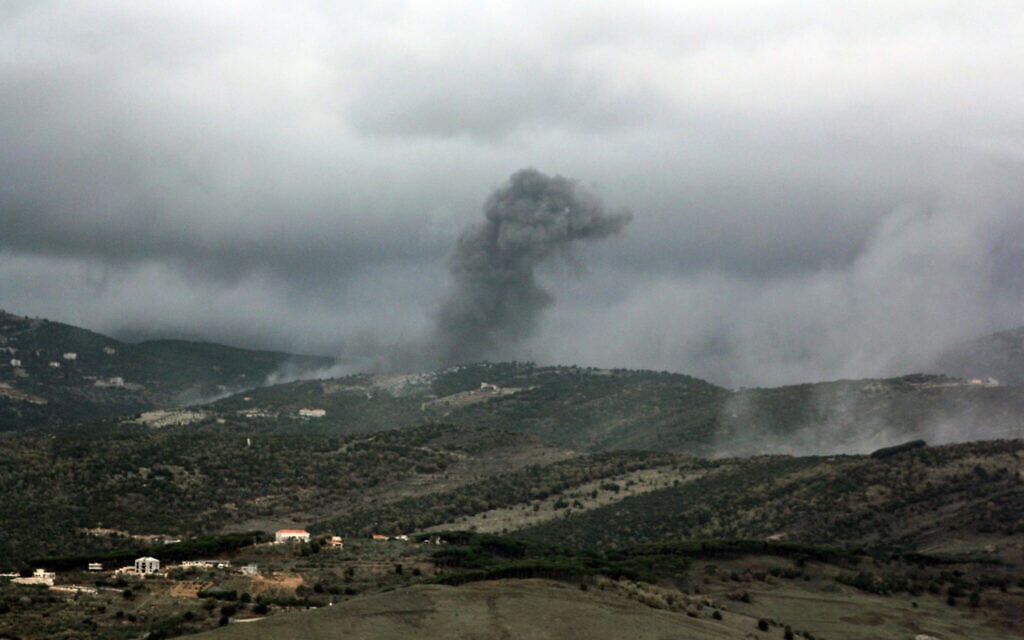

Israeli Airstrike Kills Hezbollah Fighter in Southern Lebanon Amid Ongoing Border Tensions
Beirut/Southern Lebanon — An Israeli airstrike in southern Lebanon on January 7, 2026, killed at least one member of Hezbollah, escalating cross-border confrontations between Israel and the Iran-backed militant group. The strike marks a continuation of tit-for-tat exchanges that have persisted along the Israel-Lebanon border since late 2023.
The high-severity incident occurred at approximately 23:38 GMT on Wednesday, targeting a location in southern Lebanon where the Hezbollah operative was present. Details on the precise location or additional casualties remain limited, but it underscores Israel's ongoing campaign against Hezbollah infrastructure and personnel in the region.
Just two days later, on January 9, the Israel Defense Forces (IDF) conducted further strikes on Hezbollah weapons sites and launchers in southern Lebanon, according to reports from The Times of Israel. There were no immediate reports of casualties from these operations. The timing is notable: the IDF actions came one day after the Lebanese army announced it had disarmed Hezbollah positions in the south, a development that has raised questions about the enforcement of a fragile ceasefire and disarmament efforts.
Hezbollah, a Shiite militant group and political party designated as a terrorist organization by Israel, the United States, and several other countries, has long maintained a strong presence along Lebanon's southern border with Israel. The group has been engaged in near-daily exchanges of fire with Israeli forces since October 2023, following Hamas's attack on Israel that sparked the ongoing war in Gaza. These clashes have resulted in hundreds of deaths on both sides, displaced tens of thousands of Israelis from northern communities, and forced over 1 million Lebanese from their homes near the border.
Background on Israel-Hezbollah Tensions
The current flare-up is rooted in a broader regional conflict. A U.S.-brokered ceasefire in November 2024 aimed to halt the fighting, mandating Hezbollah's withdrawal north of the Litani River—about 30 kilometers (18 miles) from the border—and the withdrawal of Israeli forces from southern Lebanon. Implementation has been uneven. United Nations Interim Force in Lebanon (UNIFIL) peacekeepers have reported violations by both sides, including Hezbollah rocket launches and Israeli overflights.
Lebanon's fragile government, dominated by Hezbollah allies but pressured by Western nations, has sought to assert state control over the south. The Lebanese Armed Forces (LAF) announced on January 8 that it had disarmed Hezbollah sites, a rare public claim that drew swift Israeli response. Critics, including Israeli officials, have dismissed such moves as superficial, pointing to Hezbollah's estimated arsenal of 150,000 rockets and missiles.
Compounding the military actions, diplomatic maneuvering unfolded in Beirut on January 9. Iranian diplomat Abbas Araghchi, a key figure in Tehran's foreign policy, visited the Lebanese capital amid reports of discussions on regional de-escalation. Lebanon's Foreign Minister separately urged Iran to adopt a "new approach" toward Hezbollah, signaling internal frustrations with the group's dominance and its role in perpetuating conflict.
Israeli Prime Minister Benjamin Netanyahu has repeatedly stated that Israel will not tolerate Hezbollah rearmament or proximity to the border, invoking security concerns after the October 7, 2023, attacks that killed 1,200 Israelis and took 250 hostages. Hezbollah leader Hassan Nasrallah, assassinated by Israel in September 2024, had framed the group's actions as support for Palestinians in Gaza. His successor, Naim Qassem, has maintained a defiant posture, though recent statements suggest wariness of full-scale war.
Regional and Diplomatic Context
The strikes occur against a backdrop of strained U.S.-led efforts to stabilize the Levant. The Trump administration, entering office in January 2025, has prioritized confronting Iran and its proxies, including Hezbollah. Meanwhile, Lebanon's economy—already crippled by a 2019 financial collapse—faces further strain from border instability, with remittances and aid flows disrupted.
UN Secretary-General António Guterres has called for renewed commitment to Resolution 1701, the 2006 UN mandate for a demilitarized south Lebanon. European nations, including France, have pushed for stronger LAF deployment, pledging over $1 billion in military aid since 2024.
No official statements from Hezbollah or Lebanese authorities confirmed the January 7 casualty as of latest reports, but the group frequently vows retaliation for such losses. Past patterns suggest potential rocket barrages into northern Israel, which could widen the conflict.
Outlook Amid Uncertainty
As Iranian and Lebanese officials engage in talks, the dual Israeli strikes highlight the precarity of de-escalation efforts. With the Lebanese army's disarmament claim quickly tested by IDF operations, skepticism persists about Hezbollah's willingness to fully retreat. International mediators, including the U.S., Qatar, and Egypt, continue shuttle diplomacy, but progress hinges on verifiable compliance.
The death of the Hezbollah member on January 7 serves as a stark reminder of the human cost, with risks of escalation remaining high. Both sides appear calibrated to avoid all-out war, yet the cycle of strikes and counterstrikes endures, testing the resilience of Lebanon's sovereignty and Israel's northern security.
(Word count: 712)






