

Israel Conflict Sees More West Bank Killings in Three Years Than Prior 17 Combined
Israeli forces and settlers have killed more Palestinians in the occupied West Bank in the past three years than in the previous 17 years combined, according to an Oxfam analysis of United Nations data, amid a broader Israeli expansion of control that has placed about 80 percent of the territory under de facto authority since the October 7, 2023 Hamas attack. The Israel conflict has produced these outcomes through sustained operations in the West Bank alongside other regional developments.
Rising Palestinian Deaths in the West Bank
An analysis of United Nations data by Oxfam shows that Israeli forces and settlers killed more people in the occupied West Bank in the last three years than in the 17 years before that combined. More than one in five of those killed over the past 20 years were children. The number of children killed in the most recent three years also rose. The Oxfam review of United Nations figures counted 1,036 Palestinians killed in the territory. [1]
Israeli Expansion and De Facto Annexation
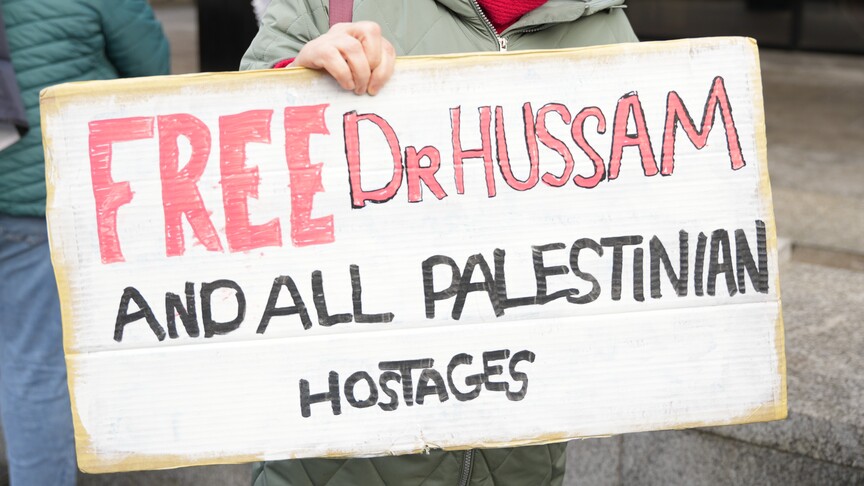
Detained Gaza hospital director Abu Safiya appeals for immediate release from Israeli custody. — Source: anadolu
To solidify control over the West Bank, home to 3.3 million Palestinians, Israel has established new settlements for its own citizens, evicted Palestinians from their residences, allowed vandals to attack rural Arab communities, and intensified military raids on towns across the territory. In tandem with these activities, the government of Prime Minister Benjamin Netanyahu has established institutions to directly govern a third of the area. Through military force, 80 percent of the entire West Bank will be under de facto Israeli control, Israeli and Palestinian observers say. The remaining 20 percent will be governed by the Palestinian National Authority, an institution set up in 1994. The moves to tighten control followed the October 7, 2023, invasion of southern Israel by Hamas. Israel’s counterattack has put about 60 percent of the territory into its hands. Domination of the West Bank aligns with Netanyahu’s long-held desire to both colonize and govern it. The Hamas 2023 attack has provided unwavering support for Netanyahu’s West Bank moves. [2]
Escalating Settler Violence and Military Complicity
Israeli settler violence against Palestinians has cemented separate but unequal status. Settlers frequently raid isolated farm houses and have set several on fire. The Israeli army stands by idly. Last month, a settler was videotaped trying to beat a sheepdog to death with a pair of sticks. Mobs steal sheep from their pens. Post October 7, 2023, the environment has seen an escalating settler violence, which has gone from primarily involving vandalism and property destruction to now being marked by kidnapping, prolonged abuse and apparent military complicity. In a March report, the United Nations Human Rights Office said settler violence continued in a coordinated, strategic and largely unchallenged manner, with Israeli authorities playing the central role in directing, participating in or enabling this conduct, making it difficult to distinguish between state and settler violence. Prosecution of marauding settlers is rare. Yesh Din reported that 90 percent of complaints filed by Palestinians about settler harassment between 2005 and 2025 were closed with no charges being filed. Israeli security forces routinely accompanied settlers and acted as a shield for the violence. At least seven Palestinians were killed and 832 injured in 2025 with near-daily attacks continuing into this year, according to the United Nations. The increasing participation of Israeli security forces in settler attacks amounts to a de facto collapse of the distinction between settlers and soldiers. [2]
Detention of Gaza Medical Personnel

Gaza doctor Hussam Abu Safiya appears before Israeli court. — Source: thenewarab
Gaza hospital director Hussam Abu Safiya appealed for his immediate release before Israel’s Supreme Court and called his detention unjust and arbitrary. The doctor is suffering in solitary confinement after being detained and abused by Israel in 2024. Hussam Abu Safiya told Israel’s Supreme Court in his first appearance in nearly a year that his detention is unjust and arbitrary and he demands his immediate release. One of Gaza’s most renowned doctors, Hussam Abu Safiya, is set to appear in court after being held by Israel for over 17 months without charge or trial. The Israeli Supreme Court will hear the 53-year-old’s appeal against his detention extension ordered in April, with Abu Safiya scheduled to participate via video link from his prison cell. The director of the Kamal Adwan hospital in north Gaza was detained by Israeli forces on 27 December 2024 after being classified as an unlawful combatant along with other Palestinian doctors. He became internationally known for refusing to abandon patients in the hospital despite working under strenuous conditions under heavy Israeli bombardment and a lack of equipment. Reports said that Abu Safiya had been placed in solitary confinement. He was moved from Ketziot prison to Ramon prison. Information gathered during a prison visit on 4 June indicated that Abu Safiya was being held alone in a small cell where he was unable to move or sit properly due to its cramped conditions. Attorney Nasser Odeh said Abu Safiya had not received any medical treatment, continuing to suffer from back pain and experiencing vision complications. The case of Dr. Hussam represents a wider policy of targeting healthcare workers during the last two years, which aimed to destroy the health system in Gaza. Dr. Hussam is not the only healthcare worker held unlawfully in Israeli detention, but other 14 doctors also and dozens of nurses and paramedics. [3][4]
Regional Impact Including Iran Casualties
Iran says nearly 3,500 people killed in US-Israel attacks since February. Dead include 2,988 men and 511 women, according to the Foundation of Martyrs and Veterans Affairs. [5]
International and Domestic Reactions
About 58 percent of Israelis back expansion of settlements in the West Bank. The same percentage opposes outright annexation. The combination provides Netanyahu with a free hand to tighten control over the West Bank so long as he does not formally annex it. Instead, he simply creates facts on the ground that simulate annexation in all but name. Israeli diplomats in Geneva rejected a United Nations report and accused the UN body of relying on unsubstantiated allegations. Foreign governments friendly to Israel cling to the two-state solution though for many years they have made no effort to make it a reality. US President Donald Trump has mentioned the West Bank only to demand Israel not formally annex it. Tehran disdains the Palestinian National Authority as weak and ineffective. In recent years Iran funneled money to armed groups in the northern West Bank. However that effort has been weakened by the ouster of the allied government of Bashar al-Assad and its replacement by a Sunni Islamic government trying to woo Western support for economic help. [2]
What to watch next: Israeli plans to demand written proof of land ownership by Palestinians dating from Ottoman Empire or Jordanian rule periods, with many documents nonexistent for communally held land, alongside continued near-daily settler attacks into this year.






