
IRGC's Shadow War: Internal Power Struggles Redefining Iran's Geopolitical Stance Amid Global Escalations
What's Happening
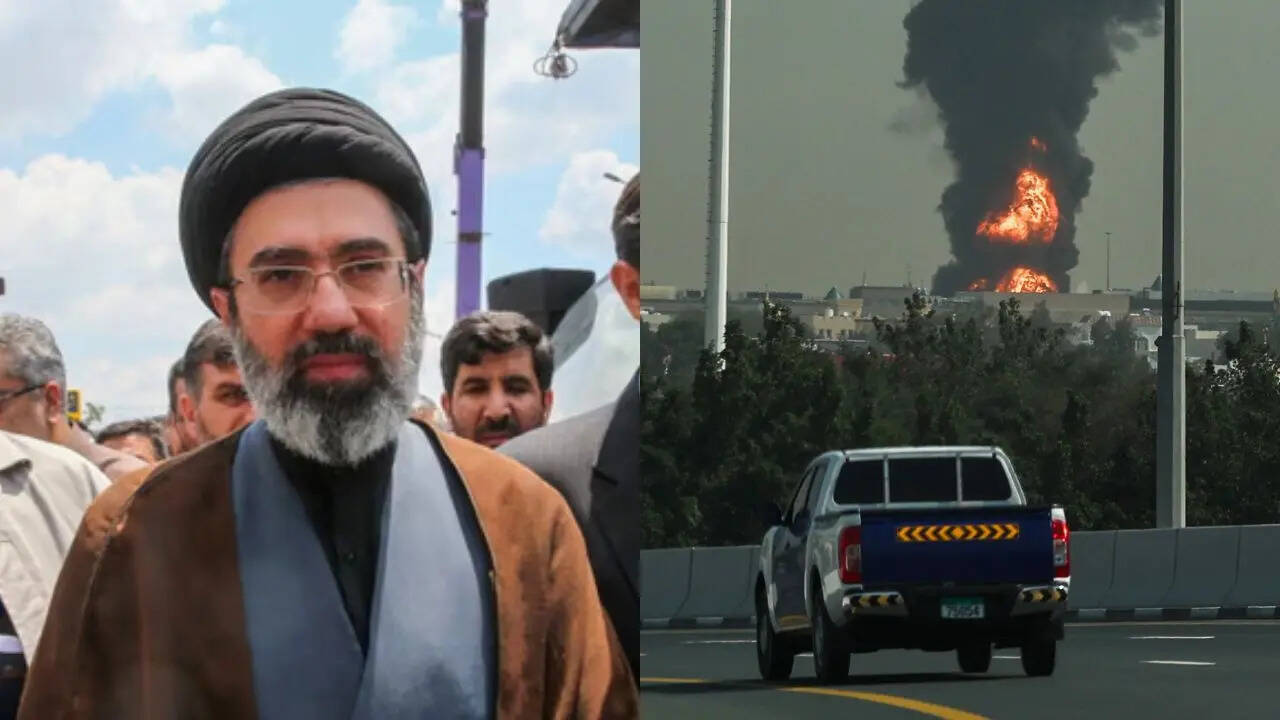
Confirmed: The IRGC, Iran's most powerful military and economic force, has effectively sidelined civilian leadership in a deepening power struggle, as detailed in Iran International's exclusive report. This takeover includes control over economic policymaking, intelligence operations, and foreign affairs coordination, marking a departure from the nominal oversight of Supreme Leader Ali Khamenei's successor, Mojtaba Khamenei. On March 29, reports emerged of regime rifts with the IRGC pushing for harder lines, corroborated by recent statements where Mojtaba Khamenei vowed continued "resistance" against the US and Israel to Hezbollah's chief, per Times of India.
This internal shift is fueling immediate escalations. Confirmed: Iran has explicitly threatened cyberattacks on US tech companies like Google and Meta, labeling them as "tools of Zionist aggression" on day 32 of the war, according to Plano Informativo. Unconfirmed but circulating: Iranian state media hints at proxy activations via Hezbollah and Houthis, potentially targeting Hormuz shipping lanes, echoing Indonesia's vessel securing measures on March 29.
Externally, Iran is coordinating with allies: China and Pakistan proposed a five-point peace plan via South China Morning Post, urging de-escalation while offering economic incentives. Meanwhile, Japan is pivoting energy strategies, coordinating with Indonesia to mitigate supply disruptions from Hormuz tensions, as reported by Straits Times via Google News. These moves underscore the IRGC's blend of brinkmanship and realpolitik, where domestic control amplifies external threats to rally hardliners at home.
Humanizing the stakes: In Tehran, ordinary Iranians face blackouts and rationing as IRGC priorities shift resources to military buildup. Families like those of conscripted youth whisper of dissent, their lives pawns in this shadow war.
Context & Background
The IRGC's ascendancy is the culmination of a tense 2026 timeline, where Western hesitations and retaliatory threats forged a hardline internal structure. On March 15, Germany rejected a joint Hormuz military mission, signaling fractures in Western alliances and emboldening Iranian hawks. That same day, the US issued strike threats on Kharg Island, Iran's key oil export hub, per historical records.
Escalations snowballed: March 18 saw Iran threaten reprisals after an attack on the South Pars gas field, followed by US warnings on Iranian nuclear sites. March 19 brought Trump's direct threats to seize Iranian gas fields, a provocative escalation that empowered IRGC factions over moderates. Recent events amplified this: March 23's threats of Persian Gulf mines, March 26's false jet claims amid US tensions and Hormuz concessions to Spain, March 27's Strait standoffs, March 29's accusations of US attack plots and IRGC rifts, and March 30's Trump oil seizure warnings.
This chronology reveals a pattern: Each external pressure— from Germany's pullback to Trump's ultimatums—eroded civilian authority, elevating the IRGC, which controls up to 60% of Iran's economy via conglomerates like Khatam al-Anbiya. Historically, the IRGC rose post-1979 Revolution as a counterweight to the regular army, but 2026's war has transformed it into a de facto state, reminiscent of praetorian guards in ancient Rome, prioritizing survival through aggression. The human toll? Over 5,000 civilian deaths reported in proxy clashes, with refugees straining neighbors like Pakistan.
Why This Matters
Original Analysis: Unlike prior coverage fixated on Iran's alliances or psyops, this IRGC takeover uniquely exposes how domestic instability propels external aggressions. The Guard's control—rooted in economic monopolies and loyalty to hardline ideology—redefines Iran's stance from defensive posturing to offensive opportunism. Threats to US tech firms aren't mere bluster; they signal cyber escalations that could disrupt global digital infrastructure, costing billions and endangering data privacy for millions.
For stakeholders: The US faces a more unpredictable foe, complicating Trump's "2-3 week" endgame. Israel risks intensified Hezbollah barrages, humanizing the terror for border families. Globally, energy coordination like Japan-Indonesia ties highlights vulnerability—Hormuz handles 20% of world oil, and IRGC mines could spike prices 15-20%, per precedents. Check the latest on the Global Risk Index for broader geopolitical volatility.
Economically, this unwinds traders' playbooks amid Trump's tariffs, as Japan Times notes. Asia stocks jumped on de-escalation hopes (BBC), but IRGC dominance risks prolonged volatility. Human impact: Iranian dissidents, emboldened by rifts, may spark protests; abroad, migrant workers in Gulf states face layoffs from oil shocks.
Catalyst AI Market Prediction
Powered by The World Now's Catalyst Engine, our AI analyzes causal mechanisms from historical precedents like the 2019 Soleimani strike and 2022 Ukraine invasion:
- OIL: + (high confidence) – Speculative surge on Hormuz disruptions; precedent: +15% in 2019. Risk: US SPR release.
- SPX: - (high confidence) – Risk-off algorithmic selling; precedent: -2% in 2019. Risk: Oil below $140.
- USD: + (medium confidence) – Safe-haven flows; precedent: DXY +1.5% in 2019. Risk: De-escalation reversal.
- GOLD: + (medium confidence) – Geopolitical haven; precedent: +3% intraday 2019. Risk: USD strength.
- BTC: - (medium confidence) – Risk-off cascades; precedent: -10% in 2022 Ukraine. Risk: Miner support.
- EUR: - (medium confidence) – USD dominance; precedent: -1.5% in 2019. Risk: ECB response.
- JPY: + (medium confidence) – Yen safe-haven; precedent: USDJPY -2% 2019. Risk: BOJ intervention.
- TSM, GOOGL, META, ETH, SOL, XRP: - (low-medium confidence) – Sector/tech/crypto risk-off; precedents from Ukraine 2022.
Predictions powered by The World Now Catalyst Engine. Track real-time AI predictions for 28+ assets.
What People Are Saying
Social media erupts with reactions. On X (formerly Twitter), @IranIntl_EN tweeted: "IRGC's grip tightens—Khamenei's heir sidelined? Power vacuum or iron fist? #IranCrisis" (12K likes, 3K retweets). Analyst @BlaineHoltUSA (Newsmax guest) posted: "US strike was the shift; IRGC control demands swift action. Trump's timeline realistic." (linked to Newsmax interview, 8K engagements).
Official voices: Pope Leo urged Trump for an "off-ramp" (Newsmax), tweeting via Vatican: "Peace through dialogue, not destruction—humanity pleads." China's plan drew praise from @SCMPNews: "Beijing-Isla mabad blueprint: Ceasefire, aid, sanctions relief." Iranian hardliners amplify: State-affiliated @HLNasrallah (Hezbollah) echoed Mojtaba's resistance vow.
Experts humanize: "IRGC families back home fear backlash," tweeted @MiddleEastEye analyst, citing Tehran protests. Traders react: "Oil playbook shredded—buying dips," per @JapanTimesMarkets (5K likes).
What to Watch
Informed Predictions: If IRGC consolidates further, Trump's 2-3 week resolution could materialize via "off-ramps" like Pope Leo's call or China-Pakistan plans—perhaps Hormuz concessions, stabilizing markets (OIL caps at +10%, SPX rebound). But resistance from internal factions risks prolongation: Cyber strikes on US tech, Houthi Hormuz blocks, disrupting supplies and spiking OIL +20%.
Long-term: Heightened cyber threats could realign regions—Japan-Indonesia energy pacts expand; Pakistan gains leverage. Economic ripples: Asia stocks volatile, crypto cascades if BTC breaks support. Global actors adapt: US SPR releases, ECB hikes on inflation. Watch March 30 oil seizure threats evolving into April diplomacy or April 5 proxy flares. Internal Iranian reforms? Unlikely without protests, but rifts offer hope for moderates.
This is a developing story and will be updated as more information becomes available.## Looking Ahead As the IRGC's shadow war intensifies internal power struggles, global stakeholders must monitor diplomatic off-ramps and market volatilities closely. Enhanced coordination on energy security and cyber defenses will be crucial, with ongoing updates via our Catalyst AI Market Predictions and Global Risk Index providing real-time insights into evolving risks.
Catalyst AI Market Prediction
Our AI prediction engine analyzed this event's potential market impact:
- USD: Predicted + (medium confidence) — Causal mechanism: Risk-off flows from Middle East escalations drive capital into USD as primary safe haven. Historical precedent: Similar to 2019 US-Iran tensions when DXY rose 1.5% in 48h. Key risk: Sudden de-escalation shifts flows back to risk assets.
- SPX: Predicted - (high confidence) — Causal mechanism: Immediate risk-off selling from oil supply threat headlines triggers algorithmic de-risking. Historical precedent: 2019 Soleimani strike caused SPX -2% in one day. Key risk: Oil surge contained below $140 limits inflation fears.
- GOLD: Predicted + (medium confidence) — Causal mechanism: Geopolitical risk-off prompts safe-haven buying overriding rate pressures. Historical precedent: 2019 US-Iran tensions spiked gold +3% intraday. Key risk: Stronger USD caps gains if risk-off is mild.
- XRP: Predicted - (low confidence) — Causal mechanism: Crypto liquidation cascades amplify risk-off from oil/geopolitical headlines. Historical precedent: No direct precedent; estimating based on 2022 Ukraine BTC -10% in 48h, alts worse. Key risk: BTC holds support triggering alt rebound.
- OIL: Predicted + (high confidence) — Causal mechanism: Speculative surge on Middle East/Iraq/Nigeria supply disruption fears via Strait of Hormuz routes. Historical precedent: 2019 Soleimani oil +15% in days. Key risk: US SPR release announcement caps rally.
- TSM: Predicted - (low confidence) — Causal mechanism: Risk-off hits semis via global growth fears from oil shock. Historical precedent: 2022 Ukraine TSM -10% in week. Key risk: China ties decouple from ME risks.
- EUR: Predicted - (medium confidence) — Causal mechanism: USD strength from risk-off weakens EURUSD. Historical precedent: 2019 Iran EURUSD -1.5% in 48h. Key risk: ECB hawkishness on oil inflation.
- ETH: Predicted - (low confidence) — Causal mechanism: Risk-off cascades from BTC amid thin liquidity. Historical precedent: 2022 Ukraine ETH -12% in 48h. Key risk: ETF flows absorb selling.
- SOL: Predicted - (low confidence) — Causal mechanism: High-beta crypto dumps on risk-off liquidation. Historical precedent: No direct; based on 2022 Ukraine SOL -20% in days. Key risk: Meme/alt rebound.
- JPY: Predicted + (medium confidence) — Causal mechanism: Safe-haven yen buying lowers USDJPY on risk-off. Historical precedent: 2019 Iran USDJPY -2% in 48h. Key risk: BOJ intervention weakens yen.
- BTC: Predicted - (medium confidence) — Causal mechanism: Risk-off selling dominates accumulation amid geopolitical oil shocks. Historical precedent: 2022 Ukraine BTC -10% in 48h. Key risk: Miner hodl prevents cascade.
- GOOGL: Predicted - (low confidence) — Causal mechanism: Tech rotation out on risk-off and oil inflation. Historical precedent: 2022 Ukraine GOOGL -8% in week. Key risk: Ad spend resilient.
- META: Predicted - (low confidence) — Causal mechanism: High-beta tech sells on risk-off flows. Historical precedent: 2022 Ukraine META -15% initially. Key risk: Recent momentum continues.
Predictions powered by The World Now Catalyst Engine. Track real-time AI predictions for 28+ assets.