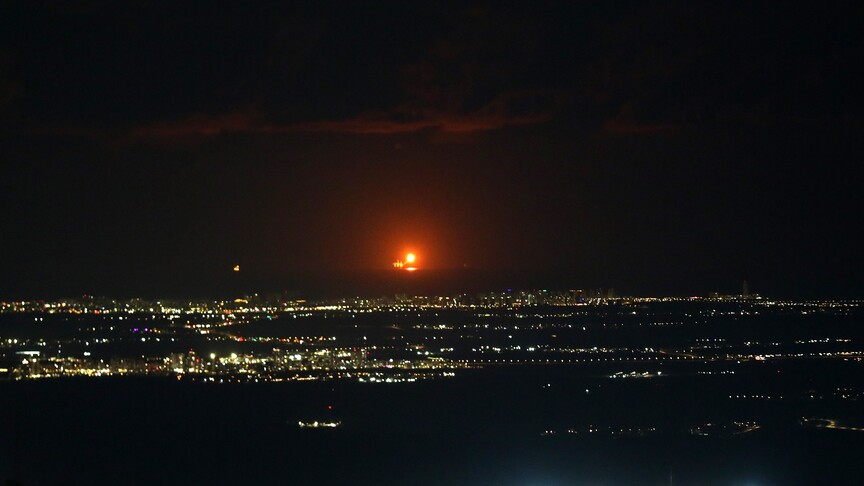

Iran War Resumes as US Launches Strikes on Military Sites Near Bandar Abbas
The United States and Iran have resumed direct military conflict with waves of strikes and blockades centered on the Strait of Hormuz, three months after an interim memorandum aimed at ending hostilities in the Iran war.
Resumption of Hostilities
The United States launched a wave of strikes against Iran on Wednesday after reimposing a naval blockade. [2] Nearly a month after the sides signed a memorandum of understanding aimed at ending the Middle East war, the two sides resumed fighting with strikes on targets across the region. [2] US Central Command launched strikes targeting Iranian military capabilities used to attack commercial shipping in the Strait of Hormuz, hitting sites near Bandar Abbas, Qeshm, Bushehr and other locations. [2] Iran's Revolutionary Guards targeted the US Fifth Fleet in Bahrain, launched missiles toward Jordan and Kuwait, and struck a Kuwaiti naval vessel, wounding four crew members. [2] Iranian state media reported explosions near the port city of Bandar Abbas, on the island of Qeshm and on Bandar Imam Khomeini, with fresh US strikes later hitting the southern port city of Bushehr. [2]
Dispute Over the Strait of Hormuz

US strikes target Iranian military sites near Bandar Abbas in the Strait of Hormuz. — Source: thenewarab
At the heart of the resumption of hostilities has been the dispute over the Strait of Hormuz, a waterway that is crucial for global oil and gas flows. [2] Iran blockaded Hormuz after the war erupted with US-Israeli strikes on 28 February, using the waterway for leverage against its foes for months. [2] The Strait of Hormuz remains effectively closed with low traffic levels, disrupting 20 percent of global oil and LNG flows despite US efforts to reopen it. [1] Traffic through the waterway remained low, with maritime tracker Kpler reporting only 21 transits on Tuesday. [2] The US, in turn, has reimposed its own blockade of Iran's ports, though Trump has backed down on a planned 20 percent levy on ships using the strait. [2] Iranian Deputy Foreign Minister Kazem Gharibabadi said the renewed US blockade "has, in a way, dismantled the Islamabad memorandum," referring to the interim deal reached last month. [2]
Military Damage and Losses
US strikes have killed at least 30 people in Iran according to government statements, while damaging at least 16 US installations across the region and depleting significant stocks of Tomahawk, Patriot and other munitions. [2] [1] At least 16 U.S. installations across eight countries suffered severe damage, rendering many bases unusable. [1] Iran targeted dozens of U.S. sensors and radars, crippling regional air defense networks. [1] Forty-two military aircraft, including an E-3 AWACS and four F-15s, were damaged or destroyed. [1] The United States burned through 1,000 Tomahawk missiles, nearly 50 percent of its Patriot and THAAD interceptor stockpiles, and significant portions of advanced stand-off weapons like PRSM and JASSM missiles. [1] Since last week, renewed US attacks have killed at least 30 people in Iran, government spokesman Fatemeh Mohajerani said. [2] Separately, the military announced that seven of its personnel were killed in Wednesday's strikes on the southeast. [2]
Economic and Strategic Consequences
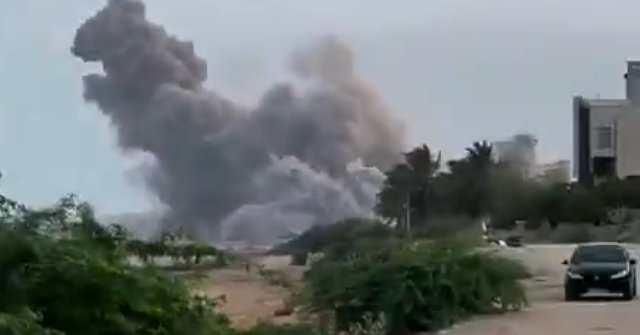
Iranian southern port city of Bandar Abbas experiences renewed strikes near the Strait of Hormuz. — Source: iraninternational
The economic fallout is equally devastating. [1] Higher oil prices and inflation are hammering American consumers, while global trade disruptions have slowed economic growth. [1] The price for Brent crude oil, the international standard, traded above $85 a barrel on Wednesday — more than 15% higher than the price before the war, but still well below the nearly $120 reached at the height of the conflict. [4] The price rises mean that when the conflict does end, global travel won't immediately bounce back to the pre-war state. [4] Experts warn that the United States can no longer defend Taiwan or Europe simultaneously. [1] A $1.5 trillion defense budget cannot solve the structural insolvency of U.S. global commitments. [1]
Statements from Leaders
President Trump threatened to expand strikes to Iranian power plants and bridges next week unless Tehran returns to negotiations, while scrapping a planned levy on ships using the strait. [2] Trump declared that "Next week it gets really bad for them." [2] Israeli Prime Minister Benjamin Netanyahu, whose country has so far not rejoined the war, warned Iranian leaders on Tuesday that Israel would deal a heavy blow if they launched an attack on his country. [2] Speaking from Dimona, a southern town widely believed to house Israel's undeclared nuclear arsenal, he said: "Do not count on things remaining quiet if you attack us." [2] Trump was quick to declare victory, writing on Truth Social that "The Strait of Ormuz is open for ALL maritime traffic, except for Iran — and this is a consequence of its lying, violent and malicious leadership, which is leading the country down a path of TOTAL DESTRUCTION." [5]
Regional Variations in Impact
A week of heavy fighting has left parts of Iran’s southern coast looking unmistakably like a war zone. [3] Yet in Tehran, many still struggle to believe the country is at war. [3] In the capital Tehran, there was no sign of a return to conflict, with ordinary Iranians thronging cafes to watch the France-Spain World Cup semi-final in huge crowds. [2]
What to watch next: Mediated talks between the two sides have not formally ended, and analysts note that the United States continues to focus on weakening Iranian control over the Strait of Hormuz through additional strikes on military targets. [2]