
Iran War Resumes as Trump Notifies Congress of Renewed Strikes After Ceasefire Breach
The United States and Iran have returned to open warfare, with President Donald Trump notifying Congress that the U.S. is again at war with Tehran after Iran breached a June 17 ceasefire agreement by attacking commercial vessels in the Strait of Hormuz. The Iran war has escalated rapidly with new military actions on both sides.
Renewed Open Warfare Between U.S. and Iran
President Donald Trump formally notified Congress in a July 10 letter that the nation is once again at war with Iran. [4] The letter states that the renewed military action is to protect Americans, U.S. national security and foreign policy interests, following failed diplomatic efforts and Iran's violation of the ceasefire. [2] Trump described how the administration had announced a two-week ceasefire on April 7 that was later extended and how efforts were made toward a diplomatic solution. [4] The letter references the understanding agreement signed by the United States and Iran on June 17 and notes that Iran breached the agreement by attacking civilian commercial vessels in the Strait of Hormuz. [2] This breach prompted Trump to order new attacks against Iran beginning July 7. [4] U.S. Central Command began launching the third consecutive night of strikes against Iran on July 13 at 4:45 p.m. ET. [5] The strikes are intended to impose a heavy cost on Iranian forces and degrade their ability to attack commercial shipping. [5]
U.S. Precision Strikes on Iranian Targets
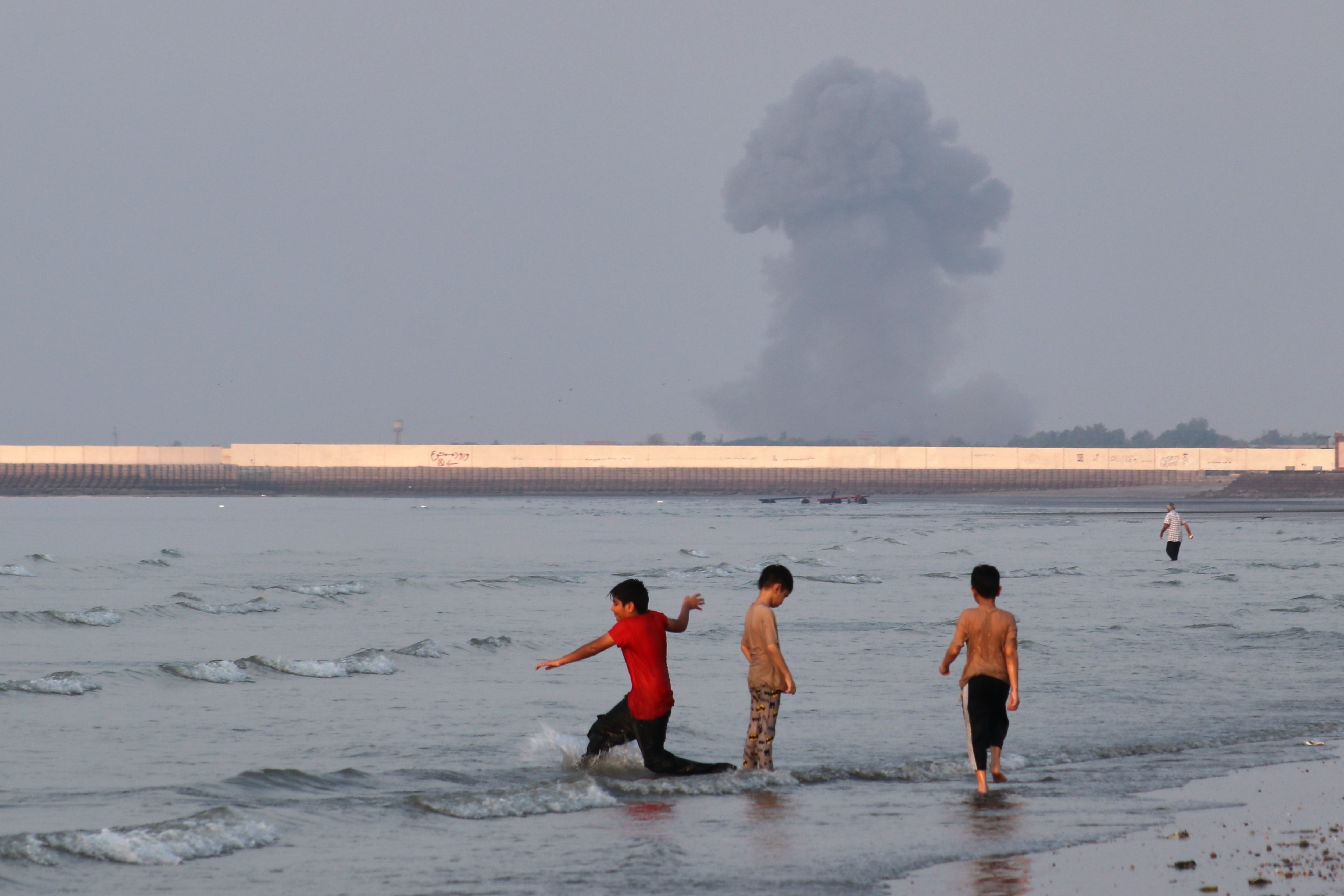
U.S. Central Command conducted precision strikes on Iranian military targets including Bushehr, Chabahar, Jask, Konarak, Abu Musa and Bandar Abbas to degrade Iran's ability to attack commercial shipping. [1] The strikes used precision munitions against Iranian coastal defense systems, missile and drone sites, and maritime capabilities. [1] The locations are on Iran’s southern coast or islands in the Persian Gulf where major commercial ports, oil facilities and, in the case of Bushehr, the country’s only civilian nuclear power plant are concentrated. [1] Attacks began on the night of last Tuesday and continued for three consecutive nights. [1] The purpose of the operations is to further weaken Iran’s ability to attack commercial shipping. [2] U.S. forces remain postposed to take further action as necessary to address threats and ensure the Government of the Islamic Republic of Iran ceases being a threat. [5]

President Donald Trump notifies Congress of renewed US military action against Iran. — Source: gdelt
Iranian Retaliatory Attacks and Casualties
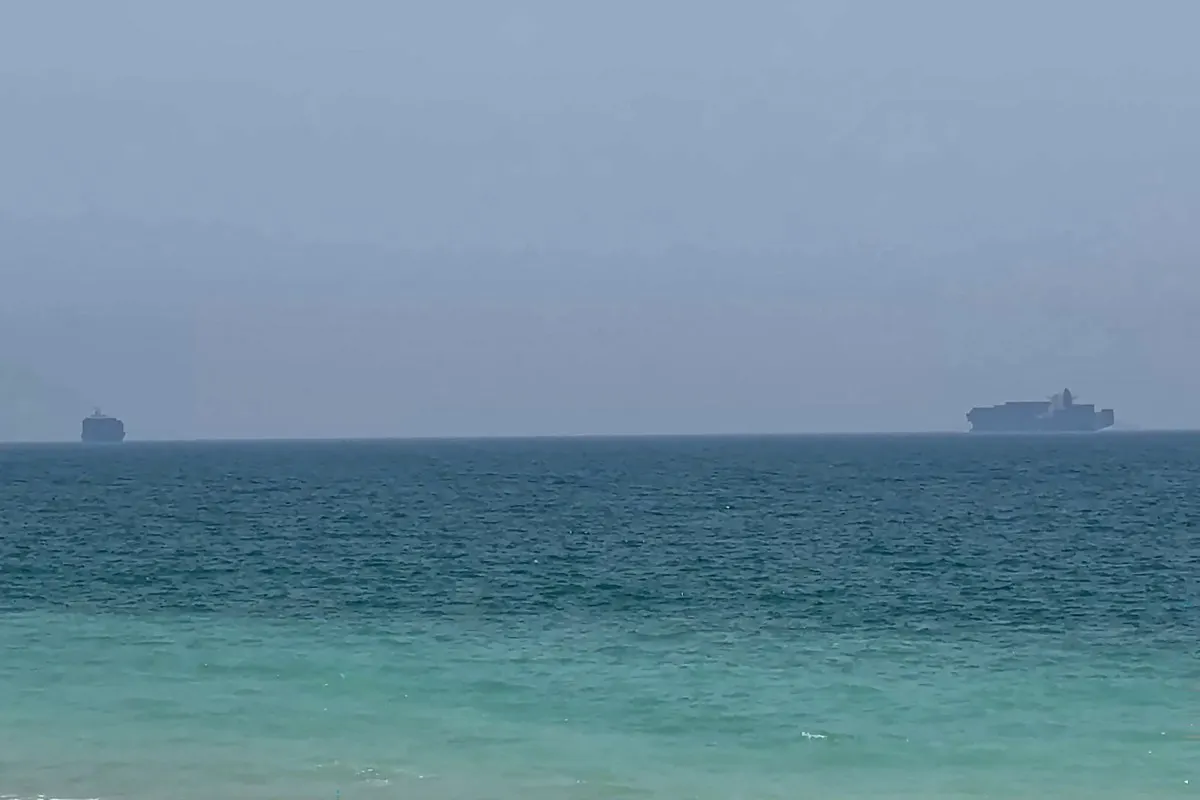
Iran responded by striking U.S. interests in Jordan and the Fifth Fleet base in Bahrain with ballistic missiles, while also attacking two tankers in the Strait of Hormuz, killing one Indian sailor and wounding eight others. [1] The Islamic Revolutionary Guard Corps stated it had attacked U.S. military targets in Jordan and the U.S. Fifth Fleet base in Bahrain using ballistic missiles. [1] Jordan reported intercepting four missiles launched toward its territory. [1] The UAE Ministry of Defense condemned the attack on two tankers linked to the country. [1] An Indian sailor was killed in those strikes and eight others—two Ukrainians and six Indian nationals—were wounded, four of them seriously. [1] Brig. Gen. Hossein Mohebi justified the strike by saying the vessels had violated the closure of the Strait decreed by Iran. [1] At least 20 people have been killed and more than 100 wounded in Iran since U.S. strikes resumed, according to the Iranian Health Ministry. [1] Iranian media reported that at least four people were injured in Omidiyeh in Khuzestan province. [1]
Risk of Regional Spillover
The conflict risks spreading to the Red Sea with Houthi threats to resume attacks on shipping in the Bab el-Mandeb Strait, and an attack occurred on a Kurdish-Iranian group base in Iraq. [1] Yemen’s Houthi government said it had fired on Abha airport in Saudi Arabia after Sana’a airport was bombed. [1] The Houthis have threatened to resume attacks on vessels in the Bab el-Mandeb Strait. [1] A base in Iraq belonging to the Kurdish-Iranian armed group PAK was attacked, one of its leaders reported. [1] In March and April many bases of these groups in northern Iraq were attacked by Iran and by pro-Iranian Iraqi militias. [1] During earlier phases of the conflict the Houthis began attacking ships in the area, forcing many shipping companies to sail around Africa. [1]
US military death toll in Iran war rises to 14. — Source: gdelt
U.S. Military Casualties in the Conflict
The updated U.S. death toll has reached 14, including the recent non-combat helicopter crash death. [3] More than 400 service members have been wounded, primarily with traumatic brain injuries. [3] The death of a Navy pilot in a helicopter crash in the Arabian Sea in July brought the official count to 14. [3] The count of wounded grew to more than 400 by Monday. [3] The majority of the wounded suffered traumatic brain injuries. [3] The helicopter crash on July 1 was initially described as an emergency landing with no indication of hostile action. [3] The three other sailors on board were rescued shortly after. [3] Earlier deaths included six soldiers killed in a drone attack on a command center in Kuwait, one soldier who died after being wounded at Prince Sultan Air Base in Saudi Arabia, and six killed when a KC-135 tanker crashed in Iraq. [3] In total 414 military personnel have been wounded. [3]
Economic Impact and Congressional Context
Oil prices rose sharply to nearly $85 per barrel for Brent crude amid the renewed fighting. [1] The return of open war has pushed oil prices from around $70 a barrel for Brent crude to nearly $85. [1] Trump’s July 10 letter to Congress states the renewed military action follows failed diplomatic efforts. [2] The notification gives the administration another 60-day clock to use the military without congressional approval. [5] Under the War Powers Resolution a military operation ordered by a president may last only 60 days before it must end or be approved by Congress. [4] The first 60-day deadline expired May 1, but Trump stated it was not applicable because of the ceasefire he declared in April. [2] In June both the Senate and House voted to stop U.S. military operations in Iran unless authorized by Congress. [5] The Senate vote passed 50-48 and the House vote passed 215-208. [5] Those votes were viewed as largely symbolic because concurrent resolutions do not go to the president and could face a veto. [5]
What to watch next: Houthi threats to resume attacks on vessels in the Bab el-Mandeb Strait and further U.S. strikes that could extend the 60-day timeline under the War Powers Resolution remain key developments to monitor.