Iran War Leaves Regime More Radicalized With Mojtaba Khamenei in Control
Four months after the end of the US-Israeli war with Iran, the Iranian regime presents itself as strengthened and more radicalized, with Mojtaba Khamenei leading a new generation of hardline security officials despite economic damage and intensified internal repression.
Iranian Leadership Transition After Khamenei's Death
The massive funeral for Supreme Leader Ayatollah Ali Khamenei, killed in an airstrike during the war, became a symbolic moment for the new Iranian leadership. [1] In place of an image of a regime on the brink of collapse, the ceremony suggested continuity of institutions and the consolidation of a new generation of leaders, according to assessments by officials and security experts cited by The New York Times. [1] At the center of the new power structure stands Mojtaba Khamenei, son of the late supreme leader and his successor. [1] Although he was reportedly wounded in the same airstrike that killed his father, he continues to lead from secure locations and avoids public appearances. [1] Western experts assess that the new leadership consists of younger officials who have gained experience in the security apparatus and military structures of the Islamic Republic. [1] Unlike the generation of the 1979 Islamic Revolution, these officials are described as more pragmatic in the use of influence tools, from diplomacy to online communication campaigns, without abandoning repressive methods of internal control. [1] Several of the new leaders come from the ranks of the Islamic Revolutionary Guard Corps or security services. [1] Among them are Mohammad Bagher Zolghadr, the new secretary of the Supreme National Security Council, Ahmad Vahidi, appointed to lead the Revolutionary Guards, and Mohsen Rezaei, who became the supreme leader’s principal military adviser. [1] Experts maintain that most of these figures built their careers in structures involved in suppressing internal protests, coordinating Iran’s allied groups in the region, and developing the Islamic Republic’s military apparatus. [1] At the same time, leaders considered more moderate have lost influence, including President Masoud Pezeshkian and Foreign Minister Abbas Araghchi, who previously played an important role in negotiations on the Iranian nuclear program. [1]
Regime's Post-War Confidence and Strategic Outlook
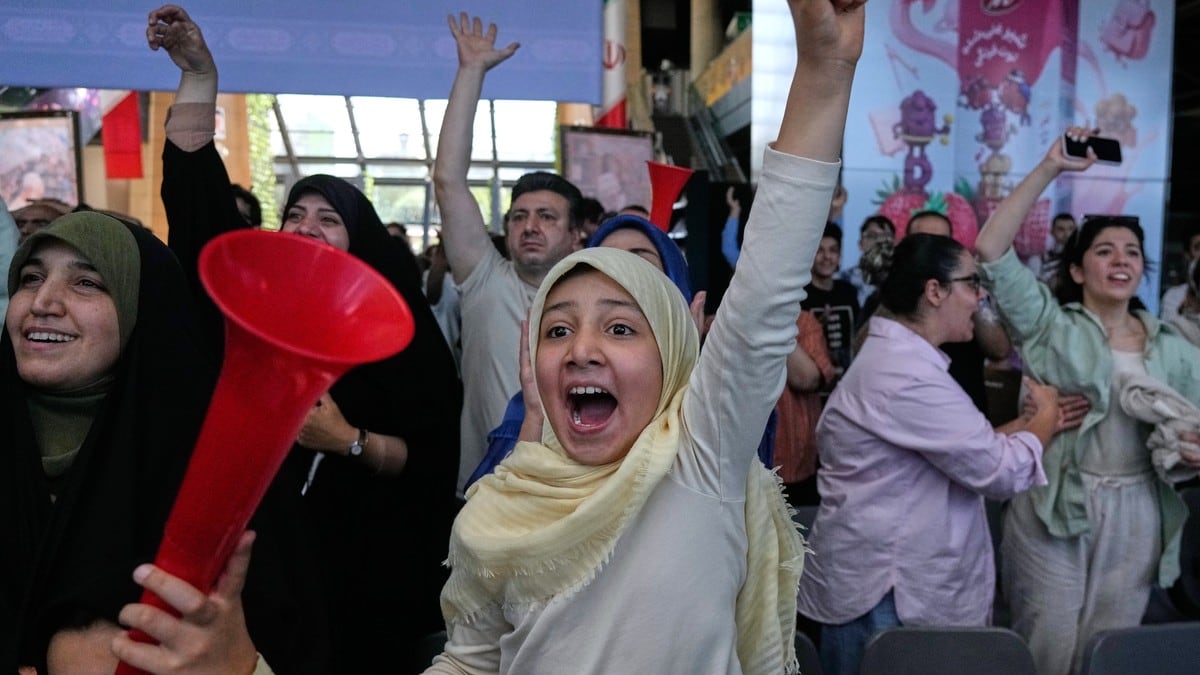
Iranians navigate daily life amid uncertainty four months after the US-Israeli war with Iran. — Source: nrk
Iranian leaders view the conflict as a strategic victory that demonstrated resilience. [1] The new generation of leaders looks differently at the relationship with the United States compared with the leaders of the 1979 Islamic Revolution. [1] While the previous generation was marked by the American hostage crisis in Tehran, current leaders formed their convictions by watching American military interventions in Iraq and Afghanistan. [1] In their view, these conflicts demonstrate that Washington can sustain long-duration military operations without achieving all its strategic objectives. [1] This perspective appears to have influenced Iran’s strategy during the recent conflict. [1] Attacks on American interests in the Persian Gulf and threats to block maritime traffic through the Strait of Hormuz provided Tehran with an important instrument of economic and diplomatic pressure. [1] Although the military confrontation caused significant losses, the Iranian leadership is trying to present the outcome of the conflict as a strategic victory. [1] According to European officials in contact with Tehran representatives, the current leadership believes it has demonstrated the Islamic Republic’s capacity to resist military and economic pressure from the United States and Israel. [1] “The Iranian leadership gives the impression of increased confidence. From its perspective, the regime not only survived but rediscovered the strategic importance of the Strait of Hormuz and believes it can negotiate from a position of strength,” stated a European official speaking on condition of anonymity. [1] Mojtaba Khamenei continues to set the guidelines for negotiations with the United States, even though communication with state institutions is hampered by exceptional security measures. [1] Western sources state that the supreme leader has ruled out resuming substantial negotiations on the nuclear program before a ceasefire becomes durable. [1] At the same time, he tries to avoid directly assuming controversial decisions. [1]
Civilian Views and Daily Uncertainty in Tehran
Iranian civilians in Tehran express uncertainty whether the war is truly over, with mixed views on whether the regime emerged victorious. [2] Many prioritize economic recovery and note a temporary relaxation of hijab enforcement as a breathing space for women. [2] “I think the war is over for now. But I also think it can start again soon,” writes Parya, a 30-year-old woman, on WhatsApp to NRK. [2] “The mood in Tehran is marked by a lot of uncertainty,” says Mehrnaz, 26, also from Tehran. [2] “Who can know that the war is over? We are just trying to survive,” she writes. [2] Teenage mother Yasamin is more optimistic. [2] “Now we can make plans again, because it finally looks like the war is over. But we are not entirely sure, because a lot can go wrong with the negotiations,” she says. [2] Several international commentators agree that Iran has in a way won, while Israel and the United States are left as losers after the war they themselves started on 28 February this year. [2] BBC Middle East commentator Jeremy Bowen writes that “the regime in Tehran faced its worst nightmare when it was attacked by the world’s strongest power, the USA, and the Middle East’s superpower, Israel,” yet “the regime has not only survived. It has been strengthened.” [2] New York Times writer Nicholas Kristof agrees, writing that the preliminary agreement President Donald Trump recently reached with the Iranian regime most resembles a conditional surrender by the United States side. [2] “It is true that Iran’s response, tactics and pressure have shown that Iran is more powerful than the rest of the world thought,” says 26-year-old Mehrnaz. [2] Yet she is uncertain whether all Iranians consider Iran the winner of the war. [2] “Maybe a fifth of the population thinks so,” she estimates. [2] Yasamin believes many Iranians feel a sense of pride now. [2] “The world had no idea how strong Iran was militarily. Even Iranians did not believe that our ability to defend ourselves and strike back was so strong,” she says. [2]
US Domestic Opposition to the Iran War
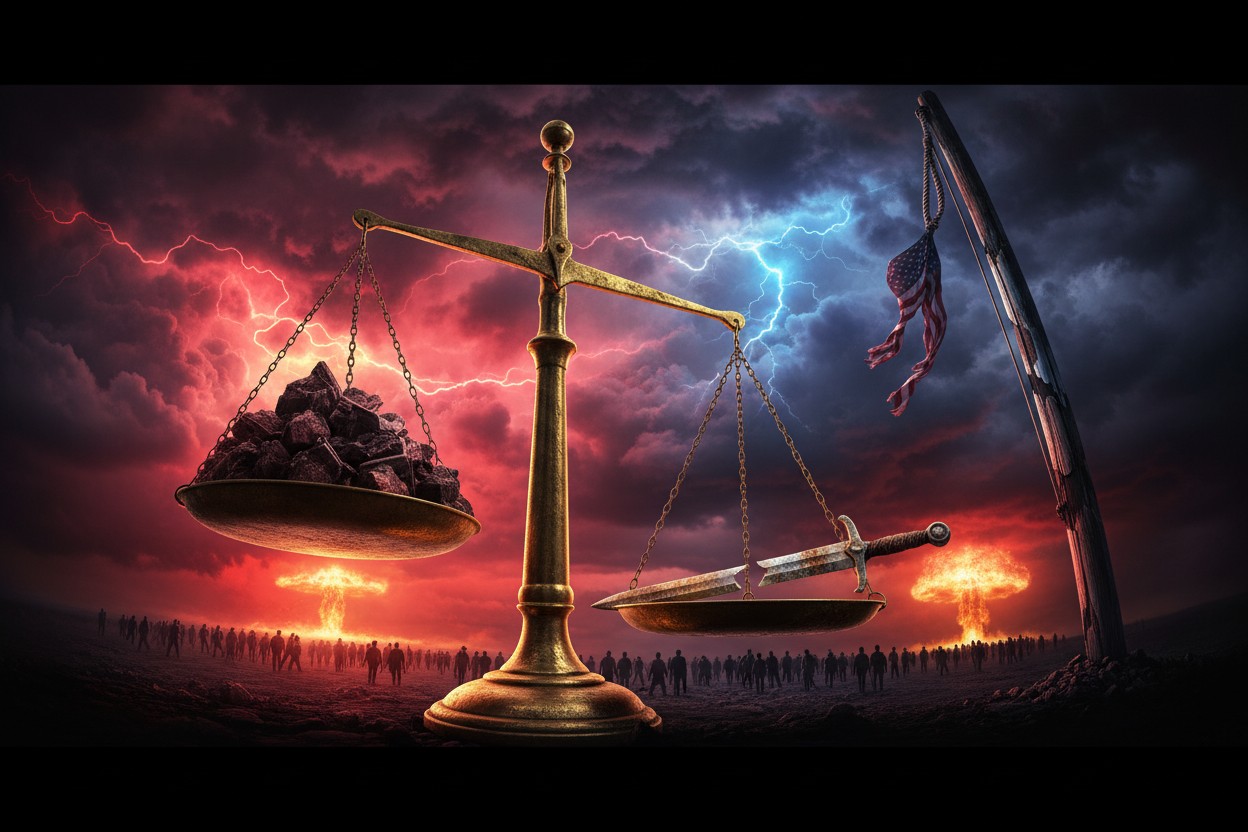
Poll analysis shows US-Israeli war on Iran as most unpopular conflict in US history. — Source: gdelt
The war has become the most unpopular major US conflict in history with net support at negative 32 percent. [3] An analysis of 153 public opinion surveys across seven major US wars, published by Responsible Statecraft on June 26, concluded that the US-Israeli war against Iran is the most unpopular conflict in American history. [3] Public support has dropped to a net negative 32 percent, surpassing the previous low of negative 31 percent recorded during the Vietnam War. [3] This finding directly contradicts testimony by US Defense Secretary Pete Hegseth, who claimed in an April Senate hearing that the war maintained public support. [3] The analysis demonstrates that public opinion has consistently opposed the military campaign since its launch. [3] The conflict began with net negative support of minus 13 percent, currently holds the lowest support level of any major US war, and opponents have outnumbered supporters for the entire duration of fighting. [3] A significant “support gap” emerged in the polling data. [3] While 67 percent of Republicans expressed general support for the war, 54 percent of that same group called for a deal to end the conflict as quickly as possible. [3] Among the general US public, net support for prolonging the war rather than ending it immediately stood at negative 52 percent. [3] The widespread disapproval of the war has contributed to a decline in President Trump’s approval rating to approximately 34 percent. [3] The war’s unpopularity has also prompted congressional action. [3] The US Senate voted 50-48 on June 23 to pass a war powers resolution directing President Trump to withdraw US forces from hostilities against Iran. [3] The resolution, which previously passed the House on June 3 by a vote of 215-208, marked the first time Congress approved a concurrent resolution under the 1973 War Powers Act ordering the termination of an unauthorized war. [3]
Regional Repercussions Including Gaza
Gaza's fate has been eclipsed by the US-Iran war, with preliminary agreements between Tehran and Washington containing no mention of the Palestinian territory despite its role in sparking the wider regional conflict. [4] “Ever since the United States went to war with Iran, the whole world has forgotten Gaza and its tragedy. We no longer have anyone standing by us,” said Palestinian Ahmed Jamali, 53, from the displacement camp in Gaza where he lives. [4] “We are weak and oppressed, and Israel is doing whatever it wants: killing, destroying and occupying Gaza, while no one in the world lifts a finger.” [4] Although Iranian officials initially spoke of an agreement to end the Middle East war that would encompass the entire region, the preliminary text endorsed by Tehran and Washington last month contains no mention of Gaza. [4] For analysts, that shows a shift in regional priorities. [4] “It reflects Hamas’s declining strategic value in Iran’s eyes,” said Hugh Lovatt of the European Council on Foreign Relations. [4] Behind the scenes, negotiations over Gaza’s future continue in Cairo. [4] The talks bring together Palestinian factions, including Hamas, alongside the Board of Peace set up by US President Donald Trump and regional players including Qatar and Turkiye. [4] “Trump may want to give this process a chance,” said a source close to the negotiations. [4] “Whether it succeeds remains to be seen.” [4] Diplomatic and security sources said that negotiators are working on a roadmap combining the gradual disarmament of Hamas with the creation of transitional governing authorities for Gaza. [4] Israeli media has reported that the government would reject such a framework. [4] “For now, this diplomatic process exists only around the negotiating table,” Lovatt said. [4] “There has been progress, but reconstruction remains a distant prospect, and nothing is changing for the people on the ground.” [4]
Economic Damage and Internal Repression
The war has become the most unpopular major US conflict in history with net support at negative 32 percent, contributing to President Trump’s approval rating falling to 34 percent and prompting Congress to pass a war powers resolution ordering withdrawal of US forces. [3] The conflict affected the Iranian economy, infrastructure and part of its military capabilities. [1] Yet specialists assess that the regime has consolidated its internal political position. [1] “Iran may be more vulnerable from an economic and industrial point of view, however, in essence we are dealing with a bolder state and more confident in its own forces,” states Raz Zimmt, coordinator of the Iran studies program at the Institute for National Security Studies in Israel. [1] In parallel, human rights organizations and Western sources maintain that Iranian authorities have intensified internal repression, including through the execution of political opponents and regime critics. [1] Experts warn that the real challenge for the new leadership will begin after the effective conclusion of the conflict. [1] Reconstruction of the economy, reduction of social pressures and improvement of the standard of living will test the regime’s ability to manage the aftermath. [1]
What to watch next: Analysts will monitor whether Mojtaba Khamenei maintains strict limits on nuclear talks until a durable ceasefire holds, while Cairo negotiations on Hamas disarmament and transitional governance for Gaza continue without Iranian input.