Iran War Funeral for Slain Supreme Leader Khamenei Draws Mourners in Tehran
Iran began a days-long funeral on July 4, 2026 for Supreme Leader Ayatollah Ali Khamenei, who was killed in an airstrike at the start of the US-Israeli war with Iran in February. [1] [2] Authorities unveiled the casket containing Khamenei’s body in a glass case at the Grand Mosalla in Tehran, where mourners wept at the sight. [2]
Funeral Ceremonies Begin in Tehran
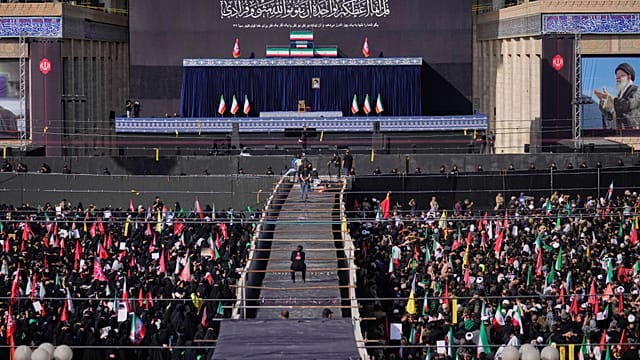
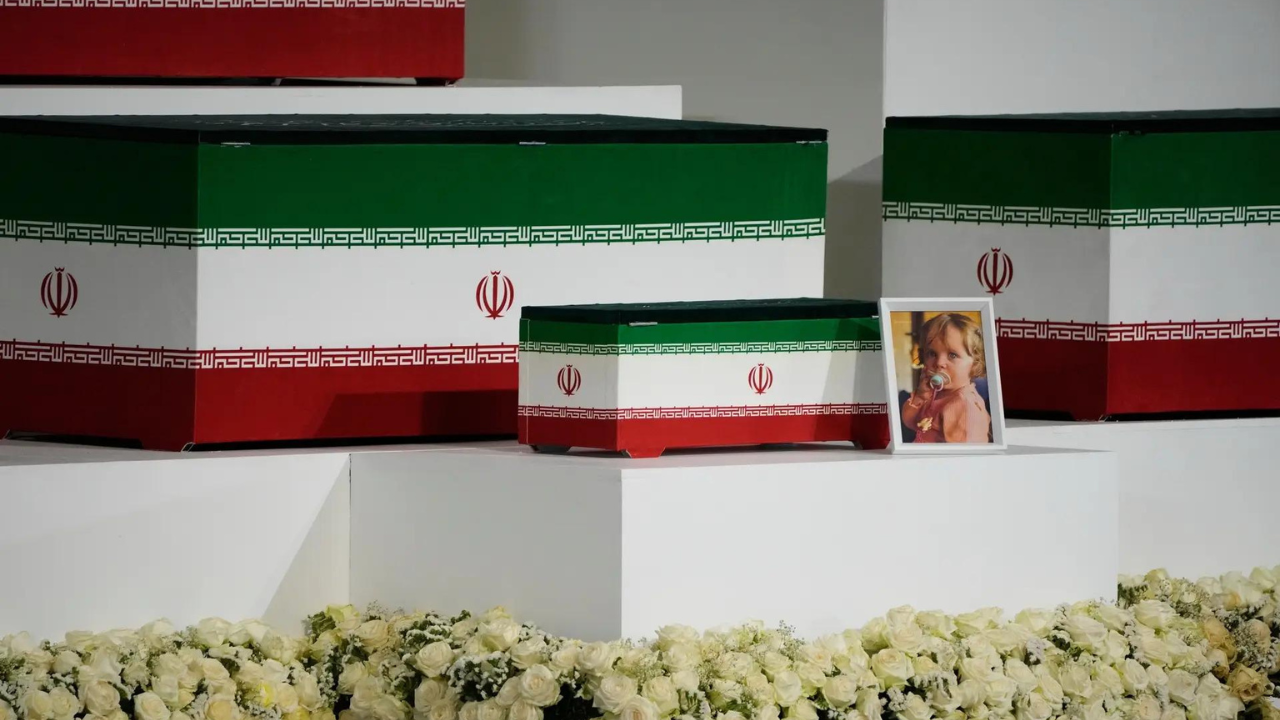
Iran on Saturday began a days-long funeral for the late Supreme Leader Ayatollah Ali Khamenei at the Imam Khomeini Mosalla Grand Mosque in Tehran. [1] A crowd attended the start of the ceremonies on July 4, 2026. [1] Mourners wept when authorities unveiled the casket containing Khamenei’s body at the Grand Mosalla. [1] The body of Iran's supreme leader Ali Khamenei arrived at Tehran's Grand Mosalla religious complex on Friday. [1] Several hundred people were already waiting on Friday evening outside the venue for the funeral of Iran's slain supreme leader. [1] Authorities unveiled the casket containing Khamenei’s body in a glass case at the Grand Mosalla in Tehran. [2] Mourners wept at the sight, with some chanting: “Our word is one! Revenge! Revenge!” [2] Some carried banners and flags, while billboards across the city bore Khamenei’s image. [2] Crowds of men rhythmically beat their chests in mourning, a common practice at Shiite funerals. [2] Coffins sat on display at Grand Mosalla. [2] An outdoor stage set up at the Grand Mosalla resembled the stage where Khamenei once gave his speeches at a husseiniyah at his compound in downtown Tehran. [2] The caskets of his dead family members sat beneath his, which had his black turban atop it, identifying him as a direct descendent of the Prophet Muhammad. [2] Iran’s government expects to see millions flood the streets of the capital in scenes reminiscent of the burial of the late Supreme Leader Ayatollah Ruhollah Khomeini in 1989. [2] Organizers sprayed water on the crowds and offered cold drinks to help those with the summertime heat. [2] “We attended the funeral to show that we are all committed to defend our country and religion,” said Ali Kazemi, who came from the northwestern city of Tabriz. [2]
Khamenei's Death in the Iran War
The 86-year-old was killed in an air strike at the start of the US-Israeli war with Iran. [1] He was 86. [2] That site was destroyed in the Israeli airstrike that killed Khamenei and some of his family at the start of the Iran war on Feb. 28. [2] Iran is staging a week of mass funeral processions for Khamenei, whose 37-year reign was brought to an end in February by the first airstrike of the war. [5] The body of Ayatollah Ali Khamenei lay in state in a vast hall in Tehran Friday as clerics, officials, foreign dignitaries and other mourners paid their respects to Iran's late supreme leader, slain by US and Israeli bombs. [3] Khamenei, who was killed in US-Israeli strikes that triggered the recent Middle East conflict, lay in state at Tehran's Grand Mosalla. [4] Killed alongside Khamenei, and displayed in coffins next to his, were his daughter, son-in-law and baby granddaughter, as well as the wife of his son Mojtaba. [5]
Mourners form overnight lines outside Tehran's Grand Mosalla to pay respects to slain Supreme Leader Khamenei. — Source: timesofindia
Mourner Reactions and Symbolic Displays
Mourners wept and chanted “Revenge! Revenge!” and “Death to America!” as Khamenei's casket was unveiled in a glass case at Tehran's Grand Mosalla, with his black turban placed on top and the coffins of killed family members displayed beneath. [2] [3] His coffin was unveiled late Thursday to a throng of sobbing supporters, swaying and beating their heads in time to a sung lament as flowers were thrown from the bier into the crowd. [3] On Friday the coffin — and those of family members who were also killed in the same attack — was laid in state in the great prayer hall built to honour his predecessor, Ayatollah Ruhollah Khomeini. [3] A black turban, worn by clerics claiming descent from Islam's Prophet Mohammed, lay on the coffin on a folded chequered scarf, a symbol in Iran of revolutionary ideals and solidarity with Palestinians. [3] “I am here to say goodbye to my beloved leader Ali Khamenei,” said a weeping Hananeh Mousavi, 27, who attended the funeral alongside her mother. [2] “I never expected to see such a day. I wish I had died before this tragedy.” [2] “God willing, only by avenging his blood, demanding justice for it, and ensuring that our leader's blood is not left unavenged, can this sorrow of the people be alleviated,” said Mobina Razaaghi, an 18-year-old student, attending the funeral. [3]
Mourning Processions and Itinerary
The funeral events, expected to draw millions, will include processions in Tehran, Qom, Najaf, Karbala and burial in Mashhad on July 9, postponed from Islamic tradition due to security concerns during the conflict. [3] Khamenei will lie in state at the Grand Mosalla religious complex in Tehran until Monday, with doors scheduled to open at 6am local time. [3] His body was expected to be taken to Qom, Najaf and Kerbala, the great Shi'ite centres of Iran and Iraq, before being laid to rest on July 9 in Mashhad, home to the country's holiest pilgrim shrine. [3] Following a funeral procession in central Tehran on Monday, Khamenei's remains will be taken to the seminary city of Qom for ceremonies on Tuesday. [4] Further commemorations are scheduled for Wednesday in the Iraqi shrine cities of Najaf and Karbala. [4] Khamenei is scheduled to be buried on Thursday in Mashhad, near the shrine of Imam Reza, after a final funeral procession. [4] Burials are meant to be conducted within a day of death in Islam, but because of the risks of holding a big funeral during the war it was postponed until after last month’s interim truce deal was agreed. [5] Hotels are offering 50% discounts, schools, mosques and sports halls have been prepared to house mourners, and bus and rail networks are being diverted to serve the main events. [5]
{IMAGE_3}
Security Concerns and Leadership Absence
New IRGC chief Ahmad Vahidi emerged from hiding to attend, while new Supreme Leader Mojtaba Khamenei has been absent from events after being wounded in the strike, amid Israeli threats against him. [1] [4] Iranian authorities warned the US and Israel against attacks during the funeral, closed Tehran's airspace and streets, and are providing transport, food and lodging to boost turnout as the government seeks leverage in negotiations to end the war. [3] [4] Iran's chief negotiator called for a large public turnout, saying it would be a way to avenge Khamenei's death. [4] Ahmad Vahidi, commander of the Revolutionary Guards, also attended the ceremony, marking his first public appearance since the outbreak of the conflict in February. [4] Iran has heightened security ahead of the funeral ceremony, where millions of mourners and several foreign dignitaries are expected to gather, amid concerns over potential attacks. [4] On Friday, the Islamic Revolutionary Guard Corps warned against any attempts to target the country in the coming days ahead of the funeral. [4] The warning came days after Israeli Defence Minister Israel Katz said Iran's Supreme Leader Mojtaba Khamenei had been “marked for death”. [4] Iran's Civil Aviation Organization also said on Friday that the airspace over Tehran will be “completely closed” on Monday to facilitate the funeral procession. [4] It remains unclear whether Iran’s new supreme leader, Ayatollah Mojtaba Khamenei, will appear at his father’s funeral. [2] The absence of Iran's new supreme leader Mojtaba Khamenei from the funeral of his father and predecessor drew attention. [4] The new supreme leader, Khamenei's son Mojtaba Khamenei, has not been seen in any new image since being wounded in the strike. [5] Among them was the new Revolutionary Guards head Ahmad Vahidi, having not appeared in public since his appointment for fear of assassination. [5]
Political Context and International Attendance
Iranian authorities warned the US and Israel against attacks during the funeral, closed Tehran's airspace and streets, and are providing transport, food and lodging to boost turnout as the government seeks leverage in negotiations to end the war. [4] [5] A large turnout could provide a boost for Iran’s government, particularly as it tries to leverage its hold on the Strait of Hormuz in negotiations with the United States over a permanent end to the war. [2] The funeral is taking place at a critical moment for Iran, where the clerical rulers backed by the Islamic Revolutionary Guard Corps are riding high from surviving what they saw as an existential war against their most powerful foes. [3] Authorities aim to mobilise millions of people for the big processions over the coming days, offering transport, food and lodging to buoy the numbers. [5] Foreign dignitaries including Dmitry Medvedev, Chinese and Pakistani officials attended, along with families of slain Hezbollah leaders, as crowds beat their chests in traditional Shiite mourning. [2] [5] Former Russian President Dmitry Medvedev, Chinese National People’s Congress deputy head He Wei, Pakistani Prime Minister Shehbaz Sharif and Iraqi President Nizar Amedi were among the foreign leaders and officials attending. [5] Families of Hezbollah leader Hassan Nasrallah and senior commander Imad Mughniyeh, close Lebanese allies of Iran killed in Israeli strikes, attended the ceremony. [5] Crowds at the ceremony in Tehran chanted: “Death to America!” [2] In the crowd in Grand Mosalla, several mourners held a large flag that read: “#KillTrump.” [2] Iran chose July 4, the 250th anniversary of the creation of the U.S., to begin the funeral. [2]
What to watch next: Khamenei's body will be transported to cities in both Iran and neighboring Iraq after the initial events in Tehran, with further processions and ceremonies scheduled in Qom, Najaf, Karbala and burial in Mashhad.