Iran War Deal Lifts US Naval Blockade and Opens Path to $300 Billion Reconstruction Plan
The United States and Iran signed a Memorandum of Understanding on 15 June 2026 to immediately and permanently terminate military operations on all fronts, including Lebanon, launching a 60-day negotiating period for a final deal while the US lifts its naval blockade and issues oil export waivers. The agreement addresses key aspects of the Iran war by halting hostilities and opening pathways for sanctions relief and reconstruction support.
Overview of the Memorandum of Understanding
The 14-point MoU declares the immediate and permanent termination of military operations on all fronts, including in Lebanon, and commits both sides not to initiate any war or military operation against each other while ensuring the territorial integrity and sovereignty of Lebanon. [4] The document requires the United States to begin removal of its naval blockade immediately and fully end it within 30 days, with traffic of vessels restored in proportion to pre-war levels. [4] Iran undertakes to make arrangements for safe passage of commercial vessels through the Strait of Hormuz from the Persian Gulf to the Sea of Oman and vice versa, with traffic starting immediately and tactical obstacles addressed within 30 days. [4] The United States commits to working with regional partners on a plan worth at least $300 billion for reconstruction and economic development of Iran, with the mechanism to be finalised in the final deal. [4] Iran reaffirms it shall not procure or develop nuclear weapons, and both sides agree to resolve the disposition of stockpiled enriched material through blending on site under IAEA supervision. [4] Pending the final deal, both sides agree to maintain the status quo on nuclear activities and sanctions, with the United States issuing waivers for Iranian crude oil exports immediately upon signing. [4] The final deal must be endorsed by a binding United Nations Security Council resolution. [4]
Casualties and Humanitarian Impact
Official figures report more than 7,300 killed in Iran and Lebanon since fighting began on 28 February, with analysts warning the true toll is likely higher due to restricted access and reporting challenges. [2] In Iran, official government figures as of mid-April showed at least 3,468 killed, including 499 women, comprising 1,460 civilians and 2,008 military personnel. [2] The US-based Human Rights Activists News Agency reported a higher count of 3,636 killed by 18 May, including 1,701 civilians with 307 children, 1,221 military personnel, and 714 individuals whose status could not be confirmed, describing these as absolute minimums due to access restrictions, internet blackouts and political repression. [2] In Lebanon, health authorities confirmed 3,912 killed in Israeli attacks, among them 366 women and 247 children, though it remains unclear how many Hezbollah fighters are included. [2] Israeli authorities reported 60 killed, mostly by Iranian attacks and fighting with Hezbollah, including 29 civilians and 31 IDF soldiers. [2] Across the wider region, official statements recorded 13 deaths in the United Arab Emirates, more than 100 in Iraq with at least 80 members of the Popular Mobilisation Forces, 13 US military personnel, and 14 sailors of various nationalities in the Strait of Hormuz. [2] Experts noted that access restrictions, damaged infrastructure and political sensitivities have limited reporting, making the final death toll likely to remain contested and potentially substantially higher. [2]

Map shows mobility and displacement patterns in Iran and the Middle East from 9 to 15 June 2026. — Source: reliefweb
Iranian Reactions and Victory Claims
Iranian officials including Mohsen Rezaei and Mohammad Bagher Ghalibaf have hailed the outcome as a victory that humbled enemies and warned against any US violations. [1] Mohsen Rezaei, an adviser to Iran’s supreme leader, described the conflict as an “epic” that would endure in history and said Iran had “shattered” its enemies’ dominance. [1] Mohammad Bagher Ghalibaf warned that any breach of the memorandum by Washington would be met with a “crushing response” and stated that Iran’s adversaries had already been “slapped” during the war. [1] Iran’s supreme leader allowed the deal to proceed while making clear it had been accepted on the Supreme National Security Council’s responsibility, holding “another view in principle” but authorising it after President Masoud Pezeshkian accepted responsibility. [5] The MoU allows Iran to claim it emerged stronger by securing recognition of sovereignty, the lifting of the blockade, sanctions relief on the table and explicit mention of reconstruction funding. [5]
US Political Response and Defense of the Deal
Vice President JD Vance defended the agreement, saying the signing has launched a 60-day negotiating period towards a final deal. [1] The Trump administration rejected criticism that Tehran received too many concessions, stating it is acting in US interests and emphasising that “not a cent of American money is going to Iran”. [1] Officials stressed that the deal contains safeguards, relies on Iranian compliance and links sanctions relief to progress in nuclear negotiations. [1] Democratic Senate Minority Leader Chuck Schumer said the US is “worse off because of Trump’s incompetence, his ego, and his inability to listen to facts” and rejected claims that Democrats would support any funding for Iran. [1] Vice President JD Vance delivered strong messages to Israel that Lebanon is covered by the agreement and that military operations there must halt. [1] Political analyst Harlan Ullman described a “great split” between President Trump and Israeli Prime Minister Benjamin Netanyahu, with the relationship increasingly “volatile” and “dangerous”. [1]

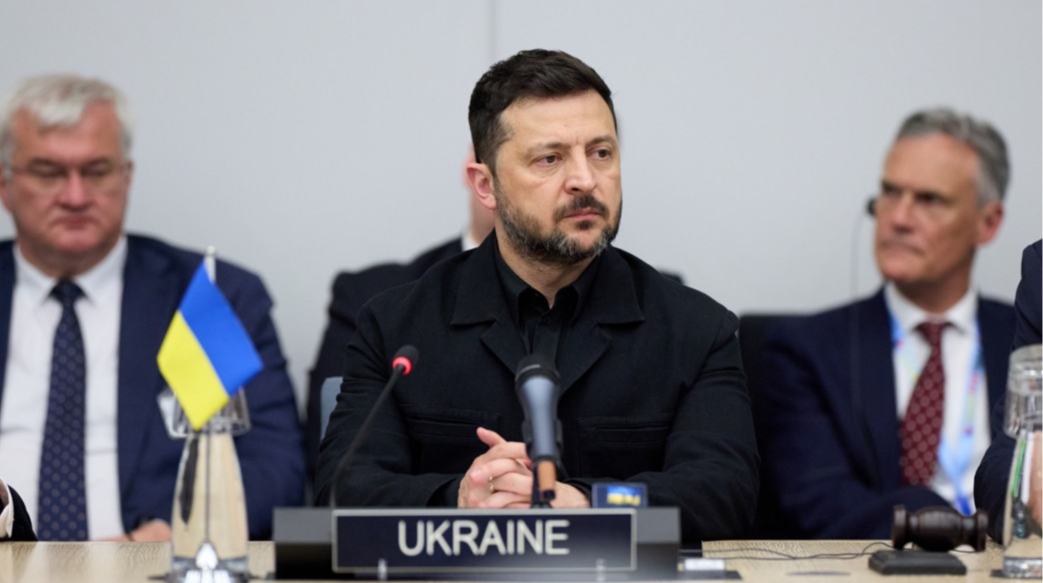
The signed US-Iran Memorandum of Understanding ends military operations and lifts the naval blockade. — Source: premiumtimes
Developments in Lebanon and Israel
Israeli attacks continued in southern Lebanon after the signing, killing at least three, prompting Iran to seek implementation assurances before talks and the US to warn Israel to comply with the Lebanon ceasefire terms. [1] Lebanese state media reported two killed in a drone attack near Kfar Tebnit and another in Zabadin. [1] Hezbollah said it had repelled a four-day Israeli offensive. [1] The memorandum makes clear that Lebanon is part of the agreement, requiring Israel to halt military operations there, a provision that has drawn pushback from some pro-Israel lawmakers. [1] Netanyahu has avoided publicly attacking the agreement but sees it as a threat to his political future before the October elections. [1]
Implementation Status and Next Steps
Both sides claim the agreement leaves them stronger, with Iran presenting it as survival without surrender and the US citing prevention of Iranian nuclear weapons and reopening of global oil flows. [5] The US military said it had ended its naval blockade of Iranian ports, with all enforcement efforts ceased though naval vessels remain to monitor compliance. [1] Iran’s immediate obligations include helping ensure safe commercial passage through Hormuz and reaffirming it will not pursue nuclear weapons, while entering talks on highly enriched uranium and its enrichment programme. [5] The United States will issue waivers for Iranian oil exports and make frozen assets available, with negotiations on the final deal to start exclusively after implementation of key paragraphs begins. [4] An executive mechanism will monitor successful implementation of the MoU and future compliance. [4] Iran first wanted to see signs that the interim agreement was being implemented before confirming negotiators would travel for talks. [1]
What to watch next includes whether the 60-day window produces a final deal endorsed by the UN Security Council, continued US monitoring of compliance in the Strait of Hormuz, and any further Israeli actions in Lebanon that could test the ceasefire terms.