Iran Tensions Escalate as Trump Warns of More US Strikes After Iranian Attacks on Gulf States
Iran tensions intensified as US President Donald Trump threatened additional strikes on Iran after it fired missiles at Bahrain, Kuwait and Jordan, which host US troops, as the two sides continued to exchange blows despite ongoing diplomatic efforts to end the conflict. The latest strikes followed the crash of a US Army helicopter near the Strait of Hormuz, which Trump blamed on Iran; the US then conducted airstrikes on Iranian air defence and radar sites while also disabling an oil tanker violating its port blockade. [1]
Trump Threatens Further Strikes
US President Donald Trump said more strikes were on the way after the US launched airstrikes against Iran. [1] Trump warned that Tehran would “pay the price” for stalled peace negotiations. [1] Hours after Bahrain, Kuwait and Jordan came under Iranian fire, Trump told reporters at the White House that the United States was “going to hit them again hard today.” [1] Shortly after those remarks, the US military fired on an oil tanker attempting to transport oil from Iran in violation of the blockade on Iranian ports, marking the eighth merchant vessel disabled in the waters off Iran. [1] US fighter jets targeted air defence, ground control stations, and surveillance radar sites, according to US Central Command. [1] Trump urged Iran to sign a deal with the US, stating that negotiators “were really close to a deal but they keep tapping us along.” [1] He suggested on Monday that a deal could be reached in a matter of days, yet he has also made demands that will be tough for Iran to accept, including that Iran give up its stockpile of highly enriched uranium. [1] Trump has repeatedly threatened to walk away from the talks, and his Truth Social post accused Iran of taking “too long to negotiate a deal that would have been great for them, now they will have to pay the price!!!” [1]
Iranian Missile Attacks on Gulf States
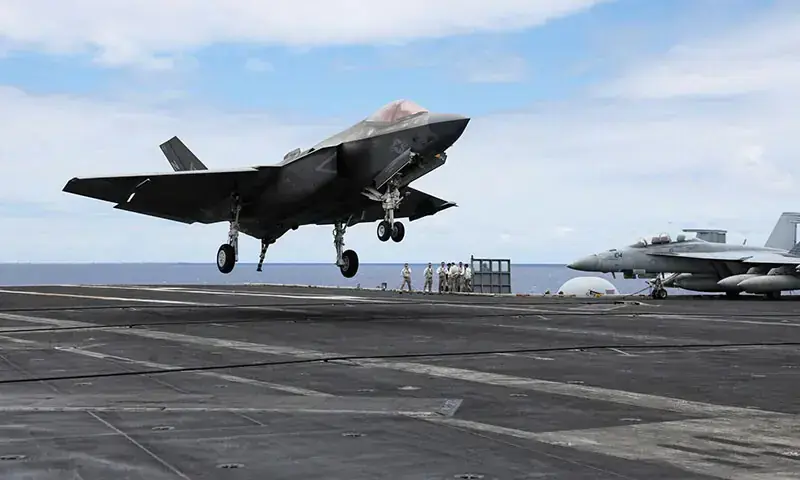
Iran fired back at countries in the region after the US attacks. [1] Bahrain, Kuwait and Jordan, all of which host US troops, came under Iranian fire in the second round of back-and-forth strikes this week. [1] Jordan said it shot down five incoming missiles that Iran said targeted the Muwaffaq Salti Air Base, which has hosted American F-35 fighter jets and other aircraft. [1] Jordan’s state-run Petra news agency reported there were no injuries. [1] Bahrain and Kuwait said they intercepted incoming fire. [1] Iranian Foreign Minister Abbas Araghchi condemned the American attacks as a violation of Iranian sovereignty in calls with his counterparts from Turkey and Saudi Arabia and emphasised the inherent right of self-defence, including reciprocal action. [1] Foreign Ministry spokesperson Esmail Baghaei said in televised comments that, following the new attacks, Iran would review its stance on negotiations to end the war. [1] Araghchi posted on X that Iran’s powerful armed forces would leave no attack or threat unanswered and warned outsiders to leave the region if they wanted to be safe. [1]
Helicopter Crash and Immediate Escalation
The exchanges of fire came a day after a US Army attack helicopter crashed near the Strait of Hormuz after colliding with an Iranian drone. [1] It was not clear whether the collision was intentional. [1] A drone boat rescued both of the helicopter’s crew, and Trump said they were uninjured. [1] Before he accused Iran of downing the US helicopter, Trump had expressed renewed optimism over negotiations. [1] The crash triggered the latest round of US strikes on Iranian air defence and radar sites. [1]
Diplomatic Efforts and Iranian Conditions
Efforts to mediate a deal continued even as the attacks escalated. [1] Following consultations with the US, a delegation from Qatar arrived in Tehran for talks. [1] Both sides appear to be looking for a way to end the conflict if they can manage to sell it as a win at home. [1] Iran has outlined conditions for ending the war with the United States under a proposed memorandum of understanding known as the Islamabad Memorandum of Understanding or Islamabad Agreement. [3] The first demand is the lifting of the US naval blockade on Iranian ports and shipping. [3] Iran also wants a new arrangement for the Strait of Hormuz that includes continued tolls and joint administration with Oman, with Araghchi stating that administration of the waterway “will no longer be the same as before” and that commercial vessels will continue paying for services. [3] Another major Iranian demand is that any agreement must include an end to hostilities involving Hezbollah in Lebanon, with Araghchi saying Iran will never leave Hezbollah alone. [3] Nuclear talks would be deferred to a second phase lasting 60 days after the initial agreement is signed, with all details of the nuclear programme addressed in that later round. [3] Araghchi noted that the memorandum consists of 14 articles and that the first phase focuses on ending conflicts involving both Iran and Lebanon. [3] While Trump has claimed a deal is imminent, Iranian officials have stressed that no final decision has been taken and that the text remains under review. [3] The United States wants Iran to reopen the Strait of Hormuz immediately, stop funding proxy groups, commit never to acquire a nuclear weapon, address concerns about its highly enriched uranium stockpile, and accept verification measures. [3] Sanctions relief would be linked to Iranian compliance and would occur gradually. [3]
UAE Funds Release as Confidence Measure
The United Arab Emirates agreed to release billions of dollars to Iran in exchange for a halt to attacks against the Gulf state. [2] According to multiple sources, Abu Dhabi approved the release of a total of $10 billion for Iran, with more than $3 billion already transferred. [2] Two other sources put the overall value of the arrangement at $20 billion. [2] One source said the first tranche, worth approximately $3 billion, has already been delivered to Iranian authorities. [2] Neither the UAE nor Iran has publicly confirmed the reported agreement. [2] The move highlights growing diplomatic efforts to reduce tensions across the region and could serve as a confidence-building measure aimed at supporting a wider diplomatic settlement. [2]
Economic Impact and Regional Fallout
Since the US and Israel started the war with attacks on Iran on February 28, the conflict has shaken the global economy. [1] The international benchmark for crude oil traded above 92 dollars a barrel on Wednesday, up more than 25 percent since the start of the war. [1] Iran tensions have driven international crude oil prices above $92 per barrel, up more than 25 percent, and shaken the global economy. [1] An Israeli military official said an airbase in northern Israel was hit on Sunday by an Iranian missile during an exchange of fire, damaging a non-critical area of Ramat David airbase with no injuries. [1] Israel’s military launched multiple strikes in southern Lebanon over the past day, targeting Hezbollah infrastructure. [1] An airstrike on a village east of Tyre killed at least six people, and two others were killed by an Israeli drone strike on a car in the southern city of Sidon. [1] Guards aboard a cargo ship off the coast of Yemen in the Gulf of Aden exchanged fire with gunmen in a small boat and repelled their attack. [1] India’s foreign ministry said three Indian crew members were missing after an attack on a Palau-flagged commercial vessel off the coast of Oman, while 21 Indian sailors were rescued. [1]
What to watch next is whether the Qatari delegation’s talks in Tehran produce movement on the Islamabad Memorandum of Understanding and whether Iran’s Supreme National Security Council reaches a collective decision on the proposed terms.