Iran Tensions Ease as US and Tehran Sign Memorandum to End Middle East War
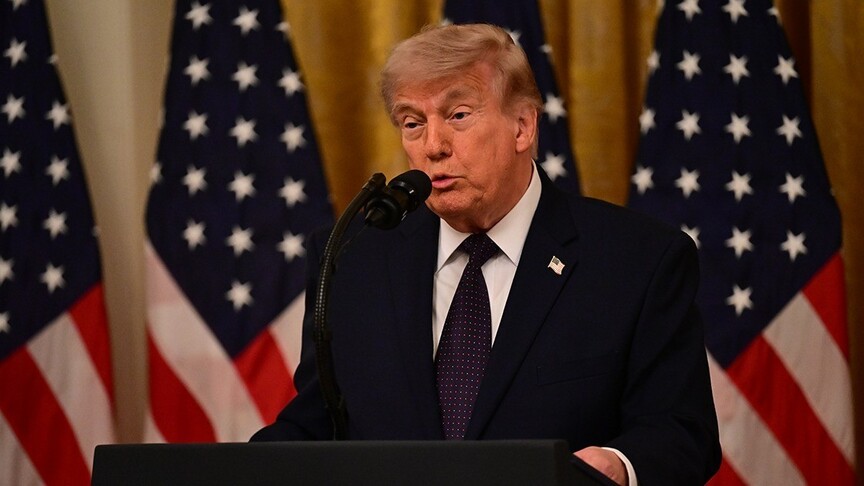
Amid easing Iran tensions, the United States and Iran signed a memorandum of understanding on Wednesday to end the Middle East war that began with US and Israeli strikes on Iran on February 28, establishing an immediate regional ceasefire, reopening the Strait of Hormuz, and initiating 60 days of further talks on Iran's nuclear program. [4] The MoU, signed by President Donald Trump and Iranian President Masoud Pezeshkian, contains 14 points that mandate an immediate and permanent termination of military operations on all fronts, including in Lebanon. [1] US Vice President JD Vance and Iranian Parliament Speaker Mohammad Bagher Ghalibaf digitally signed the agreement, with Trump witnessing the signing. [2] The document sets in motion a 60-day negotiation period to seek a full settlement of the nearly four-month war. [2]
US and Iran Sign Ceasefire Memorandum
The memorandum was signed on Wednesday after Trump first teased on the previous Thursday that the final points of a ceasefire agreement had been approved by all parties. [1] The gradual rollout of terms has only partly shielded the memo from criticism, yet it establishes an immediate regional ceasefire and requires Iran to reopen the Strait of Hormuz while the US lifts its naval blockade. [1] Public opinion polls have underscored widespread US disapproval toward the conflict, which began without direct provocation on February 28 and has boosted the case for diplomacy in some conservative sectors. [1] The agreement aims to resolve an active war, distinguishing it from the 2015 nuclear deal signed by then-US President Barack Obama. [1]
Key Provisions on Strait of Hormuz and Sanctions
The MoU requires Iran to reopen the Strait of Hormuz and sees the US lift its naval blockade and sanctions on Iranian energy exports. [1] US forces lifted the naval blockade of Iranian ports on Thursday, with American warships remaining in the general area. [4] Three Saudi oil tankers left the Gulf through the strait on Thursday, while the loaded liquefied natural gas vessel Mraikh became the first such French vessel to make the transit since the start of the conflict. [4] Iran's Supreme National Security Council stated that ships seeking passage through the Strait of Hormuz must submit their request to a new government body, the Persian Gulf Strait Authority, and that no fees whatsoever will be collected from applicants for a period of sixty days. [5] The US is set to lift sanctions against Iran’s energy exports, which will increase global supply and help bring down oil prices. [1] Iran will also see the release of billions of dollars of its own assets that have been frozen by sanctions, though the memorandum does not provide a specific timeline or mechanism for freeing the funds. [1] It does, however, promise a $300 billion investment and reconstruction fund for Iran. [1]
Nuclear and Missile Issues in the Deal
Iran reiterated its long-standing position that it will not pursue nuclear weapons. [1] The agreement suggests Iran’s willingness to resolve a dispute over its near-bomb-grade uranium stockpile, including the possibility of down blending onsite under supervision by the International Atomic Energy Agency, but leaves that decision for a final deal. [2] Iran’s nuclear materials will not be sent outside the country, and the agreement gives the regime the option of uranium dilution. [2] Tehran extended an invitation to IAEA Director-General Rafael Mariano Grossi and would allow him to bring US nuclear inspectors to Iran. [3] The MoU establishes limits on US forces in the region and states that negotiations regarding Iran’s nuclear program will be conducted during the period following the signing of the agreement. [3] The preliminary deal does not resolve the thorny issue of whether Iran’s uranium enrichment programme will be allowed to continue. [1] It also does not mention a single word about Tehran’s missile programme. [1] Iranian Foreign Ministry Spokesperson Esmaeil Baghaei said that Iran’s ballistic missiles are only meant to be fired, not to be negotiated, and that Iran’s defensive capabilities will not be discussed in any process or with any party. [2] Trump said missiles are not the problem and suggested that the issue could be addressed as part of regional security talks. [1]
Iranian Leadership's Position
Iran’s Supreme Leader Mojtaba Khamenei approved the deal despite reservations, citing promises from President Masoud Pezeshkian to protect Iranian rights. [2] Khamenei said that he eventually approved the Memorandum of Understanding based only on a series of promises from Iranian President Masoud Pezeshkian and the negotiating team. [2] He stated that he held a different view as a matter of principle but granted permission due to the commitment that the president gave regarding the safeguarding of the rights of the Iranian nation and the Resistance Front. [2] Khamenei argued that it was the American president who, out of desperation, used all kinds of leverage to bring this about. [2] He added that face-to-face negotiations with the United States will be held in the future, but that does not mean accepting the enemy’s point of view. [4] Iranian parliament speaker Mohammad Bagher Ghalibaf insisted the deal represented a US failure, while Pezeshkian called it historic. [4]
Reactions from US Republicans and Pro-Israel Groups
US Republicans showed mixed reactions, with some like Senators Lindsey Graham and Roger Marshall expressing tolerance or support. [1] Senator Lindsey Graham said the memorandum will be beneficial for the US and that he sees little downside to trying to reach an acceptable, verifiable deal with Iran. [1] Senator Roger Marshall stated that Iran has to be able to defend itself. [1] Others including Ted Cruz, Bill Cassidy, and pro-Israel groups like AIPAC, FDD, and commentator Mark Levin criticized it as ill-advised or a capitulation. [1] Senator Ted Cruz called the deal ill-advised and said history teaches that giving billions of dollars to theocratic lunatics who want to murder us is not a good idea. [1] Senator Bill Cassidy described it as the worst foreign policy blunder in decades. [4] Senator Roger Wicker called the MOU completely out of step with Trump’s goals and railed against sanctions relief. [4] Senator John Cornyn expressed concern that the accord could be little more than an intermission. [4] Pro-Israel commentators like Mark Levin described the memorandum as a capitulation to Iran and Hezbollah. [1] The Foundation for Defense of Democracies rejected the deal, saying that the memorandum guarantees the survival of the governing system in Iran and allows it to rebuild itself after the US-Israeli strikes. [1] The American Israel Public Affairs Committee released a statement with detailed explanations of what it sees as failures in the memorandum. [1]
Economic Impacts and Uncertainty Ahead
Oil prices tumbled after the agreement was inked. [4] The fighting saw Iran close down the Strait of Hormuz, sending global oil prices soaring and fueling inflation and economic uncertainty in the US. [1] From Israel there was a lukewarm reaction, with Prime Minister Benjamin Netanyahu underscoring the importance of maintaining close ties with the US. [4] Netanyahu said the struggle is not yet over and requires calm judgement, steadfast defence of Israel’s security interests, and at the same time the preservation of the vital relationship with American friends. [4] French President Emmanuel Macron said he did not believe that the war was totally finished. [4] In Tehran, some expressed a downbeat mood, with one resident saying there is no hope that this is a lasting agreement and that maybe after the 60 days they start fighting again. [4] Trump said he was prepared to bomb the hell out of Iran if they violated the agreement and described the deal as a victory. [4]
What to watch next
US Vice President JD Vance said he planned to go to Switzerland for technical negotiations with Iran this weekend, but emphasised that the plan could change. [4] Iranian state media said nothing has been confirmed about the Iranian delegation’s trip to Switzerland. [4] Trump added on social media that those criticising the agreement were fools. [4]